In the current digital landscape, social media platforms are saturated with content and it can be difficult for creators to gain a substantial audience without significant investment in advertising or viral tactics. However, a new virtual space is emerging as a potential solution for content creators: the metaverse.
The metaverse, also known as the virtual universe, is a digital space where users can interact, create, and consume content in a shared environment. It is often compared to the early days of Facebook, as it is still relatively untouched and has the potential for growth and success for those who invest in it early.
Many companies and investors are already pouring billions of dollars into the development and expansion of the metaverse. This includes major players in the technology industry such as Facebook, Google, and Microsoft, as well as gaming companies like Roblox and Epic Games.
One of the key advantages of the metaverse is its ability to provide a sense of immersion and presence for users. This can be achieved through the use of virtual reality and augmented reality technology, allowing users to fully engage in the virtual environment and experience it as if it were real.
The metaverse also has the potential to revolutionize various industries, such as education, entertainment, and commerce. For example, in the education sector, the metaverse can offer immersive and interactive learning experiences for students, while in entertainment, it can provide a new platform for creators to share and monetize their content.
Currently, some of the most popular metaverses include:
Roblox: A massively multiplayer online game platform that allows users to create their own games and play games created by others.
Fortnite: A popular battle royale game that also includes a creative mode where users can build and create their own virtual worlds.
Horizon: A social virtual reality platform that allows users to interact with each other in a shared virtual space.
Decentraland: A decentralized virtual reality platform that allows users to create, experience, and monetize content and applications.
VRChat: A virtual reality social platform where users can create and customize their own avatars, socialize, and participate in community events.
Minecraft: A massively popular game that allows users to build and create their own worlds.
In conclusion, the metaverse is a promising new virtual space that offers a wide range of possibilities for creators, businesses and individuals. With the growth of technology, it’s expected to become more and more accessible, and more and more people will join it. The metaverse has the potential to revolutionize various industries and provide new opportunities for creators to reach and engage with their audience. It will be interesting to see how it develops in the coming years.
Artificial intelligence (AI) is a rapidly advancing technology that is set to have a significant impact on the job market in the next 50 years. While some jobs may become automated, others will continue to require human skills and expertise.
Jobs that are likely to be impacted by AI in the next 50 years include:
Manufacturing roles, such as assembly line work, where repetitive tasks can be easily automated.
Transportation and logistics, where AI-powered systems can optimize routes and manage fleet operations.
Data analysis and decision-making roles, such as financial analysis, accounting, and certain aspects of healthcare.
Customer service and call center jobs, where AI-powered chatbots and virtual assistants can handle routine interactions.
Jobs that involve repetitive tasks, such as data entry and document processing.
On the other hand, jobs that require certain human skills and expertise are less likely to be impacted by AI in the next 50 years:
Jobs that involve human interaction and empathy, such as teaching, social work, and therapy.
Jobs that require creativity and problem-solving, such as design, innovation, and research.
Jobs that require complex decision making and judgement, such as managers, executives, and leaders.
Jobs that require a deep understanding of human emotions and social dynamics, such as therapists, counselors, and sociologists.
It is also worth mentioning that AI will create new job opportunities, particularly in the field of AI development, implementation, maintenance, and governance. As AI becomes more prevalent across various industries, there will be a growing demand for professionals with expertise in AI-related fields.
It is important to note that AI will not necessarily lead to widespread unemployment. Instead, it is likely to result in a shift in the types of jobs available, with some becoming automated while others will continue to require human skills and expertise. As such, individuals and organizations must adapt to these changes and develop the necessary skills to succeed in the new job market.
In Peru, there are 48 native languages and approximately 28,000 bilingual schools, within the modalities of regular basic school, alternative basic school and special basic school, serving more than 1,200,000 students nationwide, at the pre-school, primary and secondary levels.
In order to continue with the proposals for progress in rural bilingual education policies, within the Peruvian Ministry of Education there is the Directorate of Alternative Basic Education, Intercultural Bilingual Education and Educational Services in Rural Areas, which, through its professionals, is responsible for designing and proposing improvements in education in rural areas, through proposals for educational improvements and training for bilingual teachers, in order to ensure the education of thousands of students in an inclusive manner and to avoid school dropout.
However, despite continuous efforts, the lack of budget and bilingual teachers only widens the inequality gap. Furthermore, the ongoing political crisis in the country not only generates an atmosphere of uncertainty in general, but it also stops further proposals and investments in order to meet the main demands of students from indigenous peoples.
Rural bilingual schools are not only spaces for the dissemination of academic knowledge, but also of ancestral knowledge. Peruvian indigenous peoples are spaces in which there is a living culture of ancestral knowledge, which is passed down from generation to generation. Ensuring bilingual education through teacher training, funding, educational policies, but above all respect for ancestors who have resisted through the centuries, would contribute to reducing the inequality and indifference with which these peoples have been living. The current political situation, and the current violation of human rights in the country, especially in sectors where there is a high presence of indigenous people (the Department of Puno is the most affected, with citizens murdered during the demonstrations against the current president and is home to the Quechua and Aymara population), only affects a student community that is faced with indifference, lack of basic services to study and lack of quality education; However, it also empowers students who are aware that they are the voice of the future and seek to be heard in order to feel included in a country that is highly centralised in the capital Lima.
The challenges facing the Peruvian state in order to ensure the development of students from indigenous peoples is to continue to coordinate with various institutions such as the Ministry of Culture (which has a directorate that promotes policies for the protection of indigenous peoples), civil associations that have a professional staff to meet the main demand for social projects, curators who would help students to continue generating spaces for dialogue and ancestral knowledge, enhancing through education everything they have learned through their community sages; But above all, the Ministry of Education must ensure educational policies that ensure that students can receive the same quality education that students who have Spanish as their mother tongue receive.
The 48 native languages resist in a country that seems to be more and more indifferent every day and whose colonial construction still persists. However, what Peruvian society does not count on is a large native student community, who through meetings try to make their own demands visible, try to denounce open secrets that are like assassinations of community leaders defending their territories, as well as systematic violence that they constantly experience. Rural schools are therefore not only spaces of knowledge, but also of resistance, in the face of a country that looks at them with indifference.
On 7 December, the former president of Peru, Pedro Castillo, was removed from office by the Peruvian Congress after a failed coup attempt. This event sparked a series of nationwide protests, which have so far left more than 25 people dead, including minors. But what are the Peruvian people demanding?
The main demand is the resignation of the current president Dina Boluarte, who has so far repressed the protesters by giving freedom to the Peruvian army and the police to disperse any demonstration against the government using any measure of force, which is anti-democratic. It also calls for the elections to be brought forward to the current year (it has been approved to be brought forward to April 2024), the dissolution of the congress and the creation of a new constituent assembly.
Last weekend, during protests in the city of Juliaca, capital of the department of Puno, a series of police abuses were reported, including an injured reporter, who said the following:
“At around 3 o’clock in the afternoon I was covering the protests, where I was recording (photographing) demonstrators and the police. I was on the wall of that bypass (level crossing), on the edge, to be able to see the confrontation between the police and the demonstrators. At that moment I was sending photos, I stopped to look at my mobile phone and I saw that I was hit by a blunt object. When it hit me, my leg went numb and then it started to bleed through my trousers. I pull up my trousers and I see a hole (at that moment), I was calm and also scared. When the demonstrators noticed it, some said it was buckshot, others said it was a bullet, but I didn’t really know what it was. They carried me to a little market ten steps away and there they began to treat me with bandages, clean the blood and put a tourniquet on my leg.”
The journalist received police threats, including death threats. This is a serious violation of human rights and an aggression towards the independent media, who in view of the lack of biased reporting by the mainstream media, report by getting involved in the protests and taking pictures of the various acts of violence that are taking place. However, this is only one of several events that have been recorded.
Demonstrations at the national level show human rights violations in the form of arbitrary arrests, use of tear gas, use of firearms by the police. Some of the deaths recorded during Dina Boluarte’s first month in office have been civilians who have been trying to help injured demonstrators. The constant repression has left children, adults and elderly people dead, without leaving dialogue open.
Protesting is a right. No human being should be violated for raising his or her voice against a regime. What is happening in Peru is a dictatorship: a president who uses force to silence the voice of the people, no space for dialogue to reach an agreement with the citizens, police who abuse their power, media that transmit messages of hatred towards the demonstrators.
Social inequality in Peru has always been latent. Today the forgotten voices are making themselves heard in the midst of a centralist, unequal and classist country. Infringing their rights through aggression and death only further widens the existing inequality gap. It is necessary to raise our voices to ensure that the right to protest is respected, however, through a dictatorship it is unfortunate to know that the only thing that is guaranteed is repression and death.
Reflections on Economy, Market and Society for the year to come*
The Human Advisor Project proposes some reflections on the year that is about to come. It is recommended to read the disclaimer note at the end of the text. The report is divided into short and summary paragraphs, please request in the comment section if you would like to deepen one or more of the topics below in future reports and articles. Let’s get started.
The evolution of Globalization
The era of the West as the center of the world is over. The new trend now, in the West, will be to consider the world as a two-pole world with a democratic bloc and an authoritarian bloc. However, this seems to be an overly simplistic and naive definition. The rise of alternative powers to the two US-CHINA blocs seems to be foreshadowing an evolution in the direction of a multipolar world within which exchanges of resources and services will continue both between blocs and within the blocs. The market will suffer from the moment of tension caused by this change, but in the long run it will benefit. Nationalist and populist movements will be able to arise and proliferate temporarily in the initial phase of this process, but clashing with the economic needs of global market union that will make them mature and/or lose ground in the medium and long term. It is also noteworthy that we are preparing to reach 10 billion people on planet earth in a few years, with all the challenges in terms of food supply, population density, migration, security, energy and pollution that this will bring.
Climate change and social justice
From Cop27, some main scenarios have emerged: There is no agreement at global level on how to reduce emissions. Europe is a leader in regulation with the US, which could supplant it as early as this year. At the moment, the focus seems to be on the rebalancing of social justice between developed and emerging countries, to the extent that the west will have to (would they already have to?) create and/or support the emerging countries in the process of adaptation to current climatic conditions (provoked mainly by the developed countries). A Cop28 more focused on decarbonization is expected next year.
War in Ukraine as a regional and non-world war
The war in Ukraine that seemed to result in a world-nuclear-war in the second quarter of 2022, now appears to have stabilized as a ‘regional’ war, only European. The consequences on the rest of the world are visible but not as much as if it had broken out a few decades ago. This makes us reflect on the role of an increasingly less central Europe at world level, that is, more and more a single subject among a multitude of subjects, political, economic and military, within a multipolar world. This war is to be considered, anyway, as a War between USA and China, but the conflict should not lead to a Nuclear world (even tough it could be announced as possible to destabilized political order in the Euro-Asiatic continent).
The future monetary war
Strong dollar, weak euro, and other raising currencies. The Chinese digital currency is in the pipeline, which wants to become the main exchange currency of the BRICS countries (which would also like to incorporate Dubai). All this monetary ferment seems to foreshadow a future currency war. Among these currencies, one certainly represents the most ambiguous but interesting: Bitcoin. Much down from last year’s highs but very high compared to its pre-covid levels, with its strong assumptions and projections still very promising in the long term, despite the expensive and polluting mining issue. A war between Fiat currencies and Bitcoin can become reality but for now it prevails the Central Banks will of just regulating the crypto sector and set the ground for a mutual existence in future of both systems.
Inflation and Central Banks
Inflation (to 70% due to the increase in the cost of food and energy due to the war in Ukraine) is the big issue of these last months. The loss of purchasing power of households is beginning to be felt and, while in America there is already talk of the ‘beginning of the end of inflation’, in Europe, although it seems that the peak has reached, high inflation will still seem to remain present throughout 2023, thus impacting the cost of living and eroding uninvested savings or money on the current accounts of savers. Central banks are running for cover, in fact, the FED and the ECB seem to want to continue to use the hard fist, raising interest rates on the money lent to the banks, which consequently raise mortgage rates, thus triggering a difficult situation for businesses and citizens. At the moment, inflation forecasts are not rosy for Europe. To run for cover, many think of lightening their liquidity by investing in the rising bond market or buying Real Estate, mainly in the ‘Logistics’ and Private Luxury sector (a big “No” for the commercial real estate sector in sharp devaluation from the pandemic).
Bear market
It is given by everyone as certain a more contained growth in the two-year period 2023/2024 with a “bear” or dormant market, or even in a slight decline in Europe (recession) and very light or absent in the USA. This would represent a significant disadvantage for investors who opened their market positions in 2021 who are now losing double-digit percentages, but a considerable advantage for those who want to open them (especially in solid stock) positions in the next year by buying on weaknesses. Bear market could still be a reality in 2024.
Luxury
The crisis, as always, is not felt by the richest groups of society, which are becoming richer and richer and who, even driven by inflation, tend less and less to take liquidity on account and prefer to spend, and sometimes even invest, in the luxury sector. Although down from last year due to the war in Ukraine, buying a Rolex still means doubling if not tripling your investment at the exact time of purchase. In fact, a Steel Daytona purchased today at 12K€ from that elité that has access to the waiting lists of retailers, can be exchanged in the gray watch market for about 25/30K€. Watches thus become no longer tools but jewels: Swiss watchmaking houses are increasingly shifting towards the use of precious metals and sought-after mechanisms, raising customer entry-level prices to 20/30 thousand euros (comes to 7/8 a few years ago). This is also because of the total absorption of the market for ‘technical’ or ‘instrumental’ watches by the tech industry. Suffice it to say that Apple alone sells more watches per year comparing to the entire Swiss industry put together. Apple has recently come out with the first model of diving and hiking smartwatch. It is thus expected a gradual distancing of the Swiss industry from the ‘stainless steel’ to the luxury good in gold and diamonds or platinum (and an overvaluation of the Vintage given the poor availability of some models).
Layoffs, BigTech Crisis and Labour Market
However, very few are those who can afford to buy luxury goods, especially given the drastic increase in layoffs in the world due to the fear of recession and the bear market. In fact, the bear market bogeyman seems to have pushed the American technological giants to fire tens of thousands of workers. However, in the opinion of many analysts, this is not a strange fact, but a healthy and natural evolution of such companies that evidently, after a period of unicorn traction and over-price on the stock market, due to their boom and post-pandemic, begin to become more mature, solid, well-managed and therefore promising companies in the long term (and less volatile). Clearly this is devastating from the point of view of the workers concerned, but only if you think of the world of work in the ‘ancient’ way or the way in which it is necessary to work for a living. As automation is constantly advancing, the future scenario that is now facing with certainty is that of increasingly automated work and the creation of alternative subsidy tools to work such as universal income or UBI (Universal Basic Income). In this sense, Germany has begun working on the creation of a citizenship income to cover the loss of jobs of German citizens. Jobs that probably, in many cases, will not be get back. In contrast to Italy, which abolishes its already precarious citizenship income, but more for ideological reasons it seems and without putting tangible alternatives at the moment. So strong social and humanitarian crises are expected even in the West due to the reticence of the legislators to regularize this practice of “monthly non-repayable survival allowance” by the state to every citizen who will be (in academic circles and among the elité of American entrepreneurs it has already been mentioned for years as the only solution to unemployment from automation) the formula.
Millennials and GenerationZ
Two generations face the world of work. Millennials and GenerazioneZ are the workers/citizens/leaders-politicians/entrepreneurs/investors of the present/future. In order to understand how these generations will approach business, economic, financial, social and political life, we must first consider what we know about them. Of the millennials (born between 1981 and 1996) we know that they are the most educated generation ever. This on the one hand pushes them to think they ‘already know everything’ even when in reality this is not the case. On the other hand, it pushes them to want to distinguish themselves, to want to emerge and to increase their wealth, cognitive, experiential, consumerist and financial. They are also very politicised in different countries of the world, but that is not necessarily why they are recognised in mainstream politics. Of GenerationZ (born between 1997 and 2012) what we know is that they are babies born with the ‘screen in the cradle’. They have never seen a program on television or read a paper newspaper and everything for them exists more in the virtual than in the real one, in the present extemporaneous rather than in the planned future. Social interactions are predominantly mediated between them by the technological medium, via chat (phone calls are considered an invasion). Their private sphere is very wide and the level of comfort they are used to is very high. Their attention lasts no more than 8 seconds and the enjoyment of one content for them is difficult to go beyond 15 minutes. GenerationZ is likely to be renamed CyberGeneration. The next one will continue that trend.
Metaverse
In this perspective, the space for the birth of a new world is foreshadowed, first only imagined in science fiction novels and today already partial reality: the Metaverse. Meta, whose stock is down sharply today due to non-return spending policy, is the most interesting company to look at in this regard. It is in fact creating the platform and the device (i.e. software and hardware) through which all internet users in a medium and long-term time horizon will interface with the network for activities such as working, communicating, socializing, having fun, enjoying entertainment content (including those for adults), playing sports and much more. All from home, in your own comfort zone and without invading your private sphere, in line with the needs of GenerazioneZ. Other companies are chasing Meta in both America and China. Possible mergers are on the horizon in my opinion, so you will have to be careful, but investing in this sector (wide and not mono-company), over a time horizon of 10/15 years, could give very high returns.
Market prospects: crisis/opportunity
In addition to the metaverse and cryptocurrencies today at attractive prices, there are other interesting prospects in the market in my opinion: EM Asia: The emerging countries of Asia and the Pacific are, according to almost all reports, the driving economies of the coming years followed by Nigeria (still risky and too immature politically). Health care (home diagnosis and oncology immunology): In the health sector, there are excellent potential results in the medium to long term with regard to DIY diagnostics (home devices connected to the smartphone) and oncology immunology (cancer vaccines). Pet: A close eye should be given to the sector that concerns pets and everything that revolves around them. In sharp rise and with great future potential. Bond: Fixed coupon bonds are back. Certainly the most cautious investors will make use of it. Beware, however, to the fact that compared to the Bonds of a few years ago, these have some little more risks. It is therefore better to be cautious and always diversify.
The commitment of the HAP in the world: Ukraine Africa and Afghanistan
Our commitment abroad remains strong on three fronts: Ukraine: The situation of internal refugees, that is, the people who have been left homeless for the war, is very serious. The most important thing now is for us to intervene not only on a psychological but also socio-economic level. The people, as had been predicted by our report sent to President Draghi last February, have suffered devastating damage on all levels. It is necessary at this time to rehabilitate them psychologically but also to reintegrate them from a social and work point of view. Innovative poles must be created scattered throughout western Ukraine (it is possible that for a period there will be two Ukraines) where IDPs (internal disposable person) can start from scratch in safety and therefore live, work and socialize. Our head of Ukraine Emergency Dr. Viktor Vus now in Kiev is already on the front line on this front and in constant contact with me. Africa: As far as the African continent is concerned, we have decided to focus on Rwanda and work on supporting adolescent mothers. Girls aged 13 to 18 who got pregnant due to rape or absence of sex education and who now find themselves being minors with minors dependent on them, no economic resources and no education. We will work to improve their conditions. Dr. Ronald Kimuli, head of Human Advisor Project Africa is already operational in this regard and in constant contact with me. Afghanistan: The situation in Afghanistan is disastrous. There are parents forced to drug their children to make them sleep. There is no food, there is no infrastructure and many have lost their homes as a result of natural disasters. As much as the issue of education is central to us in a country like Afghanistan, as can be seen from our policy paper, we are now focusing first on humanitarian aid. Dr. Noorwali Khpalwak is operating from Paris and we have a team on site in Kabul in constant contact with us led by Dr. Samiullah Ahmadzai.
The next summary report will presumably be published at the end of next year.
Dott. Gianpaolo Marcucci
President of the “Human Advisor Project”
*This text is to be considered a free reflection for study and research purposes. It is not to be considered scientific, commercial or informative material nor does it necessarily represent the thought of Gianpaolo Marcucci or the Human Advisor Project. Any consideration or forecast is considered valid only until the time of publication of this text i.e. November 30, 2022 at 14:00 GMT+1 and no later and may also change completely at any time thereafter. The conclusions reported in it were elaborated following studies and analysis of written, audio, video materials and reports from specialized institutes such as: CIFS, ISPI, Julius Bär, JP Morgan, Goldman Sachs, Morgan Stanley, Bloomberg, Financial Times, Wall Street Journal, Sole 24 ore, Il fatto Quotidiano. Neither Gianpaolo Marcucci nor the Human Advisor Project is in any way responsible for the actions the reader will take as a result of reading this document. For additional info: Legal Team Human Advisor Project
Here we present our Human Advisor Stories, the stories of those people we choose to represent our spirit in their being excellence in their field around the world. Science, Human Rights, Art, Culture, Politics, Religion, All the sphere of the Human Being is admitted. To share your story you can send a request here: humanadvisorproject@gmail.com.
For 2023 we have chosen Naelia (Eliana Antonia Tumminelli) a music artist who brings with here a message of peace.
Compositrice colorata, infanzia nel giardino degli aranci, dove nascono i fiori, e adolescenza a San Lorenzo dove hanno trasformato i palazzi in cenere, faremo rinascere i fiori in questo inverno… Di questi tempi è difficile usare le parole e il coraggio, ma mi sono svegliata con una fitta nel petto e ho scritto questo brano. Spero che la genuinità dei bambini possa essere coscienza dei ”grandi”.
Eliana Tumminelli, aka NaElia, singer-songwriter, dancer and performer, was born in Catania on 20-06-1989. As a child she takes her bags and moves from her land to Rome to study and cultivate her passion for dance, music and art. Eclectic his artistic training, from theater, to music, to dance, graduated from the National Academy of Dance in Rome.
On July 1, 2004 she was awarded the International Professionalism Prize “Rocca D’Oro di Serrone”, as a young talent, receiving the sculpture by Ambrosetti.
In 2008 she self-produced her first album-promo È Senza Senso
Already among the six finalists, of which only three have access, to participate in the RAI (National Italian Television) Xfactor 4^ TV Talent show, Magnolia production, 80,000 presences.
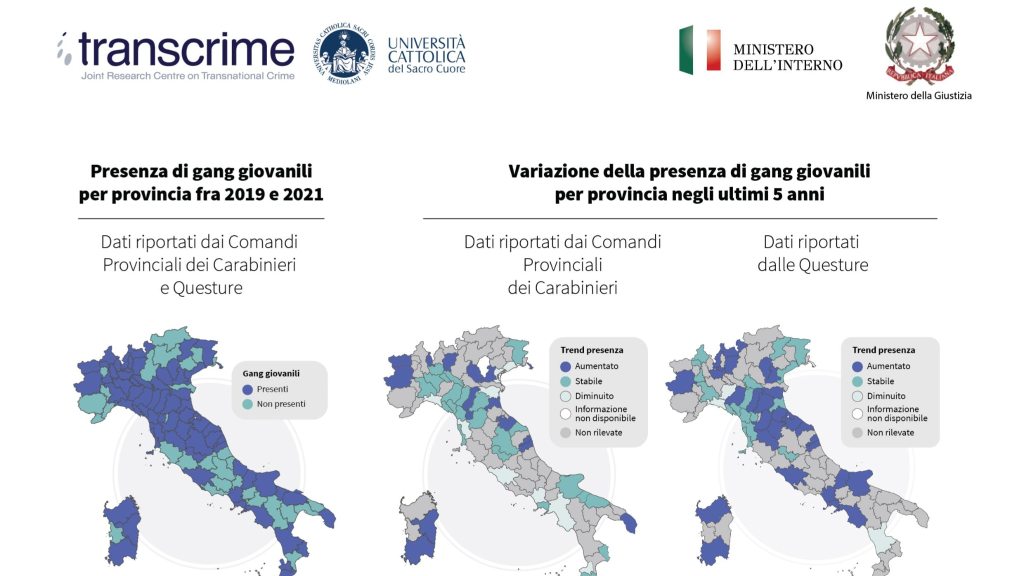
The Ministers of Internal Affairs and Justice, with Transcrime Research Center and Sacro Cuore University made a wonderful job in studying and reporting the presence and activity of baby gangs in Italy.
With the Scentific Committee of the Human Advisor Project we decide to activate a program of intervention about this phenomenon, working of what we elaborated could be the most important cause: Italian Young Generation is completely lost and not listened to, from years.
For that, our program aims to get in touch with young generations in difficult areas, mix with them, get to know them, listen to them (focusing on the North-East of Italy) and better understand the phenomenon and the possible intervention that need to be implemented, mostly about education but also about education to self-awareness, compassion, mindfulness and emotional intelligence, making them aware of the world they are creating for themselves and help them to face the uncertainty of this historic moment.
The program is not public because of safety reasons. Results will be published in the next two years.
The “Mindful Police and Military Forces Program“ consists in teaching Mindfulness and Emotional Intelligence to our great police and military forces all over the world.
Our program is aimed to:
Increase officers efficiency
Increase officers ability to do the right action in critical situations
Increase “choice-space” between stimulus and response
Decrease judgmental biases in decision making process
Significantly reduce stress, anxiety and depression generator factors
Significantly improve sleep quantity and quality and the capacity to sleep when needed
Develop the skills officers need to de-escalate volatile situations
Improve community relations both in peace and in war zone
Significally increase ability of negotiating in hard situations
Butwhy, in a moment like that, would Military, Police, Nurses, Fire-Fighters and First Responders needs to quickly develop high levels of “Mindfulness and Emotional Intelligence” Skills?
Try to question yourself about this 3 simple scenarios:
When does an accident take place? When you are in a controlled situation, lab or drill situation, with everything you need to solve the criticality that the accident causes ready to be used…or when you are on duty, in the field, or at home with your family or even alone? And are you aware of all the chance you have in any situation to experience that accident, and of what to do to cope with it?
When does an injury or a physical breakdown takes place? When you are comfortable sitting or laying in a Hospital full of medics and nurses ready to care about you…or else when you are on duty, in the field, or at home with your family or even alone? And are you aware of all the chance you have in any situation to experience that injury, and of what to do to cope with it?
When does a mental breakdown take place? When you are comfortable sitting over laying in a Mental Health Facility surrounded by psychologists and psychiatrists ready to intervene and help you…or else when you are on duty, in the field, or at home with your family or even alone? And are you aware of all the chance you have in any situation to experience that breakdown, and of what to do to cope with it?
And do you know that if you are not aware of the bias of your mind, those bias can easily overcome you and make you become an “always on the edge” person that, like a time-bomb, can implode/explode and lose all productivity at once, all of a sudden, maybe right in the middle of an important task or mission?
The 3 scenarios that I reported before represent 3 different kind of skills that you may lack of: – Awareness of the environment – Awareness of the body (yours and others) – Awareness of the mind (yours and others)
In a moment of uncertainty such as this one, it is impossible to simply “stick on the plan” or “follow the protocol” because many times there are no plans and many times the protocol is only theoretical.
What is needed is a direct connection with what happens in the very moment things happen, and that can only be given by strong “awareness skills”.
Awareness and Mindfulness are synonyms. And as you know, since you are human, emotions can and will get in the way between you and your capacity to discern which is the best option.
From that, our programs are about both Mindfulness and Emotional Intelligence.
Only a Mindful And Emotional Intelligent Mind can cope with any situation without getting involve with it and do always the best possible action. During an accident, in first aid emergency, in war or in quickly-escalating police operations, a Mindful and Emotionally intelligent mind can always act in the best way
All our works are supported by solid scientific studies. We leave some scientific notes about our program, useful for the reader:
The studies examined evidenced that police officers who went through mindfulness training experienced less depression in their first year of service and also “significant improvement in self-reported mindfulness, resilience, police and perceived stress, burnout, emotional intelligence, difficulties with emotion regulation, mental health, physical health, anger, fatigue, and sleep disturbance.” (Christopher 2016,2018).
In a recent article about a very interesting study conducted by the University of Wisconsin emerged that:
“Mindfulness training led to significant reductions in psychological distress and mental health symptoms, consistent with previous RCTs demonstrating reduced anxiety and depression symptoms (Trombka et al., 2021), burnout and perceived stress (Christopher et al., 2018), and negative affect (Krick and Felfe, 2019). We provide the first evidence of reduced PTSD symptoms in an RCT of mindfulness training for police officers, consistent with findings from an earlier single-arm pilot study (Grupe et al., 2021a). This result is notable given high exposure to direct and vicarious trauma in policing, and the serious and potentially deadly consequences of unmitigated trauma exposure for police officers (Syed et al., 2020) and members of the public (Chemtob et al., 1997; Weiss et al., 2012). We also observed a modest improvement in sleep quality with mindfulness training that was significant at 3-month follow-up (see also Christopher et al., 2018). Improved sleep may benefit both police officer health and community well-being. For example, North American police officers who screened positive for sleep disorders (40% of the sample) not only had increased rates of diabetes, heart disease, and depression, but were more likely to express anger at work, fall asleep while driving, and incur citizen complaints (Rajaratnam et al., 2011). Mindfulness training was associated with a reduction in the CAR at 3-month follow-up, consistent with results from a previous RCT in police officers (Christopher et al., 2018). Although the CAR is generally thought of as an adaptive anticipatory response to prepare for the upcoming day (Powell and Schlotz, 2012), exaggerated responses are associated with excessive worry, burnout, and depression (Schlotz et al., 2004;” (Grupe &Co 2021)
Furthermore, is directly Officer Richard Goerling, a police lieutenant is Hillsboro, Oregon, who works with fellow police officers to increase their well-being through mindfulness, who says in a recent interview that often officers:
“Instead of understanding the impacts of stress, anger, or fear, [are forced by habit to] try to tamp down those emotions or ignore them, which keeps them from understanding the effect of emotion on performance “It’s classic compartmentalizing, saying, ‘I don’t let my emotions get in the way,’” says Goerling. “Yeah, right. But what happens if those emotions spike up out of the little box and get in the way, creating problems in the encounter with others?” (Suttie 2016).
And he added about mindfulness in critical situations that:
“Mindfulness opens up the space in which we make decisions—we’re not so linearly focused or so stressed because we are under threat,” he says. “We may still be under threat, but because I’m regulating my stress response and my emotions—anger, fear, and ego, which is a huge problem in our culture—I’m more aware of my options.”
Mindfulness and emotional intelligence are now crucial instruments for police officers all over the world and we find very important to present to our Italian Forces the opportunity to have those kind of abilities in their set of skills.
Primary References
– Christopher, M.S., Goerling, R.J., Rogers, B.S. et al. A Pilot Study Evaluating the Effectiveness of a Mindfulness-Based Intervention on Cortisol Awakening Response and Health Outcomes among Law Enforcement Officers. J Police Crim Psych 31, 15–28 (2016). https://doi.org/10.1007/s11896-015-9161-x
– Christopher MS, Hunsinger M, Goerling LRJ, Bowen S, Rogers BS, Gross CR, Dapolonia E, Pruessner JC. Mindfulness-based resilience training to reduce health risk, stress reactivity, and aggression among law enforcement officers: A feasibility and preliminary efficacy trial. Psychiatry Res. 2018 Jun;264:104-115. doi: 10.1016/j.psychres.2018.03.059. Epub 2018 Mar 23.
– Daniel W. Grupe1, Jonah L. Stoller, Carmen Alonso, Chad McGehee, Chris Smith, Jeanette A. Mumford, Melissa A. Rosenkranz and Richard J. Davidson (2021). The Impact of Mindfulness Training on Police Officer Stress, Mental Health, and Salivary Cortisol Levels
Clinical Trial published: 03 September 2021 doi: 10.3389/fpsyg.2021.720753
– Jill Suttie, Psy.D, How Mindfulness Is Changing Law Enforcement
Meditation is helping police officers to de-escalate volatile situations, improve community relations—and improve their own well-being, MAY 18, 2016: on https://greatergood.berkeley.edu/
Other References
– Andersen, J. P., and Gustafsberg, H. (2016). A training method to improve police use of force decision making: a randomized controlled trial. SAGE Open 6, 1–13. doi: 10.1177/2158244016638708
– Ballenger, J. F., Best, S. R., Metzler, T. J., Wasserman, D. A., Mohr, D. C., Liberman, A., et al. (2011). Patterns and predictors of alcohol use in male and female urban police officers. Am. J. Addict. 20, 21–29. doi: 10.1111/j. 1521-0391.2010.00092.x
– Black, D. S., and Slavich, G. M. (2016). Mindfulness meditation and the immune system: a systematic review of randomized controlled trials. Ann. N. Y. Acad. Sci. 1373, 13–24. doi: 10.1111/nyas.12998
– Browning, C. R., Tarrence, J., LaPlant, E., Boettner, B., Schmeer, K. K., Calder, C. A., et al. (2021). Exposure to police-related deaths and physiological stress among urban black youth. Psychoneuroendocrinology 125:104884. doi: 10.1016/j.psyneuen.2020.104884
– Burke, K. C. (2020). Democratic policing and officer well-being. Front. Psychol. 11:874. doi: 10.3389/fpsyg.2020.00874
– Buysse, D. J., Reynolds, C. F., Monk, T. H., Berman, S. R., and Kupfer, D. J. (1989). The Pittsburgh sleep quality index: a new instrument for psychiatric practice and research. Psychiatry Res. 28, 193–213. doi: 10.1016/0165-1781(89)90047-4
– Carleton, R. N., Afifi, T. O., Turner, S., Taillieu, T., Duranceau, S., LeBouthillier, D. M., et al. (2017). Mental disorder symptoms among public safety personnel in Canada. Can. J. Psychiatr. 63, 54–64. doi: 10.1177/0706743717723825
– Chemtob, C. M., Novaco, R. W., Hamada, R. S., Gross, D. M., and Smith, G. (1997). Anger regulation deficits in combat-related posttraumatic stress disorder. J. Trauma. Stress. 10, 17–36. doi: 10.1002/jts.2490100104
– Chopko, B. A., Palmieri, P. A., and Adams, R. E. (2018). Trauma-related sleep problems and associated health outcomes in police officers: a path analysis. J. Interpers. Violence 36, NP2725–NP2748. doi: 10.1177/0886260518767912