“Il mondo si sta muovendo rapidamente verso un assetto multipolare. Questo, in molti modi, è positivo. Porta nuove opportunità di giustizia ed equilibrio nelle relazioni internazionali. Ma il multipolarismo, da solo, non può garantire la pace.” — António Guterres, Segretario Generale ONU, 2023
Geopolitica: i conflitti si congelano
Nel 2026 i principali conflitti globali non termineranno con vittorie schiaccianti, ma con tregue e congelamenti. In Ucraina si arriverà a un cessate-il-fuoco di fatto: Mosca manterrà territori occupati, Kiev resterà sovrana con il sostegno occidentale. A Gaza un cessate-il-fuoco multilaterale, sostenuto da Stati Uniti, Egitto, Qatar e ONU, stabilizzerà la Striscia. La crisi di Taiwan resterà contenuta: Pechino continuerà con pressioni militari simboliche, senza invadere. In Africa il Sahel sarà diviso in nuove sfere di influenza, mentre in Congo la tregua mediata dal Qatar ridurrà un conflitto decennale. Il Venezuela sarà reintegrato nel mercato globale, e in Medio Oriente la distensione tra Arabia Saudita e Iran resisterà, aprendo a nuovi accordi. Il filo rosso sarà chiaro: i conflitti resteranno irrisolti, ma verranno incanalati in un equilibrio multipolare che eviterà escalation globali.
Finanza: il mosaico monetario
La de-dollarizzazione accelererà. Sempre più scambi energetici e commerciali avverranno in yuan, rupie o rial. Il dollaro resterà centrale ma non più egemonico. Accanto ad esso emergerà un sistema policentrico fatto di dollaro, yuan, euro, oro e Bitcoin. Gli investitori privilegeranno oro, bond a breve termine, mercati emergenti e Bitcoin come asset complementare. Le borse occidentali cresceranno moderatamente, mentre i listini asiatici guideranno i flussi globali.
Tecnologia e spazio: frammentazione gestita
Il 2026 confermerà la splinternet: Internet sarà diviso in blocchi regionali, con la Cina e la Russia sempre più chiuse e l’Occidente a difendere un web aperto. I paesi emergenti adotteranno modelli ibridi, tra controllo e apertura.
L’intelligenza artificiale raggiungerà livelli inediti di creatività e autonomia. Crescerà la pressione per un trattato internazionale che limiti le armi autonome, con l’ONU impegnata a proporre un’agenzia di controllo simile all’AIEA.
Nello spazio, la competizione sarà più politica e tecnologica che materiale. Gli Stati Uniti punteranno a riportare astronauti sulla Luna con Artemis, mentre la Cina intensificherà i preparativi per missioni con equipaggio entro il 2030. Musk e Bezos continueranno a giocare un ruolo di acceleratori, con Starship e Blue Origin pronti a ridurre i costi di accesso allo spazio. Non nasceranno basi permanenti, ma il 2026 segnerà il ritorno della Luna e di Marte al centro dell’immaginario geopolitico multipolare.
Società e lavoro: dopo la crisi
Con la fine dell’inflazione bellica i consumi torneranno a crescere. Le nuove classi medie di Asia e Africa guideranno la domanda globale. Il lavoro sarà trasformato dall’IA e nasceranno nuove figure professionali. In Europa e Nord America sperimentazioni di reddito di base universale compenseranno l’impatto sociale. La Cyber Generation userà la propria forza digitale per imporre priorità di pace, giustizia e sostenibilità.
I miliardari come nuovo polo di potere
Il 2026 mostrerà come i miliardari tecnologici siano ormai un terzo polo geopolitico. Elon Musk, con infrastrutture come Starlink, influenzerà scelte di sicurezza. Jeff Bezos investirà in spazio e media come attore statale. I grandi fondi globali orienteranno transizioni energetiche e mercati come veri super-ministeri. Questi attori avranno interesse diretto nella stabilità: la loro influenza sarà un fattore determinante verso la Multipolar Peace.
2027–2028: pace fragile o coesistenza stabile?
Il rischio di nuove escalation rimarrà: cambi di leadership, shock climatici o crisi interne potrebbero riaccendere tensioni. Ma se gli accordi del 2026 verranno consolidati, nascerà una fase di coesistenza multipolare stabile: competizione economica e tecnologica, meno guerre dirette. Il 2026 sarà ricordato come l’anno in cui il mondo avrà compreso che la pace non nasce dall’egemonia di uno solo, ma dall’equilibrio di molti.
Questo testo è una libera riflessione a scopo di studio prospettico e non rappresenta verità assolute né consigli operativi. Le considerazioni espresse valgono alla data di pubblicazione (agosto 2025) e possono mutare con l’evolversi degli eventi
To understand what is happening in the world today, we must start from a simple yet powerful idea: globalization is, above all, control of the seas. It is not just about trade, technology, or financial flows, but about the ability to ensure—or block—the free transit of goods and energy along the world’s major maritime routes.
History teaches this clearly. Every dominant empire has built its power through strategic control of the waters: Rome unified the Mediterranean, turning it into an internal lake—“mare nostrum”; the British Empire established naval bases across the globe, from the Suez Canal to Singapore; and finally, the United States, which since the end of World War II has dominated the oceans, sustaining the liberal global order with an unrivaled navy.
But no hegemony, however solid, remains unchallenged forever.
⸻
The American Empire in a Phase of Fatigue
Today, the United States still appears formally dominant, but less capable of exercising its authority unopposed. It is not so much a military weakness as a perceptual fatigue—a loss of confidence, both domestically and internationally, that creates room for other powers to rise. This perception—and the reality that follows—carries tremendous weight: in international relations, the perception of strength is already strength, just as the perception of weakness is already an invitation to challenge.
It is into this vacuum that determined actors are stepping: China, Russia, Turkey, and Iran, each carrying a worldview and, often, a historical empire to which they appeal to legitimize their expansion.
⸻
The Return of Empires
It is no coincidence that these emerging powers explicitly reference history. The United States sees itself as the heir to the British Empire—not just linguistically and culturally, but as a global maritime guardian. China, with its millennia-old civilization, has revived the Belt and Road Initiative, not only by land but especially by sea, building strategic ports from Asia to Africa. Russia aims to reconstruct a post-Soviet sphere of influence, supported by a czarist and Orthodox vision. Turkey, nostalgic for Ottoman glory, is now very active in the Eastern Mediterranean and Syria. And Iran presents itself as the spiritual and geopolitical heir of the Persian Empire, with a regional agenda aimed at shaping the broader Middle East.
These actors are not merely competing symbolically. They have concrete goals: regional influence, market access, energy control, and military presence in key global hotspots. And all of these goals, inevitably, pass through the sea.
⸻
The New Map of Power: Strategic Straits
If the seas are the arteries of globalization, the straits are its vital points. They are narrow spaces where everything passes—and where everything can be blocked. This makes them the true fault lines of modern geopolitics.
The Suez Canal links Europe to Asia; even a partial closure causes immediate price shocks globally. The Bosporus and Dardanelles, controlled by Turkey, are essential for Russia and the entire Black Sea region. The Strait of Gibraltar remains a critical gateway to the Mediterranean. The Bab-el-Mandeb, between Yemen and the Horn of Africa, connects the Red Sea to the Indian Ocean, with direct consequences for European energy security.
The Strait of Hormuz may be the most delicate of all: nearly one-third of the world’s oil passes through it. Every Iran–U.S. tension plays out here as well. The Strait of Malacca, by contrast, is vital for China: a major portion of its trade flows through it, making it extremely sensitive in any potential conflict.
Further north, the Bering Strait—between Alaska and Siberia—gains relevance, not only symbolically as a frontier between two superpowers but also strategically in a world where Arctic routes are becoming navigable. Finally, the Taiwan Strait is now the epicenter of global tension: a geopolitical flashpoint where economic, technological, and military interests intersect.
⸻
Ongoing Wars: Symptoms of a Reordered World
Each current conflict can be interpreted as an attempt to redefine the global order. The war in Ukraine is not simply a clash between two states but a Russian challenge to NATO expansion and its own post-Soviet marginalization. In Syria, Turkey intervenes to control Kurdish dynamics and safeguard its regional influence. In Gaza, Iran strengthens its role in the anti-Israel axis and within the broader Middle Eastern theater.
Tensions around Taiwan may be the most dangerous: China claims the island as its own, and any attempt at reunification—even by force—would mark a critical turning point in its standoff with the United States. For now, Washington responds economically, using tariffs and technological restrictions in an effort to slow Chinese military and digital development without triggering open warfare.
⸻
A World Reassembling: Between Power, Narrative, and Perception
The Taiwan case is more than a territorial dispute. It is the symbolic center of a much broader challenge: that between two worldviews. On one side, a liberal, multilateral order led by the United States, which has provided decades of maritime stability and commercial growth. On the other, a new multipolar order in which emerging powers demand more space, influence, and control over strategic routes and global flows.
But the real battle is not just over who rules, but how reality is told and perceived. Narrative power matters as much as military power. China and Russia are not only challenging U.S. dominance at sea—they are also attacking its moral, cultural, and economic primacy. In this sense, the conflict also plays out in the minds of public opinion and in the diplomacy of neutral or non-aligned nations.
Globalization is not over—but it is changing its face. From an integrated, Western-led system, we are shifting to a more fragmented mosaic, where each power seeks to defend its sphere of influence, even at the expense of global cooperation. In this context, seas, straits, ports, and canals become arenas of strategic competition once again. It is the return of infrastructure geopolitics and chokepoint diplomacy.
⸻
Economic Impacts and New Financial Strategies
This new global context does not remain confined to diplomacy or armed conflict: it has direct and deep effects on financial markets. Wars, sanctions, naval blockades, geopolitical realignments, and trade tensions make future scenarios increasingly uncertain and volatile.
The consequences are visible across at least three dimensions:
1. Structural inflation: supply chain disruptions and the race for strategic self-sufficiency (in energy, tech, raw materials) are driving up global costs.
2. Market volatility: instability is growing—not only in countries directly involved in conflicts but at a systemic level.
3. End of the linear paradigm: predictable, steady growth models are becoming obsolete, prompting a fundamental rethink of risk itself.
In this setting, traditional passive investment strategies—like recurring index-based plans (e.g., PACs)—are showing their limitations. While still valid for long-term retail investors, they no longer suffice for those seeking resilience in a multipolar, high-entropy world.
Thus, we are witnessing a return—or rather a reinforcement—of more dynamic and adaptive approaches, such as those labeled “Absolute Return” strategies. These are not brand new: they have existed in institutional portfolios for decades. But their relevance increases in scenarios where the goal is not to beat the market, but to protect capital across all market phases.
Absolute Return strategies may include:
• Long/short instruments, which can profit in both rising and falling markets;
• Active hedging against inflation, volatility, or geopolitical shocks;
• Selective exposure to currencies, commodities, or assets uncorrelated with traditional markets.
Additionally, multi-strategy models are gaining traction—blending quantitative algorithms, macroeconomic analysis, and geopolitical intelligence—to deliver stable, non-cyclical returns.
In short: in a world where global powers are contesting control of the seas, investors must redraw their mental maps. Sailing blind is no longer an option, nor is following routes set by past textbooks. A new compass is needed—one capable of navigating not just quarterly earnings and equity indices, but the Strait of Hormuz, tech tariffs, and capital flows chasing the next strategic alliance.
To understand what is happening in the world today, we must start from a simple yet powerful idea: globalization is, above all, control of the seas. It is not just about trade, technology, or financial flows, but about the ability to ensure—or block—the free transit of goods and energy along the world’s major maritime routes.
History teaches this clearly. Every dominant empire has built its power through strategic control of the waters: Rome unified the Mediterranean, turning it into an internal lake—“mare nostrum”; the British Empire established naval bases across the globe, from the Suez Canal to Singapore; and finally, the United States, which since the end of World War II has dominated the oceans, sustaining the liberal global order with an unrivaled navy.
But no hegemony, however solid, remains unchallenged forever.
⸻
The American Empire in a Phase of Fatigue
Today, the United States still appears formally dominant, but less capable of exercising its authority unopposed. It is not so much a military weakness as a perceptual fatigue—a loss of confidence, both domestically and internationally, that creates room for other powers to rise. This perception—and the reality that follows—carries tremendous weight: in international relations, the perception of strength is already strength, just as the perception of weakness is already an invitation to challenge.
It is into this vacuum that determined actors are stepping: China, Russia, Turkey, and Iran, each carrying a worldview and, often, a historical empire to which they appeal to legitimize their expansion.
⸻
The Return of Empires
It is no coincidence that these emerging powers explicitly reference history. The United States sees itself as the heir to the British Empire—not just linguistically and culturally, but as a global maritime guardian. China, with its millennia-old civilization, has revived the Belt and Road Initiative, not only by land but especially by sea, building strategic ports from Asia to Africa. Russia aims to reconstruct a post-Soviet sphere of influence, supported by a czarist and Orthodox vision. Turkey, nostalgic for Ottoman glory, is now very active in the Eastern Mediterranean and Syria. And Iran presents itself as the spiritual and geopolitical heir of the Persian Empire, with a regional agenda aimed at shaping the broader Middle East.
These actors are not merely competing symbolically. They have concrete goals: regional influence, market access, energy control, and military presence in key global hotspots. And all of these goals, inevitably, pass through the sea.
⸻
The New Map of Power: Strategic Straits
If the seas are the arteries of globalization, the straits are its vital points. They are narrow spaces where everything passes—and where everything can be blocked. This makes them the true fault lines of modern geopolitics.
The Suez Canal links Europe to Asia; even a partial closure causes immediate price shocks globally. The Bosporus and Dardanelles, controlled by Turkey, are essential for Russia and the entire Black Sea region. The Strait of Gibraltar remains a critical gateway to the Mediterranean. The Bab-el-Mandeb, between Yemen and the Horn of Africa, connects the Red Sea to the Indian Ocean, with direct consequences for European energy security.
The Strait of Hormuz may be the most delicate of all: nearly one-third of the world’s oil passes through it. Every Iran–U.S. tension plays out here as well. The Strait of Malacca, by contrast, is vital for China: a major portion of its trade flows through it, making it extremely sensitive in any potential conflict.
Further north, the Bering Strait—between Alaska and Siberia—gains relevance, not only symbolically as a frontier between two superpowers but also strategically in a world where Arctic routes are becoming navigable. Finally, the Taiwan Strait is now the epicenter of global tension: a geopolitical flashpoint where economic, technological, and military interests intersect.
⸻
Ongoing Wars: Symptoms of a Reordered World
Each current conflict can be interpreted as an attempt to redefine the global order. The war in Ukraine is not simply a clash between two states but a Russian challenge to NATO expansion and its own post-Soviet marginalization. In Syria, Turkey intervenes to control Kurdish dynamics and safeguard its regional influence. In Gaza, Iran strengthens its role in the anti-Israel axis and within the broader Middle Eastern theater.
Tensions around Taiwan may be the most dangerous: China claims the island as its own, and any attempt at reunification—even by force—would mark a critical turning point in its standoff with the United States. For now, Washington responds economically, using tariffs and technological restrictions in an effort to slow Chinese military and digital development without triggering open warfare.
⸻
A World Reassembling: Between Power, Narrative, and Perception
The Taiwan case is more than a territorial dispute. It is the symbolic center of a much broader challenge: that between two worldviews. On one side, a liberal, multilateral order led by the United States, which has provided decades of maritime stability and commercial growth. On the other, a new multipolar order in which emerging powers demand more space, influence, and control over strategic routes and global flows.
But the real battle is not just over who rules, but how reality is told and perceived. Narrative power matters as much as military power. China and Russia are not only challenging U.S. dominance at sea—they are also attacking its moral, cultural, and economic primacy. In this sense, the conflict also plays out in the minds of public opinion and in the diplomacy of neutral or non-aligned nations.
Globalization is not over—but it is changing its face. From an integrated, Western-led system, we are shifting to a more fragmented mosaic, where each power seeks to defend its sphere of influence, even at the expense of global cooperation. In this context, seas, straits, ports, and canals become arenas of strategic competition once again. It is the return of infrastructure geopolitics and chokepoint diplomacy.
⸻
Economic Impacts and New Financial Strategies
This new global context does not remain confined to diplomacy or armed conflict: it has direct and deep effects on financial markets. Wars, sanctions, naval blockades, geopolitical realignments, and trade tensions make future scenarios increasingly uncertain and volatile.
The consequences are visible across at least three dimensions:
1. Structural inflation: supply chain disruptions and the race for strategic self-sufficiency (in energy, tech, raw materials) are driving up global costs.
2. Market volatility: instability is growing—not only in countries directly involved in conflicts but at a systemic level.
3. End of the linear paradigm: predictable, steady growth models are becoming obsolete, prompting a fundamental rethink of risk itself.
In this setting, traditional passive investment strategies—like recurring index-based plans (e.g., PACs)—are showing their limitations. While still valid for long-term retail investors, they no longer suffice for those seeking resilience in a multipolar, high-entropy world.
Thus, we are witnessing a return—or rather a reinforcement—of more dynamic and adaptive approaches, such as those labeled “Absolute Return” strategies. These are not brand new: they have existed in institutional portfolios for decades. But their relevance increases in scenarios where the goal is not to beat the market, but to protect capital across all market phases.
Absolute Return strategies may include:
• Long/short instruments, which can profit in both rising and falling markets;
• Active hedging against inflation, volatility, or geopolitical shocks;
• Selective exposure to currencies, commodities, or assets uncorrelated with traditional markets.
Additionally, multi-strategy models are gaining traction—blending quantitative algorithms, macroeconomic analysis, and geopolitical intelligence—to deliver stable, non-cyclical returns.
In short: in a world where global powers are contesting control of the seas, investors must redraw their mental maps. Sailing blind is no longer an option, nor is following routes set by past textbooks. A new compass is needed—one capable of navigating not just quarterly earnings and equity indices, but the Strait of Hormuz, tech tariffs, and capital flows chasing the next strategic alliance.
L’introduzione massiccia dell’Intelligenza Artificiale (IA) nel tessuto economico sta ridefinendo il mondo del lavoro. Nei prossimi 5-10 anni (indicativamente entro il 2030-2035), in particolare in Europa e Nord America, assisteremo a cambiamenti significativi: alcuni lavori verranno sostituiti dall’IA, altri verranno integrati con strumenti IA, emergeranno nuove professioni, e si osserverà un forte ricambio tra posti persi e creati. Questo report analizza in dettaglio tali aspetti, i flussi economici legati all’IA, le implicazioni socio-politiche, e propone strategie per una transizione equilibrata. I dati citati si concentrano soprattutto sul contesto occidentale, con uno sguardo alle tendenze globali.
1. Lavori che verranno sostituiti dall’IA
Non tutte le professioni sopravvivranno indenni alla rivoluzione dell’IA. I progressi nell’automazione mettono a rischio in particolare i lavori ripetitivi, manuali o basati su compiti routinari e dati strutturati, che risultano più facilmente automatizzabili. Studi recenti stimano che entro i prossimi 10 anni fino al 25-30% dei posti di lavoro complessivi potrebbe essere automatizzabile nei paesi avanzati, anche se l’impatto varia notevolmente da settore a settore. La tabella seguente riassume alcune previsioni di percentuale di sostituzione da parte dell’IA per settore, con relative tempistiche e fattori chiave:
Data entry, segreteria, contabilità di base automatizzabili tramite software IA (weforum.org)
Esempi concreti:
Nel manifatturiero, l’adozione di robot e sistemi di visione artificiale sta già sostituendo operai in catena di montaggio. Si prevede che fino al 44% dei posti produttivi potrebbe essere automatizzato entro metà anni ’30. Uno studio stima la perdita di 20 milioni di posti manifatturieri nel mondo entro il 2030 dovuta ai robot (resumeble.com). Le attività maggiormente a rischio includono assemblaggio, saldatura e controllo qualità ripetitivo.
Nei trasporti, i camion e taxi a guida autonoma potrebbero ridurre drasticamente la domanda di autisti: il settore dei trasporti è indicato come quello col più alto potenziale di automazione nel lungo termine (pwc.com) . Man mano che i veicoli autonomi diverranno economicamente e normativamente viabili, gran parte dei conducenti umani potrebbe essere sostituita (indicativamente fino a ~50% entro il 2035). Anche la logistica di magazzino è in automazione avanzata: ad es. Amazon impiega già oltre 500.000 robot magazzinieri per picking e smistamento (brandvm.com), migliorando la produttività ~20% (brandvm.com) e riducendo la necessità di magazzinieri umani.
Nel settore finanziario, molte mansioni sono altamente digitalizzabili: ad esempio, i sistemi IA analizzano contratti in pochi secondi sostituendo centinaia di ore di lavoro legale/amministrativo (brandvm.com). Le banche adottano robo-advisor e chatbot per le operazioni standard. Studi PwC evidenziano che settori basati sui dati come finanza e assicurazioni sono fortemente esposti all’automazione man mano che gli algoritmi superano le prestazioni umane in sempre più compiti analitici (pwc.com) . Questo potrebbe tradursi in circa un terzo dei ruoli attuali automatizzabili entro gli anni 2030.
Nel retail (commercio al dettaglio), l’impatto varia: le casse tradizionali e i commessi addetti a transazioni semplici sono in diminuzione a favore di soluzioni self-service e acquisti online. Già entro il 2024, circa 64% dei retailer mondiali ha introdotto casse self-service IA (brandvm.com), riducendo il bisogno di cassieri. Di conseguenza, ruoli come cassiere e addetto alle vendite di routine sono stimati in calo ~25% nei prossimi anni (hackernoon.com). Tuttavia, nel retail rimangono importanti attività umane come l’assistenza personalizzata, il merchandising creativo e la gestione di eccezioni (clienti difficili, prodotti difettosi), dove le macchine non eccellono ancora (brandvm.com)
Nei servizi amministrativi, di segreteria e data entry, l’IA sta avendo un effetto particolarmente forte. Compiti ripetitivi d’ufficio (inserimento dati, archiviazione, preparazione di documenti standard) possono essere svolti da software di automazione robotica dei processi (RPA) e agenti conversazionali. Il World Economic Forum prevede un rapido declino di queste figure: ad esempio i data entry clerks risultano tra i ruoli a più veloce contrazione a livello globale (weforum.org) [già -30% osservato di recente (hackernoon.com)]. Anche i cassieri di banca, addetti allo sportello e segretarie rientrano nei top 10 lavori in via di estinzione a causa dell’IA (weforum.org).
Fattori che determinano la sostituzione: Va sottolineato che l’automatizzabilità tecnica non implica automaticamente la sostituzione effettiva di quel lavoro (pwc.com). Diversi fattori influenzeranno la velocità e portata della sostituzione:
Fattori economici: se il costo di implementazione dell’IA/robot è inferiore al costo del lavoro umano, l’incentivo all’automazione cresce. In settori con manodopera costosa (es. manifattura in paesi avanzati, logistica) l’adozione è più rapida (mckinsey.com). Al contrario, in contesti di lavoro umano a basso costo, l’automazione può essere meno prioritaria. Tuttavia, anche in paesi a basso salario, motivazioni come migliorare la qualità, la scalabilità e la vicinanza al mercato finale possono spingere verso l’IA (mckinsey.com).
Fattori tecnici: la maturità della tecnologia è cruciale. Alcune automazioni (es. veicoli completamente autonomi su strada pubblica) potrebbero richiedere più tempo del previsto per raggiungere affidabilità e sicurezza adeguate. L’“ondata di autonomia” completa è attesa negli anni ’30 proprio perché tecnologie come robotica avanzata e guida autonoma saranno pienamente mature solo allora (pwc.com).
Fattori normativi e sociali: normative sulla sicurezza, responsabilità e accettazione pubblica possono rallentare la sostituzione in certi settori. Ad esempio, l’impiego di AI mediche o veicoli autonomi richiede cornici regolatorie e fiducia dell’utenza. Inoltre, pressioni politiche per la tutela dell’occupazione possono incentivare misure che moderano l’automazione “selvaggia” (come proposte di tassare i robot o imporre quote minime di personale umano).
Limiti organizzativi: l’integrazione di nuove tecnologie richiede a volte la riorganizzazione dei processi aziendali e competenze nuove. Aziende poco pronte al cambiamento o con workforce non formata potrebbero posticipare l’adozione di IA, nonostante la fattibilità tecnica. Un sondaggio globale PwC ha rivelato che il 37% dei lavoratori teme di perdere il posto a causa dell’automazione (pwc.com) – tale percezione può spingere le imprese più lungimiranti a introdurre l’IA in modo graduale e socialmente responsabile per evitare contraccolpi.
In sintesi, molti lavori routinari e ripetitivi nei settori sopra elencati vedranno una significativa automazione (30-50% entro il 2030 in diversi ambiti). Tuttavia, la velocità di questo processo dipenderà da costi, sviluppo tecnologico e risposte normative. Rimarranno spazi per il lavoro umano laddove servono creatività, empatia, flessibilità e supervisione.
2. Lavori che verranno integrati con l’IA (complementarietà uomo-macchina)
In numerose professioni l’IA non rimpiazzerà completamente l’essere umano, ma diventerà un alleato indispensabile, trasformando la natura del lavoro. Si parla in questi casi di integrazione uomo-IA o “intelligenza aumentata”, dove la tecnologia assume compiti di supporto, velocizzando le attività e lasciando agli umani le decisioni critiche, la creatività e le relazioni interpersonali.
Esempi di integrazione per settore:
Sanità: invece di sostituire medici e infermieri, l’IA funge da strumento diagnostico e di supporto alle decisioni cliniche. Un esempio è la radiologia: algoritmi di visione artificiale possono individuare anomalie in immagini medicali con un’accuratezza 11,5% superiore a quella dei radiologi in alcuni casi (brandvm.com), evidenziando aree sospette. Ciò non elimina la figura del radiologo, ma la potenzia – il medico sfrutta i risultati dell’IA per concentrarsi sulle diagnosi più complesse e sul rapporto col paziente (brandvm.com). Allo stesso modo, sistemi IA analizzano i sintomi dei pazienti (es. chatbot medici, triage automatizzato) e possono ridurre del 25% le visite inutili dal dottore (brandvm.com), permettendo ai medici di dedicare più tempo ai casi seri. In sintesi, nel prossimo decennio vedremo chirurghi assistiti da robot, medici di base supportati da IA diagnostiche e infermieri aumentati da sensori e predizione di rischi – l’elemento umano rimarrà centrale per empatia, giudizio etico e decisioni personalizzate, mentre l’IA svolgerà calcoli e analisi veloci (brandvm.com,brandvm.com).
Educazione: anche se i tutor IA personalizzati diventeranno comuni, non rimpiazzeranno gli insegnanti umani bensì li affiancheranno. Software di apprendimento adattivo possono seguire i progressi di ogni studente, proporre esercizi su misura e persino correggere compiti meccanici, liberando i docenti da una parte del carico ripetitivo (brandvm.com). Ad esempio, sistemi di tutoring intelligente identificano le lacune di uno studente e suggeriscono esercizi mirati, permettendo al professore di impiegare il tempo in attività ad alto valore aggiunto (mentoring, progetti creativi, dialogo educativo) (brandvm.com). È improbabile che l’IA possa replicare appieno il ruolo motivazionale ed emotivo di un bravo insegnante – caratteristiche come leadership in classe, ispirare gli studenti e adattarsi alle dinamiche sociali restano prerogative umane. Pertanto, la scuola del futuro vedrà insegnanti potenziati dall’IA: meno tempo speso in burocrazia e correzioni, più tempo in creatività e supporto personale. I sistemi educativi occidentali stanno già adattandosi: molte scuole e piattaforme (Coursera, edX) introducono corsi su competenze digitali e IA per preparare studenti e lavoratori al futuro (brandvm.com).
Servizi alla clientela (customer service, hospitality): qui l’IA (soprattutto chatbot e assistenti virtuali) sta trasformando il modo di interagire con i clienti, ma tipicamente non elimina del tutto l’operatore umano, piuttosto filtra e semplifica il suo lavoro. Ad esempio, assistenti virtuali rispondono 24/7 a domande frequenti su siti web bancari o e-commerce; un caso è Erica di Bank of America, chatbot che ha già gestito 100 milioni di richieste dei clienti in modo automatico (brandvm.com). Ciò riduce il carico sul call center tradizionale. Secondo analisi di settore, entro il 2025 i bot AI potrebbero gestire fino al 95% delle interazioni cliente iniziali (masterofcode.com), inoltrando agli operatori umani solo i casi complessi. Questo significa che i ruoli di front-line (centralinisti, sportellisti) diminuiranno di numero, ma diventeranno più specializzati: l’addetto interviene come “escalation” per problemi che richiedono empatia, creatività o interventi discrezionali. In ambito alberghiero/ricettivo, già ora molti hotel usano chatbot per prenotazioni e informazioni di base (brandvm.com), oppure chioschi self-service per il check-in. Il personale umano però rimane fondamentale per gestire gli ospiti, risolvere imprevisti e offrire quel tocco personale che incide sulla soddisfazione. In definitiva, nei servizi ai clienti l’IA fungerà da “filtro intelligente”: eliminerà le code e velocizzerà le risposte semplici, mentre i lavoratori umani gestiranno meno interazioni totali ma di qualità/più complesse.
Produzione e manutenzione industriale: l’uso di robot collaborativi (“cobot”) in fabbrica consente agli operai specializzati di lavorare fianco a fianco con macchine intelligenti. Le linee produttive moderne non sono più “solo umane” né totalmente automatizzate, ma ibride. Ad esempio, nelle fabbriche Tesla i robot eseguono saldature e movimentazione materiale con estrema precisione, mentre gli umani si occupano di supervisione e compiti non standard: questo mix ha ridotto i costi di produzione di circa il 30% (brandvm.com). L’International Federation of Robotics (IFR) riporta che il mercato globale dei robot industriali ha raggiunto ~$18,2 miliardi nel 2023 con oltre 500.000 robot installati nel mondo (brandvm.com). In questo scenario, molte mansioni operative pure scompaiono, ma cresce il bisogno di tecnici di manutenzione, programmatori di robot e data analyst che mantengano ed ottimizzino tali sistemi (brandvm.com). Un indice interessante: le offerte di lavoro legate all’IA su LinkedIn sono aumentate del 60% annuo nel 2023 (brandvm.com) (segnando la domanda di competenze di integrazione). Questo riflette la trasformazione del lavoro in fabbrica: meno operai a svolgere mansioni manuali ripetitive, più specialisti che gestiscono le macchine, analizzano i dati di produzione e risolvono problemi tecnici brandvm.com. La presenza dell’IA in stabilimento, quindi, non elimina totalmente il fattore umano ma ne cambia il ruolo: dall’“esecutore” al “supervisore/risolutore di problemi”.
Finanza e legal (parte analitica): banche e studi legali adottano IA per elaborare grandi moli di dati – es. revisione automatica di contratti, rilevazione di frodi, trading algoritmico – ma mantengono personale esperto per l’interpretazione dei risultati e la gestione delle eccezioni. In una banca d’investimento moderna, l’IA può gestire oltre il 60% del volume di trading azionario (brandvm.com) e piattaforme come JPMorgan COIN analizzano migliaia di pagine di contratti in pochi secondi (brandvm.com). Tuttavia rimangono vitali ruoli umani in compliance, regolamentazione e consulenza personalizzata: ad esempio, robo-advisor come Betterment offrono investimenti automatizzati a basso costo, ma per pianificazioni finanziarie complesse o esigenze emotive (es. rassicurare clienti in panico di mercato) i consulenti in carne ed ossa restano insostituibili (brandvm.com). Così anche nel diritto, l’IA ricerca giurisprudenza e precedenti, ma gli avvocati umani costruiscono la strategia legale e persuadono in aula. Possiamo attenderci entro 5-10 anni uffici finanziari “ibridi”: un piccolo team umano amplificato da potenti strumenti IA sarà in grado di gestire portafogli e analisi che prima avrebbero richiesto decine di persone.
In generale, la tendenza è verso un modello di lavoro ibrido uomo-macchina. Secondo Accenture, il 65% del tempo oggi speso in attività lavorative basate sul linguaggio (es. leggere, scrivere, analizzare testi) potrà essere trasformato tramite automazione o augmented intelligence anziché essere completamente rimpiazzato (weforum.org). Ciò significa che, per una larga fetta di professioni, l’IA ridisegnerà il contenuto del lavoro senza eliminare il lavoratore: parte delle mansioni verranno delegate alle macchine e al software, mentre l’umano si focalizzerà su aspetti più strategici, creativi o di interazione sociale.
Va notato che questa integrazione, pur essendo positiva per la produttività, potrebbe impattare i livelli occupazionali: se una singola persona con l’ausilio dell’IA può svolgere il lavoro che prima richiedeva un intero team, è plausibile che le aziende riducano il numero di impiegati in certi reparti. Ad esempio, nel software development, un ingegnere supportato da strumenti di codifica automatica (come GitHub Copilot) può scrivere codice più velocemente, potenzialmente diminuendo la necessità di grandi team di programmatori su progetti standard. Goldman Sachs stima che le tecnologie di IA generativa potrebbero automatizzare mediamente il 25% delle mansioni in ogni lavoro nei paesi avanzati (nextbigfuture.com). Molti di questi compiti saranno “collaborativi” (eseguiti dall’IA con supervisione umana). Quindi, pur senza licenziamenti immediati, le nuove assunzioni potrebbero rallentare in alcuni settori integrati con l’IA, portando a una riduzione graduale dell’occupazione netta in ruoli dove un individuo aumentato dall’IA basta a coprire mansioni che prima richiedevano più persone.
In sintesi, nei prossimi 5-10 anni vedremo un’ampia adozione dell’IA come complemento al lavoro umano: l’uomo+macchina sarà il paradigma vincente in sanità, istruzione, finanza, manifattura avanzata e servizi. Ciò richiederà però ai lavoratori di riqualificarsi per sfruttare gli strumenti IA (ad esempio, i medici dovranno imparare a interpretare i referti prodotti dall’IA, gli insegnanti a usare le piattaforme di e-learning adattive, etc.). Le aziende più competitive saranno quelle che riusciranno a ridisegnare i processi attorno alla collaborazione uomo-IA e a formare adeguatamente il personale su queste nuove competenze (weforum.org).
3. Nuovi lavori creati dall’IA
Accanto ai fenomeni di distruzione e trasformazione del lavoro, l’Intelligenza Artificiale farà da volano per la creazione di nuove professioni e figure specializzate, molte delle quali difficilmente immaginabili solo pochi anni fa. La storia insegna che ogni rivoluzione tecnologica – dalla meccanizzazione industriale all’avvento del computer – ha generato occupazioni inedite (dall’operaio specializzato al programmatore). Analogamente, l’era dell’IA sta già creando ruoli emergenti, e nei prossimi 5-10 anni vedremo un’accelerazione di questo trend.
Figure professionali emergenti grazie all’IA:
Specialisti in Intelligenza Artificiale e Machine Learning: sono gli sviluppatori di algoritmi e gli ingegneri che progettano, addestrano e ottimizzano modelli IA. La domanda di questi profili è in forte crescita: il World Economic Forum prevede un aumento del 40% nel numero di esperti AI/ML entro il 2027 (weforum.org). Questi ruoli includono Machine Learning Engineer, Data Scientist, AI Researcher e simili. Già oggi compaiono posizioni come “Prompt Engineer” (esperto nel formulare input ottimali per sistemi IA generativi) o AI Solutions Architect. I dati LinkedIn confermano la tendenza: gli annunci per “artificial intelligence specialist” sono cresciuti dell’hype ai primi posti dei lavori emergenti in molte regioni del mondo. Questa categoria di nuovi lavori è richiesta non solo nel tech puro, ma in tutti i settori che integrano l’IA (dalle banche alla sanità), fungendo da “costruttori” delle soluzioni di IA interne.
Analisti di dati e Big Data specialist: l’IA genera e richiede enormi quantità di dati; servono quindi professionisti capaci di gestire, interpretare e ricavare insight da questi dati. Ruoli come Data Analyst, Data Scientist, Big Data Specialist vedranno una crescita del 30-35% nei prossimi 5 anni secondo il WEF (weforum.org). In effetti, con la diffusione dell’IA ogni azienda dovrà capire come usare i dati (clienti, operazioni, mercato) per migliorare prodotti e processi – aumentando la richiesta di esperti in statistica, analytics avanzato e visualizzazione dati. Accanto a loro, anche i Cloud computing specialists e gli ingegneri del software AI saranno molto richiesti, dato che le infrastrutture cloud e l’implementazione software sono alla base delle soluzioni di IA (il WEF stima +30% domanda per questi ruoli tech correlati) (weforum.org).
Specialisti in cybersecurity e AI security: con l’aumento di sistemi IA nelle operazioni critiche, cresce il bisogno di proteggere questi sistemi da attacchi o anomalie. Figure come Information Security Analyst e AI Security Specialist sono in ascesa – il WEF prevede un +31% di domanda entro il 2027 per analisti della sicurezza informatica (weforum.org). Inoltre emergeranno ruoli specializzati nella sicurezza dei modelli IA (assicurarsi che gli algoritmi non vengano manipolati, difendere dai cosiddetti adversarial attacks, garantire privacy dei dati utilizzati per l’addestramento, ecc.).
Data Labeler / Annotatori di dati: paradossalmente, la creazione di IA avanzate spesso richiede molto lavoro umano a monte per preparare i dati di addestramento. Nascono così schiere di “annotatori” che etichettano immagini, trascrivono audio, correggono output dell’IA, in modo da migliorare i modelli. Ad esempio, per sviluppare veicoli autonomi servono persone che “insegnino” ai sistemi a riconoscere segnali stradali e ostacoli nelle immagini (brandvm.com); nel retail online, annotatori aiutano l’IA a comprendere foto di prodotti e recensioni clienti (brandvm.com). Questi lavori possono essere entry-level e distribuiti globalmente (spesso tramite piattaforme online di crowdworking), e costituiscono una nuova categoria di impiego generata direttamente dal bisogno di addestrare l’IA. Molti di questi ruoli sono temporanei o di transizione (man mano che l’IA migliora, la necessità di annotazione manuale potrebbe calare), ma nell’orizzonte 2025 essi rappresentano un importante bacino di impiego (si pensi ai “turk” di Amazon Mechanical Turk o ai team di annotazione di grandi aziende tech).
Esperti di integrazione e sviluppo business con IA: man mano che l’IA penetra in ogni settore, sono richiesti professionisti capaci di colmare il gap tra tecnologie IA e obiettivi di business. Ad esempio, gli AI Integration Specialists aiutano a implementare sistemi IA nei processi aziendali esistenti e a formare il personale all’uso (brandvm.com). Un report Deloitte indica che oltre il 45% delle grandi imprese ha assunto specialisti di integrazione AI già nel 2023 (brandvm.com). Allo stesso modo, ruoli come Digital Transformation Specialist e Innovation Manager stanno evolvendo per includere competenze specifiche di IA, con l’obiettivo di identificare nuove opportunità di mercato sfruttando l’intelligenza artificiale (prodotti data-driven, servizi personalizzati tramite AI, ecc.). Queste figure fungono da “ibridi” tra competenze tecniche e manageriali, e saranno cruciali per generare nuovo valore economico dall’IA (di conseguenza, rappresentano nuovi posti di lavoro qualificati).
Specialisti di etica, policy e governance dell’IA: l’adozione ubiqua dell’IA solleva dilemmi etici (bias algoritmici, privacy, impatti sociali) e richiede conformità a normative emergenti (come l’AI Act in UE). Sta dunque emergendo la figura dell’“AI Ethicist” o esperto di etica dell’IA, incaricato di guidare lo sviluppo e l’uso di algoritmi in maniera responsabile (onlinedegrees.sandiego.edu). Questi professionisti spesso hanno un background misto (tecnico e umanistico/giuridico) e aiutano le organizzazioni a implementare principi etici, audit di algoritmi e programmi di compliance. La domanda di esperti in etica/compliance AI è in forte crescita mano a mano che regolatori e aziende pongono attenzione al tema (onlinedegrees.sandiego.edu). Parallelamente, nei governi e nelle organizzazioni internazionali nascono ruoli dedicati a policy dell’IA – ad esempio, consulenti per la regolamentazione algoritmica, responsabili di governance dei dati, ecc. – che fino a pochi anni fa non esistevano. Anche le commissioni sul lavoro e gli enti di welfare potrebbero inserire specialisti per valutare l’impatto dell’automazione e formulare risposte di policy, configurando così un’altra area occupazionale indirettamente creata dall’IA.
Manutentori e tecnici di robotica/IA: con la proliferazione di macchine intelligenti e sistemi automatizzati, vi sarà crescente bisogno di personale tecnico che mantenga operativa questa infrastruttura. Già oggi si cercano robotics engineers, tecnici di assistenza per veicoli autonomi, specialisti nell’assistenza di strumenti medici AI-driven, ecc. (brandvm.com). Ogni nuova installazione di IA e robot genera filiere di supporto: ad esempio, l’introduzione di droni agricoli e trattori autonomi crea opportunità per tecnici agrari specializzati in elettronica e IA (una sorta di “meccatronico agricolo”). Nel settore IT, l’aumento di sistemi AI cloud-based crea domanda per MLOps engineers – figure che si occupano della messa in produzione e monitoraggio continuo dei modelli IA in azienda. Insomma, per ogni tecnologia intelligente diffusa su larga scala servirà una rete di competenze umane di supporto e manutenzione, un po’ come l’auto ha creato meccanici, benzinai, addetti alle infrastrutture stradali nel ‘900.
Professioni derivate dall’innovazione guidata dall’IA: non tutte le nuove professioni riguarderanno direttamente lo sviluppo o la gestione della tecnologia; molte saranno ruoli nati in settori abilitati dalla presenza dell’IA. Ad esempio, l’IA sta accelerando la scoperta di nuovi farmaci (drug discovery): di conseguenza, possono emergere nuovi ruoli biotecnologici specializzati nel collaborare con algoritmi per la ricerca farmaceutica. Oppure, nell’industria creativa, strumenti di generative AI (per immagini, video, musica) danno vita a figure come AI content creator o designer di esperienze virtuali che uniscono arte e tecnologia. Anche nel campo legale, potrebbe diffondersi lo “AI-assisted lawyer” che è un avvocato specializzato nell’uso di software di analisi legale (un ruolo a cavallo tra l’IT giuridico e la pratica legale). Nel marketing, già ora i professionisti devono saper utilizzare strumenti AI per l’analisi clienti e la personalizzazione: stanno nascendo ruoli di marketing technologist con forte componente AI. L’IA quindi funge da catalizzatore non solo di figure tecniche, ma anche di nuove nicchie professionali in settori tradizionali, ridefiniti da questi strumenti.
Quantificazione e peso dei nuovi lavori: Secondo il World Economic Forum, entro il 2027 le professioni emergenti legate a dati e IA cresceranno tanto da aggiungere 2,6 milioni di nuovi posti di lavoro a livello globale (tra AI specialist, data scientist, specialisti trasformazione digitale, ecc.) (weforum.org, weforum.org). Inoltre, si stima che circa il 8-9% della forza lavoro 2030 sarà impiegata in ruoli che oggi non esistono ancora (mckinsey.com), una buona parte dei quali legati direttamente o indirettamente all’IA. Questo tasso di creazione di nuove occupazioni è in linea con la storia tecnologica (negli anni 2010 sono emersi app economy, social media manager, specialisti cybersecurity, ecc.).
Un altro dato indicativo: ruoli tecnico-digitali (come big data, AI, cloud) figurano ai primi posti per tassi di crescita >50-100% anno su anno in diversi mercati del lavoro (hackernoon.com). Ad esempio, il numero di Big Data Specialists è raddoppiato in pochi anni (+100%) e gli specialisti di AI/ML sono aumentati dell’80% secondo analisi recenti (hackernoon.com). Questo trend suggerisce una forte domanda insoddisfatta, con ottime opportunità per chi si forma in tali campi.
In definitiva, l’IA non è solo un “distruttore” di posti di lavoro, ma anche un formidabile creatore di nuove professioni. Molti dei lavori del 2030-2035 ruoteranno attorno all’IA: progettandola, controllandola, applicandola nei vari contesti, o affrontando le sue implicazioni etiche e organizzative. La sfida sarà far sì che la forza lavoro attuale e futura possa riconvertirsi o formarsi adeguatamente per ricoprire questi nuovi ruoli.
4. Bilancio tra perdita e creazione di posti di lavoro
Un quesito cruciale è se l’IA finirà per creare più posti di quanti ne eliminerà, o viceversa, nel medio termine. La risposta non è semplice e dipende da molti fattori (scenario economico, velocità dell’innovazione, politiche adottate). Diversi studi forniscono stime quantitative sul bilancio tra job destruction e job creation dovuto all’IA e all’automazione.
Proiezioni chiave sul saldo occupazionale:
Il World Economic Forum (WEF) nel suo rapporto “Future of Jobs 2020” (pubblicato a fine 2020) prevedeva che entro il 2025 l’automazione avrebbe eliminato circa 85 milioni di posti di lavoro, ma creato circa 97 milioni di nuovi ruoli emergenti, con un saldo positivo di 12 milioni di posti (circa +5% rispetto al campione considerato) (weforum.org, weforum.org). In altri termini, in quella previsione ottimistica, i lavori creati dall’IA supererebbero quelli distrutti (~97M vs 85M). Questa stima teneva conto di 15 industrie in 26 economie avanzate/emergenti.
A pochi anni di distanza, il Future of Jobs Report 2023 del WEF ha rivisto il quadro, suggerendo maggiore cautela. Per il periodo 2023-2027 le aziende intervistate indicano di aspettarsi 69 milioni di nuovi posti creati contro 83 milioni di ruoli eliminati, con un saldo negativo di 14 milioni (circa -2% dell’occupazione totale analizzata) (hackernoon.com). In sostanza, nel prossimo quinquennio le perdite potrebbero eccedere i guadagni occupazionali, secondo questo sondaggio globale di aziende. Ciò rappresenta un cambiamento di prospettiva rispetto al report precedente, imputabile anche agli effetti accelerati della pandemia e dell’automazione correlata.
Nota: La % si riferisce alla quota di forza lavoro considerata nei campioni dei report.
La McKinsey Global Institute, in uno studio ampio del 2017, stimava che entro il 2030 tra 400 e 800 milioni di lavoratori nel mondo potrebbero essere dislocati dall’automazione (cioè costretti a cambiare occupazione) (mckinsey.com). Tuttavia, il medesimo studio concludeva che, con sufficiente crescita economica e innovazione, si creeranno abbastanza nuovi lavori da compensare quelli persi (mckinsey.com). In particolare, prevedeva che l’8-9% dei lavoratori al 2030 sarà impiegato in occupazioni nuove mai esistite prima (grazie alla tecnologia) (mckinsey.com), contribuendo a riassorbire molti degli esuberi da automazione. Lo scenario McKinsey ottimistico suggerisce quindi un equilibrio nel lungo periodo: i posti eliminati dall’IA sarebbero rimpiazzati da posti in nuovi settori, a condizione di investire in innovazione e riqualificazione dei lavoratori.
Analisi più recenti (2023) di Goldman Sachs hanno fatto molto scalpore affermando che l’IA generativa potrebbe impattare fino a 300 milioni di posti di lavoro a tempo pieno globalmente, specie in Nord America ed Europa (forbes.com). Ciò non significa disoccupazione di 300 milioni di persone, ma un significativo cambiamento nei contenuti lavorativi: in media il 25% delle mansioni di ogni lavoro potrebbe essere automatizzato (nextbigfuture.com). Goldman stima però che questa ondata tecnologica potrebbe aumentare la produttività a tal punto da far crescere il PIL globale di ~7% addizionale nel lungo termine (cnbc.com), il che storicamente tende a creare nuova occupazione in altri settori. In sostanza, Goldman prospetta un forte impatto trasformativo (un quarto del lavoro odierno svolto da macchine) ma con potenziali benefici macroeconomici che potrebbero generare nuovi lavori indirettamente, analogamente ad altre rivoluzioni tecnologiche.
OECD: studi come quello di Arntz et al. (OECD 2016) suggeriscono che mediamente solo ~14% dei posti attuali nei paesi OCSE è ad alto rischio di automazione completa (molto meno del 47% ipotizzato in uno studio Oxford 2013) poiché molte professioni hanno anche compiti difficilmente automatizzabili. Tuttavia, circa il 32% dei lavoratori potrebbe vedere cambiato significativamente il proprio lavoro dall’IA (mckinsey.com). L’OECD quindi vede più trasformazione dei ruoli che eliminazione netta totale, e sottolinea la necessità di aggiornare le competenze.
Complessivamente, il saldo tra posti persi e creati dall’IA è oggetto di dibattito e le stime variano: alcuni report indicano un leggero netto negativo nel breve termine (prossimi 5 anni), altri prevedono un possibile netto positivo o quantomeno un pareggio nel lungo termine (10+ anni), specialmente se si attuano politiche adeguate. È probabile che coesistano entrambe le dinamiche: inizialmente l’IA potrebbe sopprimere più posti di quanti ne generi (fase di disruption), mentre col tempo, grazie ai guadagni di produttività e alla creazione di interi nuovi settori, l’occupazione complessiva potrebbe recuperare o superare i livelli iniziali (fase di adjustment).
Va inoltre considerato il forte “churn” (ricambio) atteso: anche se il saldo netto fosse vicino allo zero, la composizione del lavoro sarà stravolta. Il WEF 2023 parla di un turnover del 23% dei lavori entro 5 anni (hackernoon.com), segno che quasi un lavoratore su quattro cambierà mansione o settore a causa di queste trasformazioni. Ciò rappresenta una sfida enorme in termini di transizioni di carriera: milioni di persone dovranno essere riqualificate o spostate da settori in declino a settori in crescita.
Occidente vs. globale: Nei paesi occidentali (Europa, Nord America) l’automazione avanzata e l’IA potrebbero inizialmente erodere più posti tradizionali (data la struttura economica ad alto costo del lavoro), ma al contempo queste regioni stanno guidando anche l’innovazione che crea nuovi lavori specializzati. Ad esempio, in Europa è atteso un calo in produzione manifatturiera tradizionale, ma una crescita in posti “verdi” e digitali; mentre negli USA alcuni analisti stimano che ~1/3 della forza lavoro potrebbe dover cambiare professione entro il 2030, ma con prospettive di piena occupazione se l’economia cresce e i lavoratori si aggiornano (mckinsey.com, mckinsey.com). A livello globale, paesi con popolazione giovane e in espansione (es. India, Sud-Est Asiatico) potrebbero continuare a vedere aumento netto dell’occupazione, poiché il balzo di produttività dell’IA può stimolare crescita economica e nuova domanda di lavoro (ad esempio la domanda di servizi e consumo aumenta con l’aumento di reddito generato dall’IA). Di contro, regioni che non riusciranno a innovare o formare la propria forza lavoro potrebbero subire di più gli effetti negativi (disoccupazione tecnologica).
In definitiva, l’IA eliminerà molti lavori, ma ne creerà altrettanti di nuovi – il bilancio finale dipenderà da come governi e imprese gestiranno la transizione. Le stime quantitative mostrano scenari sia positivi sia negativi: possiamo aspettarci anni di intensa distruzione creatrice (per dirla con Schumpeter), con un periodo di transizione turbolento in cui coesisteranno disoccupazione settoriale e carenza di competenze in nuovi ruoli. La chiave sarà accompagnare la forza lavoro nei settori emergenti per far sì che i posti creati superino quelli persi nel lungo termine.
5. Flussi economici legati all’IA: investimenti, mercato e impatti finanziari
L’Intelligenza Artificiale non è solo una forza lavoro, ma anche un settore economico in rapidissima crescita. Si prevede che nei prossimi 5-10 anni l’IA diventi uno dei principali driver di investimenti e crescita del PIL a livello globale. Di seguito analizziamo i principali flussi economici collegati all’IA: il giro d’affari del mercato IA, gli investimenti previsti (pubblici e privati), la crescita di mercato e gli impatti macroeconomici attesi.
Dimensioni del mercato globale dell’IA: Il mercato dell’IA comprende software, hardware e servizi legati a sistemi di intelligenza artificiale. Nel 2023 il mercato globale dell’IA è stimato intorno ai $200 miliardi di dollari (faistgroup.com). Le proiezioni indicano una crescita esponenziale entro la fine del decennio: a tassi composti annui superiori al 35%, il mercato potrebbe superare i $1.8 trilioni (1.800 miliardi) nel 2030 (faistgroup.com). In altre parole, si tratta di un settore destinato a moltiplicarsi di quasi 10 volte in meno di 10 anni. Secondo Statista, il volume d’affari IA potrebbe oltrepassare già gli $800 miliardi nel 2030 come stima conservativa (statista.com), mentre analisi più ottimistiche come Grand View Research citano addirittura $1.8 trilioni (faistgroup.com). Questa differenza di stime dipende dalle definizioni (cosa si include esattamente nel “mercato IA”). In ogni caso, l’IA rappresenta uno dei mercati a più rapida espansione nella storia moderna, paragonabile al boom di Internet negli anni ’90 in termini di crescita percentuale.
Investimenti e spesa in IA: Gli investimenti privati in IA (aziendali e venture capital) hanno conosciuto un vero boom. Nel 2013 gli investimenti corporate globali in IA ammontavano a circa $14,6 miliardi, mentre nel 2023 hanno raggiunto circa $189 miliardi (wisdomtree.com) – una crescita di ben 13 volte in un decennio. Questo trend riflette la corsa di aziende grandi e piccole ad adottare l’IA per non restare indietro. Anche il finanziamento delle startup IA è aumentato vertiginosamente: solo nel settore dell’IA generativa, nel 2023 si sono investiti circa $25 miliardi di VC, quasi 9 volte l’anno precedente (aiindex.stanford.edu, aiindex.stanford.edu), sulla scia del successo di modelli come ChatGPT. Va menzionato che dopo un picco nel 2021, gli investimenti totali in IA hanno avuto una leggera frenata nel 2022 (in linea col raffreddamento dei mercati tech), ma il boom dell’IA generativa nel 2023 ha riacceso la crescita (aiindex.stanford.edu).
Le grandi aziende tech (FAANG, Microsoft, etc.) stanno dirottando budget enormi verso l’IA: ad esempio, Microsoft ha investito miliardi in OpenAI; Google/Alphabet spende oltre $AI in ricerca annualmente. Anche i governi occidentali sono attivi: l’UE ha annunciato piani di investimento da miliardi di euro per ricerca e sviluppo in AI (es. programma Horizon Europe), e gli USA tramite DARPA e NSF stanno finanziando centri di eccellenza sull’IA. In Asia, la Cina (pur fuori dal focus occidentale principale di questo report) investe massicciamente in IA con piani governativi dedicati.
Crescita per settori: Alcuni settori trainano la spesa in IA: media e advertising, sanità, bancario/assicurativo (BFSI) sono ad oggi i maggiori acquirenti di soluzioni IA (faistgroup.com, faistgroup.com). Nel 2023, il comparto advertising & marketing è risultato il primo segmento per fatturato IA (grazie alla pubblicità online mirata e all’analisi dati clienti), e si prevede rimarrà tra i più dinamici fino al 2030 (faistgroup.com). La sanità è un altro campo con enorme potenziale: l’adozione di IA per diagnosi, scoperta farmaci, gestione cartelle cliniche sta crescendo con CAGR altissimi. La finanza è già da tempo in prima linea (trading algoritmico, prevenzione frodi, robo-advisor). Il manifatturiero vedrà aumentare la spesa in IA soprattutto per automazione di fabbrica e manutenzione predittiva. Anche automotive (veicoli autonomi, smart features) e retail (personalizzazione, supply chain intelligente) avranno quote significative di investimento IA. In sintesi, quasi ogni settore sta incrementando le proprie spese in intelligenza artificiale, con priorità diverse a seconda dei casi d’uso (es. l’automotive sull’hardware/sensori, il software sul cloud, il retail sui recommendation engines, ecc.).
Impatto economico macro (PIL e produttività): L’IA è vista come un motore di produttività e crescita economica paragonabile alle grandi innovazioni del passato (motore a vapore, elettricità, IT). PwC ha stimato che l’IA potrebbe aggiungere fino a $15,7 trilioni all’economia mondiale entro il 2030 (pwc.com) – effetto cumulato di maggiore produttività e aumento della domanda [per contestualizzare, $15 trilioni è più del PIL attuale di Cina e India messe insieme (pwc.com)]. Un’analisi del McKinsey Global Institute parlava di $13 trilioni di contributo al PIL globale al 2030 grazie all’IA (brandvm.com).
In termini di produttività, uno studio di Goldman Sachs calcola che l’adozione diffusa dell’IA generativa potrebbe innalzare la crescita annua della produttività negli USA di circa 1,5 punti percentuali per il prossimo decennio (gspublishing.com). Questo è un boost enorme, considerando che negli ultimi anni la produttività avanzava a meno del 1-2% annuo nei paesi sviluppati. Globalmente, ciò si tradurrebbe in un PIL mondiale più alto di circa +7% rispetto al trend di qui a 10 anni (cnbc.com).
Altri indicatori finanziari:
Secondo IDC, la spesa mondiale in sistemi di AI (includendo hardware, software e servizi) era ~$154 miliardi nel 2023 e crescerà anch’essa oltre $300 mld entro 2026 mckinsey.com , con una quota crescente di spesa dedicata specificamente all’IA generativa (che entro il 2026 rappresenterà ~1/3 del totale spesa AI).
Il ritorno sugli investimenti in IA appare significativo per le imprese: ad esempio, case study indicano riduzioni di costi del 20-30% e aumenti di ricavi per chi adotta soluzioni AI in settori come produzione e marketing (brandvm.com, brandvm.com). Ciò spinge ulteriormente nuove imprese a investire in IA, creando un circolo virtuoso di investimenti.
Il valore di mercato delle aziende leader nell’IA è in forte crescita: società specializzate in AI (es. Nvidia nei chip AI, OpenAI, start-up di computer vision, ecc.) hanno visto valutazioni in borsa o venture skyrockettare. Questo attira ancora più capitali finanziari nel settore (fondi di venture capital, private equity, ecc. focalizzati sull’IA sono in aumento).
Geografia degli investimenti: Attualmente, Stati Uniti e Cina dominano la scena dell’IA in termini di investimenti e asset. Gli USA rappresentavano ~50%+ degli investimenti privati globali in IA negli ultimi anni, con la Silicon Valley e altri hub (Boston, New York, Seattle) a fare da traino (statista.com). La Cina ha il supporto statale e colossi come Baidu, Tencent, Alibaba investendo molto, anche se i dati indicano investimenti privati attorno a $7-8 miliardi recentemente (secondo Statista: statista.com), inferiori agli USA ma comunque significativi. Europa sta aumentando gli investimenti ma è indietro: ad esempio, l’investimento privato totale in IA in Europa era stimato sotto i $20 miliardi, frammentato tra vari paesi. L’Unione Europea sta cercando di recuperare col varo di fondi comuni e incentivi, puntando anche su collaborazioni pubblico-private. Canada e UK sono altri poli attivi nell’IA (grazie a un forte ecosistema di ricerca, soprattutto in Canada per il deep learning con figure come Yoshua Bengio). Nel complesso, l’Occidente (USA/Europa) è leader nello sviluppo IA e attira gran parte dei capitali globali, anche se la competizione con la Cina è strategica e crescente.
Effetti finanziari e di mercato degni di nota:
Il boom dell’IA sta trainando interi mercati azionari: ad esempio, nel 2023 il titolo Nvidia (produttore di GPU usate nell’AI) ha superato $1 trilione di capitalizzazione di mercato grazie alla domanda esplosiva di chip IA. Anche altre società legate all’IA hanno visto rialzi notevoli. Questo crea una “corsa all’oro” in borsa sulle aziende percepite come vincenti nell’AI, il che a sua volta facilita loro raccogliere capitali per investire ancora (es. quotazioni di startup AI).
Le fusioni e acquisizioni nel settore AI sono in fermento: i giganti tech stanno acquisendo startup IA promettenti a valutazioni elevate per assicurarsi talenti e proprietà intellettuale. Questo flusso di M&A genera movimenti di miliardi (e opportunità di guadagno per investitori e fondatori).
C’è una crescente attenzione a come l’IA impatta i modelli di business e i rendimenti. Molte aziende tradizionali stanno segnalando agli investitori risparmi di costo ottenuti con automazione IA (ad esempio, UPS ha risparmiato 10 milioni di galloni di carburante l’anno con IA di ottimizzazione percorsi brandvm.com , traducendosi in minori spese operative). Tali efficienze migliorano i margini di profitto, aspetto seguito dai mercati finanziari.
D’altro canto, si discute di possibili impatti negativi: se l’IA porterà disoccupazione o riduzione di salari in alcuni settori, ciò potrebbe ridurre la domanda di consumo aggregata, con effetti recessivi locali. Inoltre, c’è il tema di una possibile maggiore concentrazione di ricchezza: le aziende in grado di sfruttare l’IA potrebbero aumentare i profitti a spese di competitor che escono dal mercato, accentuando il potere di pochi attori (fenomeno “winner-takes-all”). Questo aspetto economico-sociale sarà discusso nel punto successivo sulle implicazioni.
In sintesi, i flussi economici legati all’IA mostrano una forte crescita del mercato e degli investimenti. L’IA è destinata a diventare uno dei settori più remunerativi e con maggiore impatto sul PIL globale nel prossimo decennio. Di seguito riassumiamo alcuni dati chiave in forma tabellare:
Legenda: “trilione”= mille miliardi. Il tasso di adozione e le previsioni occupazionali delle imprese sono tratte dal sondaggio WEF 2023.
Dalla tabella e analisi, è evidente che l’IA muove già centinaia di miliardi di dollari e ha un potenziale di creare valore economico misurabile in decine di trilioni nei prossimi dieci anni. Questo boom economico è accompagnato però da sfide di redistribuzione e sostenibilità che affronteremo di seguito.
6. Implicazioni economiche, sociali e politiche dell’IA
L’impatto dell’IA sul lavoro non si limita all’economia e alle aziende, ma ha ampie implicazioni sul tessuto sociale e politico. Trasformazioni occupazionali su vasta scala, come quelle discusse, influenzano la distribuzione del reddito, le disuguaglianze, il ruolo delle istituzioni formative e le politiche di welfare degli Stati. In questo capitolo analizziamo tali implicazioni in Occidente (Europa e Nord America in primis), tenendo conto anche di dinamiche globali.
Disuguaglianze e divisione del lavoro: Una preoccupazione centrale è che l’IA possa aumentare le disuguaglianze economiche. Ciò avviene su più livelli:
Disuguaglianza tra lavoratori qualificati e non: L’IA tende a sostituire compiti manuali e ripetitivi spesso svolti da lavoratori a basso reddito o con minori qualifiche, mentre crea opportunità per lavoratori altamente qualificati (ingegneri, manager digitali) spesso meglio remunerati. Questo potrebbe ampliare il divario salariale. Studi mostrano che i paesi/regioni con forza lavoro meno istruita hanno una percentuale maggiore di lavori automatizzabili (>40%), mentre economie con lavoratori più formati hanno rischio minore (~20-25%) (pwc.com, pwc.com). Ciò suggerisce il potenziale di un aumento del gap tra chi possiede competenze complementari all’IA e chi no. I lavoratori “low-skill” rischiano più facilmente la disoccupazione tecnologica o la riduzione di salario, mentre i “high-skill” vedono aumentare la domanda dei loro profili.
Polarizzazione del mercato del lavoro: L’IA potrebbe accentuare la scomparsa dei lavori di fascia media (routine sia manuali che cognitivi) – es. impiegato contabile, operaio generico – e la contemporanea crescita sia di lavori altamente qualificati sia di lavori manuali non automatizzabili (es. badanti, lavori creativi). Questo fenomeno di “job polarization” era già in atto con l’automazione informatica e potrebbe aggravarsi, svuotando ulteriormente il ceto medio occupazionale.
Disuguaglianze tra imprese: Le imprese che riusciranno ad adottare l’IA efficacemente vedranno aumentare produttività e profitti, acquisendo vantaggio competitivo. Aziende con risorse per investire in IA (tipicamente grandi multinazionali tech o manifatturiere) potrebbero conquistare fette di mercato a scapito di aziende più piccole o tradizionali, accentuando la concentrazione di mercato. Già oggi vediamo mega-corporation dominare settori digitali con ingenti utili. Ciò potrebbe tradursi in disuguaglianza nei profitti e quindi nel potere di fissazione dei salari (le aziende dominanti potrebbero mantenere bassi i salari in alcuni settori data la minore concorrenza per la manodopera).
Disuguaglianze regionali e globali: A livello geopolitico, i paesi leader in IA (USA, alcune nazioni europee, Cina) potrebbero vedere un boost economico, mentre paesi che basavano la loro competitività sul lavoro a basso costo rischiano di perdere commesse (se l’industria occidentale rimpatria la produzione grazie all’automazione). Ad esempio, nazioni in via di sviluppo con industrie tessili, call center, assemblaggio elettronica potrebbero essere bypassate dall’automazione nei paesi d’origine, minacciando il loro sviluppo. Questo è un serio rischio di approfondimento del divario Nord-Sud. D’altro canto, l’IA potrebbe offrire opportunità anche in paesi emergenti (es. India punta a diventare hub di servizi IA, l’Africa sta esplorando l’uso di IA in agricoltura). Molto dipenderà dall’accesso a istruzione e investimenti in quelle regioni.
Occupazione e coesione sociale: Un aumento consistente della disoccupazione tecnologica, anche temporanea, avrebbe effetti sociali importanti. La perdita del lavoro per individui di mezza età in settori in declino (es. operai, impiegati amministrativi) può portare a insicurezza economica, stress sociale, aumento della povertà se il sistema di welfare non riesce a tamponare. Regioni mono-industriali (la “Rust Belt” americana, alcune aree industriali europee) potrebbero rivivere dinamiche di declino economico e disagio sociale simili a quelle viste con la globalizzazione e la deindustrializzazione degli ultimi decenni, questa volta causate dall’automazione. Ciò potrebbe tradursi in malcontento politico: storicamente, fasi di rapido cambiamento tecnologico senza adeguata protezione sociale hanno alimentato movimenti di protesta, populismi e richiesta di cambiamenti politici radicali.
Regolamentazione dell’IA: I governi occidentali stanno iniziando a rispondere alla diffusione dell’IA con iniziative normative, in particolare per affrontare i rischi e garantire un uso etico e sicuro. L’Unione Europea è all’avanguardia con la proposta di AI Act, una legislazione che classificherà gli usi dell’IA per livello di rischio e imporrà obblighi (trasparenza, divieti per applicazioni ad alto rischio, ecc.) (weforum.org). Questo sul fronte tecnico/etico. Sul fronte lavoro, ci si interroga se servano nuove regolamentazioni del lavoro in era IA:
Aggiornare le normative su licenziamenti e ammortizzatori per tenere conto delle cause tecnologiche.
Introdurre l’idea di una “riduzione dell’orario di lavoro” per distribuire i benefici di produttività dell’IA (ad es. settimane lavorative più brevi a parità di salario, politica discussa in alcuni paesi).
Valutare misure come la tassazione dei robot o dell’IA: es. tassare l’uso di automi che sostituiscono lavoratori, per finanziare il welfare. Questa idea, sostenuta da alcuni (Bill Gates nel 2017 propose una “robot tax”), è controversa ma parte del dibattito politico in Europa.
Norme per la trasparenza algoritmica verso i lavoratori: se un’azienda usa IA per decidere turni, valutazioni o assunzioni, potrebbero servire diritti di spiegazione per i dipendenti (evitando discriminazioni nascoste).
Riforma dei sistemi pensionistici e contributivi: meno lavoratori umani potrebbero significare minor gettito contributivo; alcuni propongono che le aziende che automatizzano di più contribuiscano maggiormente ai fondi sociali.
Queste discussioni sono in corso. Politicamente, c’è una spinta a non frenare l’innovazione ma a guidarla responsabilmente. Negli USA il dibattito normativo è più agli inizi rispetto all’UE, ma anche lì si moltiplicano le audizioni in Congresso e i documenti di policy su IA e lavoro.
Sistemi educativi: L’istruzione è sia una soluzione sia un ambito impattato. Da un lato, come visto, l’IA può aiutare a personalizzare l’apprendimento (sezione 2), dall’altro il contenuto dell’istruzione va ripensato. Le scuole e università occidentali stanno iniziando a:
Enfatizzare STEM e competenze digitali: per preparare più sviluppatori, data scientist, ecc. che sono richiesti sul mercato. Ad esempio, introduzione del coding e basi di IA già nelle scuole secondarie, nuovi corsi universitari in AI, machine learning, robotica (è il caso di molte università europee e nordamericane negli ultimi 5 anni).
Formare su soft skill “a prova di AI”: creatività, pensiero critico, capacità comunicative, problem solving complesso, che sono competenze meno replicabili dalle macchine. I sistemi educativi progressisti (Finlandia, ad es.) stanno adattando i curricula per puntare di più su queste abilità trasversali.
Educazione continua: con lavori meno stabili, i lavoratori dovranno formarsi più volte nella vita. Questo richiede infrastrutture educative per adulti: corsi professionalizzanti brevi, certificazioni, e-learning flessibile. Stati e aziende in Occidente investono in programmi di reskilling/upskilling. Ad esempio, il governo UK ha lanciato un National Retraining Scheme per supportare transizioni di carriera (pwc.com). Aziende come Amazon, AT&T e altre hanno stanziato fondi per riqualificare i propri dipendenti automatizzabili verso ruoli tecnici. Tuttavia, la portata di queste iniziative va ampliata di molto per tenere il passo con il cambiamento tecnologico.
Accesso equo all’istruzione di qualità: se non gestito, il divario tecnologico può diventare divario educativo. Chi ha accesso a buone scuole e formazione IA avrà i lavori del futuro, chi no rischia di restare indietro. Ciò spinge i policymaker a rafforzare l’istruzione pubblica, ridurre i costi dell’università, e favorire l’ingresso di gruppi sotto-rappresentati (donne, minoranze) nelle materie tecnico-scientifiche per evitare nuove forme di disuguaglianza.
Welfare e protezione sociale: Fornire un adeguato welfare durante la transizione è fondamentale. I sistemi di sicurezza sociale dovranno adattarsi:
Possibile necessità di ammortizzatori universali per periodi di disoccupazione più frequenti. Alcuni economisti e tech leader sostengono l’idea di un Reddito di Base Universale (UBI) come rete di sicurezza se l’IA ridurrà drasticamente la domanda di lavoro umano. Il venture capitalist Vinod Khosla ad esempio ha affermato che l’IA potrà svolgere l’80% del lavoro in molti mestieri e che un UBI potrebbe diventare cruciale per garantire la stabilità sociale (businessinsider.com, businessinsider.com). Personaggi come Elon Musk e Sam Altman (OpenAI) hanno espresso posizioni simili (businessinsider.com). Un reddito di base fornirebbe un sostegno minimo a tutti i cittadini, sganciato dal lavoro, riducendo l’impatto di disoccupazione tecnologica e permettendo alle persone di riqualificarsi o perseguire lavori creativi senza rischio di indigenza. Al momento, esperimenti UBI sono stati localizzati (Finlandia, Canada, alcuni stati USA) ma nessun grande paese l’ha adottato in pieno; tuttavia il dibattito sta entrando nel mainstream politico in Occidente, alimentato proprio dalle prospettive dell’automazione.
Rafforzare i sussidi di disoccupazione e la formazione: in alternativa o aggiunta all’UBI, molti esperti propongono di migliorare i sistemi attuali: indennità di disoccupazione più generose e legate a programmi di riqualificazione, incentivi alle aziende che riassorbono lavoratori di settori in crisi, crediti di imposta per chi investe in formazione del personale invece di licenziare. Ad esempio, potrebbe essere utile un “assicurazione di transizione” in cui un lavoratore automatizzato riceve non solo un sussidio ma anche formazione pagata dallo Stato/azienda per un nuovo ruolo.
Riconsiderare la relazione lavoro-reddito: se in futuro una parte significativa della popolazione non avrà un impiego tradizionale a tempo pieno (scenario estremo ma ipotizzato da alcuni futurologi), si dovranno trovare modalità di distribuzione della ricchezza generate dall’IA. Oltre al UBI, si discute di modelli come imposta negativa sul reddito, lavori garantiti dallo Stato (in settori dove c’è bisogno, es. cura ambientale, assistenza agli anziani) per assorbire chi è disoccupato, o di far sì che i benefici dell’aumento di produttività si traducano in riduzione dell’orario di lavoro per tutti (es. 4 giorni lavorativi a settimana). Queste sono scelte politiche e sociali di ampia portata.
Sistema pensionistico: con carriere più frammentate, potrebbe diventare necessario un sistema pensionistico più flessibile, portabile e integrativo, perché meno persone faranno 40 anni di contribuzione lineare. Ad esempio, pensioni finanziate dalla fiscalità generale o con contributi anche dei robot (come evocativo “fondo pensione alimentato dai robot”).
Stabilità politica: Politicamente, l’IA e il suo impatto sul lavoro potrebbero diventare temi di forte rilevanza elettorale. Partiti e movimenti potrebbero capitalizzare la paura della disoccupazione o, viceversa, promettere ricchezza e tempo libero grazie all’IA. È plausibile la nascita di richieste di regolamentazione protezionistica (ad esempio, limitare l’automazione in alcuni settori per salvare posti di lavoro, analogamente a come si invocano dazi per proteggere industrie domestiche). Ciò mette i decisori di fronte a un delicato equilibrio: abbracciare l’innovazione per i benefici macro, ma gestirne i costi sociali per evitare instabilità. Nei paesi occidentali con processi democratici, questo tema potrebbe ridefinire le tradizionali divisioni politiche: più che destra vs sinistra, potremmo vedere “progressisti tecnologi” vs “neo-luddisti o protezionisti del lavoro umano”. In realtà, finora c’è un consenso abbastanza trasversale sulla necessità di accompagnare il cambiamento con formazione e welfare, piuttosto che bloccarlo del tutto.
Cultura e società: Su un piano più generale, se l’IA assume compiti e decisioni, cambierà anche la percezione del lavoro nella società. Si potrebbero affermare nuove etichette sociali – per esempio, come verrà percepita una persona che non lavora perché il suo mestiere è stato automatizzato e riceve un sussidio? È una dinamica da tenere in conto per mantenere la dignità e il ruolo sociale degli individui anche al di fuori del lavoro tradizionale. Inoltre, con più tempo libero (in teoria) potrebbero crescere settori come volontariato, arti, cura della comunità – aspetti positivi se incoraggiati.
In sintesi, l’avvento su larga scala dell’IA avrà implicazioni profonde sulla struttura economica, la coesione sociale e le politiche pubbliche. C’è il rischio di un aumento delle disuguaglianze e di tensioni sociali se i benefici dell’IA non verranno distribuiti equamente. Al contempo, c’è l’opportunità di ridefinire il contratto sociale: lavorare meno, lavorare meglio, con un welfare che garantisca sicurezza di base e un sistema educativo che permetta a tutti di partecipare all’economia digitale. Le scelte fatte oggi in termini di regolamentazione, istruzione e welfare determineranno se l’IA sarà ricordata come un’era di prosperità diffusa o di accentuazione delle divisioni socio-economiche.
7. Soluzioni per mitigare i problemi e gestire la transizione
Affinché la rivoluzione dell’IA nel lavoro sia equilibrata e sostenibile, è necessario mettere in atto strategie efficaci per mitigare gli impatti negativi (disoccupazione, disuguaglianze) e massimizzare quelli positivi (nuovi lavori, produttività, più benessere). Di seguito presentiamo una serie di soluzioni e politiche che governi, aziende e società civile possono adottare, basate sulle raccomandazioni di esperti e think tank internazionali.
1. Upskilling e Reskilling massiccio della forza lavoro: La misura più citata e cruciale è investire nelle competenze delle persone. Significa sia aggiornare le competenze di chi lavora (upskill), sia riqualificare chi ha perso il lavoro per ricollocarlo altrove (reskill). Le aziende dovrebbero vedere la formazione come il principale “ammortizzatore”: secondo il World Economic Forum, le imprese più competitive nel futuro saranno quelle che riqualificheranno costantemente i propri dipendenti per stare al passo con l’IA (weforum.org). Alcune azioni chiave:
Programmi aziendali di formazione interna: ad esempio, IBM ha avviato programmi di “new collar jobs” formando ex addetti amministrativi in data science; Amazon ha investito $700 milioni in corsi per 100k dipendenti per spostarli verso ruoli tecnici entro 2025. Questi esempi vanno ampliati: ogni azienda medio-grande dovrebbe mappare i ruoli a rischio automazione e offrire ai lavoratori percorsi formativi verso ruoli richiesti (anche se in altri dipartimenti).
Incentivi statali per la formazione continua: i governi possono offrire crediti di imposta alle imprese che investono in upskilling, oppure finanziare voucher formativi ai lavoratori. Politiche attive del lavoro come il Fondo nuove competenze (in Italia) o il citato National Retraining Scheme britannico pwc.com sono passi in questa direzione. L’UE con il programma “Reskilling for All” incoraggia gli Stati membri ad adottare misure simili.
Piattaforme di e-learning accessibili: sfruttare la tecnologia stessa per l’insegnamento. Piattaforme online (Coursera, edX, Udacity) offrono corsi su AI, coding, data analysis. Aziende e governi potrebbero stringere partnership per fornire accesso gratuito o scontato a questi corsi ai lavoratori in transizione. Ad esempio, molte Big Tech hanno certificazioni (Google Career Certificates, etc.) che potrebbero sostituire percorsi accademici lunghi per certe competenze pratiche.
Riconversione settoriale assistita: in alcune aree potrebbe essere necessario convertire interi bacini di occupazione (es. ex autisti di camion verso tecnici di logistica o altri settori). Qui entrano in gioco i servizi pubblici per l’impiego, che andranno potenziati e digitalizzati per fare matching rapido tra domanda e offerta di lavoro e indirizzare i disoccupati verso settori con carenza di personale.
2. Riforma dei sistemi educativi: Come discusso nel punto 6, serve un adeguamento strutturale dell’istruzione per preparare le nuove generazioni a un mercato del lavoro dominato dall’IA. Oltre agli interventi già menzionati (più STEM, più soft skills, educazione digitale di base per tutti), possibili soluzioni comprendono:
Stretta collaborazione scuola-impresa: sviluppare curricoli insieme alle aziende, specialmente per l’istruzione tecnica e professionale, in modo da allineare le competenze insegnate alle esigenze concrete (ad es. laboratori su AI e analisi dati negli istituti tecnici, stage in imprese tech per studenti).
Orientamento e counseling potenziati: far conoscere ai giovani (e ai lavoratori maturi) quali settori sono emergenti e quali declinanti, così da orientare le scelte formative. Ad esempio, promuovere le carriere in campo tecnologico e scientifico anche tra gruppi poco rappresentati (donne nelle STEM).
Lifelong learning come diritto: riconoscere formalmente il diritto/dovere alla formazione continua: i governi potrebbero istituire un conto formazione individuale (come già in Francia) dove ogni cittadino accumula ore o fondi per corsi di aggiornamento durante l’arco della carriera. Questo renderebbe normale e sostenibile tornare a studiare a 35, 45 o 55 anni.
3. Politiche del lavoro innovative: Affrontare la transizione non significa solo formare, ma anche gestire diversamente il lavoro. Alcune idee:
Riduzione orario di lavoro: se l’IA aumenta la produttività per lavoratore, una società può scegliere di ridurre l’orario settimanale medio mantenendo la produzione costante. Ad esempio, la settimana di 4 giorni o 6 ore al giorno potrebbe diventare gradualmente la norma, in modo da “spartire” il lavoro rimasto tra più persone. Ciò può mitigare la disoccupazione tecnologica e migliorare la qualità della vita. Esperimenti pilota (Islanda, alcune aziende in Spagna, etc.) hanno mostrato che la produttività non cala proporzionalmente e il benessere cresce.
Lavori garantiti e settore pubblico come datore di lavoro di ultima istanza: in settori dove c’è bisogno (cura ambientale, infrastrutture, assistenza sociale) lo Stato potrebbe creare posti di lavoro per assorbire temporaneamente chi non trova collocazione nel settore privato. Questo concetto di job guarantee è dibattuto e richiederebbe investimenti pubblici, ma può prevenire la disoccupazione di lunga durata.
Contratti di transizione e tutele flessibili: introdurre figure contrattuali che facilitino la mobilità lavorativa. Ad es., contratti part-time di transizione in cui un lavoratore riduce progressivamente l’impegno nel vecchio ruolo (via via automatizzato) e in parallelo fa formazione o affiancamento in un nuovo ruolo emergente, mantenendo parte del salario. Oppure congedi formativi retribuiti più estesi.
Rafforzare la contrattazione collettiva nelle aziende tech/IA: i sindacati potrebbero svolgere un ruolo proattivo negoziando piani di riconversione invece di licenziamenti, partecipando alla definizione di linee guida etiche per l’implementazione dell’IA sul luogo di lavoro (es. evitare sorveglianza invasiva con IA, garantire che l’introduzione di un sistema IA venga discussa in anticipo con i rappresentanti dei lavoratori).
4. Misure di welfare e redistribuzione: Abbiamo toccato in precedenza l’idea del reddito di base universale (UBI). Come soluzione, resta sulla carta per ora, ma potrebbe diventare necessaria se l’automazione raggiungesse livelli estremi di riduzione del lavoro disponibile. Nel frattempo, ci sono misure implementabili subito:
Espandere e semplificare i sussidi di disoccupazione: assicurarsi che chi perde il lavoro per l’IA abbia supporto finanziario sufficiente e non cada in povertà. Ad es. copertura di disoccupazione al 70-80% dello stipendio per i primi mesi, condizionata alla partecipazione a programmi di formazione per reimpiego.
Welfare locale nelle comunità colpite: se una fabbrica chiude per automazione, destinare fondi per riqualificare l’area (infrastrutture, incentivi ad altre aziende per insediarsi lì) e per sostenere le famiglie nel frattempo. Evitare quindi che nascano “sacche” di abbandono.
Tassazione progressiva e su rendite da automazione: considerare l’aggiornamento del sistema fiscale per attingere dai profitti extra generati dall’IA e ridistribuirli. Ciò può avvenire attraverso aliquote più alte sui redditi alti e utili societari (se l’IA aumenta le rendite di capitale rispetto al lavoro, si tassano di più i capital gains, dividendi, ecc. per bilanciare). Alcuni hanno proposto imposte specifiche per chi sostituisce lavoratori con robot, ma anche senza arrivare a ciò, l’importante è che il dividendo dell’automazione venga in parte usato per finanziare welfare e formazione (questo concetto è sostenuto da vari economisti del lavoro).
Supporto alla mobilità geografica: se l’IA distrugge posti in una zona ma ne crea altrove, servono politiche per aiutare le persone a spostarsi (sussidi trasferimento, housing temporaneo, etc.), riducendo la disoccupazione strutturale regionale.
5. Promuovere settori ad alto potenziale occupazionale: Mentre l’IA riduce il bisogno di lavoro in alcuni ambiti, ne aumenta in altri (v. sezione 3). Governi e imprese dovrebbero investire intenzionalmente nei settori dove ci sarà crescita di posti di lavoro, per assorbirne il più possibile:
Economia verde e transizione energetica: molti studi indicano che la transizione ecologica creerà milioni di nuovi posti (energie rinnovabili, efficientamento, mobilità elettrica). Molti di questi lavori (es. installare pannelli solari, isolare edifici) non sono facilmente automatizzabili a breve. Pianificando investimenti “green” si può compensare la perdita di lavori “brown” automatizzati. Ad esempio, WEF stima oltre 10 milioni di posti netti creati nel mondo dalla transizione energetica al 2030 (lpsonline.sas.upenn.edu).
Cura alla persona, sanità, istruzione: sono settori dove la domanda sociale è alta e in crescita (popolazione che invecchia, etc.) e l’IA, per quanto presente, non rimpiazza il fattore umano. Formare più infermieri, operatori sanitari, insegnanti, assistenti per infanzia/anziani e valorizzarne il ruolo può dare lavoro utile a molti. In parallelo, l’IA può aumentare l’efficacia di questi lavori (ma non eliminarli). Questi settori spesso soffrono di sotto-investimento; col giusto supporto potrebbero diventare un bacino di reimpiego per chi esce da settori automatizzati.
Imprenditorialità e PMI innovative: facilitare la creazione di startup e nuove imprese può trasformare l’innovazione tecnologica in posti di lavoro. Politiche di accesso al credito, incubatori, snellimento burocratico aiutano nuove aziende a crescere, e nuove aziende = nuovi lavori. Anche chi perde lavoro potrebbe essere incentivato (con formazione e microcredito) ad avviare microimprese in servizi personalizzati, artigianato di qualità, settori dove l’unicità umana ha valore.
Settore pubblico digitale: assumere in ruoli pubblici per supportare la digitalizzazione (analisti dati nelle PA, tecnici informatici, esperti IA per servizi pubblici). Si migliora l’efficienza dello Stato e si creano opportunità di impiego qualificato.
6. Regolamentazione pro-lavoro dell’IA: Oltre alle normative etiche già discusse, i decisori potrebbero inserire clausole “pro-lavoro” nell’implementazione dell’IA:
Richiedere Valutazioni di Impatto sul Lavoro prima di grandi implementazioni di IA in aziende sopra una certa soglia (simile alle valutazioni di impatto ambientale). Questo forzerebbe a considerare quanti posti a rischio, e piani per mitigarne gli effetti (es. riqualificazione interna).
Promuovere la trasparenza: aziende quotate potrebbero dover rendicontare quanti posti hanno eliminato e quanti creato grazie all’IA, per stimolare responsabilità sociale.
Standard di “AI governance” nelle imprese: includere nei criteri ESG (Environmental, Social, Governance) anche l’impatto dell’automazione sul personale, premiando chi adotta IA in modo responsabile con i lavoratori.
Coordinamento internazionale: l’impatto dell’IA sul lavoro è globale, sarebbe utile che organizzazioni come l’ILO (International Labour Organization) e l’OCSE sviluppassero linee guida comuni, e che magari nel G7/G20 si discutano impegni condivisi (ad esempio fondi globali per formazione nei paesi emergenti, scambio di buone pratiche).
7. Coinvolgimento attivo del settore privato e sindacale: La soluzione ai problemi non può essere solo calata dall’alto dallo Stato. Serve un approccio collaborativo:
Aziende “responsabili”: che vedano i dipendenti come asset da valorizzare anche nell’era IA. Ciò può significare riqualificarli invece di licenziare (come già sottolineato), ma anche includerli nel beneficio. Ad esempio, se l’adozione di IA fa risparmiare molti costi, alcune aziende stanno sperimentando di redistribuire parte di questi risparmi ai lavoratori (bonus, partecipazione agli utili) per creare consenso interno e sostenere il potere d’acquisto.
Sindacati modernizzati: i sindacati dovranno aggiornare la loro agenda, concentrandosi non solo sulla protezione del posto in sé ma sulla protezione della persona nel cambiamento. Potrebbero contrattare pacchetti di formazione, servizi di ricollocazione, clausole di prelazione su nuovi ruoli interni per chi viene sostituito da IA. Il dialogo sociale sarà cruciale: accordi a livello di settori (per es. un fondo settoriale alimentato dalle aziende per riqualificare i lavoratori dello stesso settore).
Consapevolezza e coinvolgimento dei lavoratori: infine, è importante che i lavoratori stessi siano parte attiva. Ciò implica fare informazione e orientamento: aiutare ciascuno a capire come sta evolvendo il proprio mestiere con l’IA e cosa può fare per migliorare la propria situazione (imparare nuove skill, etc.). Più che subire passivamente il cambiamento, bisogna incoraggiare un atteggiamento proattivo.
In conclusione, la transizione verso un’economia con IA pervasiva richiede uno sforzo concertato. Non esiste una singola soluzione miracolosa, ma un mix di politiche e iniziative:
Investire nelle persone (formazione e sicurezza economica),
Gestire in modo creativo il lavoro (orari, nuovi impieghi socialmente utili),
Regolare l’IA con lungimiranza,
Condividere i benefici (sia a livello aziendale che macro, via fisco e welfare).
Come afferma il World Economic Forum, “la finestra per gestire proattivamente questo cambiamento si sta chiudendo rapidamente”, e occorre agire con urgenza (weforum.org). Se fatto bene, l’IA potrà portare a un’era di maggiore prosperità e lavori più gratificanti, anziché disoccupazione di massa. Ma ciò avverrà solo se l’umanità guiderà la tecnologia, e non viceversa. Prepararsi sin d’ora – con dati, strategie e volontà politica – è essenziale per garantire che l’evoluzione del lavoro nell’era dell’Intelligenza Artificiale sia inclusiva e vantaggiosa per tutti.
Fonti (link tra parentesi nel testo): Il report ha utilizzato dati e previsioni provenienti da organizzazioni internazionali e ricerche di primaria importanza, tra cui World Economic Forum, McKinsey Global Institute, PwC, Goldman Sachs, International Federation of Robotics, oltre a esempi di casi aziendali e iniziative governative citati nei riferimenti. Questi elementi forniscono un quadro basato su evidenze per orientare decisioni e interventi nei prossimi anni.
Introduction: The Era of the Algorithm Between Economic Power and Political Division
Artificial Intelligence (AI) is now at the forefront of global transformation—not only technological but also economic, political, and social. To understand where we currently stand, it is crucial to recognize how AI has reshaped the landscape of power relations, introducing new opportunities but also significant risks. Following the reflections of Yuval Noah Harari and integrating analyses from other authoritative sources, we examine the current panorama in which AI is transforming the world. The goal is to explore the balance of power between advanced economies and the political fragmentation generated by data management. The information presented here is based on accredited and verified studies.
The Era of Algorithms and the New Power of Data
We are living in what Harari describes as “the era of algorithms,” characterized by the centrality of data as a global strategic resource. If in the past it was oil or minerals that determined the power of nations, today data play the same role, enabling those who control them to accumulate economic and political influence. The control and effective use of data allow major powers and multinational corporations to strengthen their dominant position on the global stage.
Google, Amazon, Facebook, Alibaba, and Tencent are emblematic examples of this transformation. These tech corporations, through the management of immense amounts of data and access to advanced computational resources, have built sophisticated algorithms that directly affect the lives of billions of people today. This dominance has created a sort of digital oligopoly, where a small number of players control much of the technological infrastructure and global information. This concentration of power is not only economic but also political, as these companies influence governmental decisions and public opinion.
Economically, AI has transformed entire sectors, such as manufacturing, where robotization and automation have revolutionized industrial production; finance, with algorithmic trading enabling investment decisions in milliseconds; and healthcare, where the analysis of clinical data through artificial intelligence allows for early and precise diagnoses (McKinsey, 2022). This has produced significant efficiencies but has also introduced the risk of greater inequality: companies and countries unable to keep pace with these technological developments risk being excluded from the new global economy.
Political Power and Surveillance
In the political realm, AI has exacerbated the division between democracies and authoritarian regimes. In Western democracies, artificial intelligence is primarily used to improve public services and decision-making processes, but also to personalize political communication, which can lead to manipulation of public opinion. Episodes like the interference in the 2016 U.S. presidential elections, attributed to the use of bots and electoral micro-targeting on platforms like Facebook, are examples of the negative consequences of AI on democratic transparency (Tucker et al., 2020).
In contrast, China has embraced AI as a tool to strengthen social control. China’s digital surveillance system is one of the most advanced in the world, and the government has used technologies such as facial recognition and behavioral analysis to constantly monitor citizens. This approach has been further consolidated with the introduction of the Social Credit System, which evaluates citizens’ behavior and determines their access to certain services, thus promoting a form of totalitarian control based on data (The Economist, 2022). This divergence between democratic and authoritarian uses of AI is helping to reshape global power dynamics, creating a sharp contrast between those who use technology to expand civil rights and those who use it to limit them.
Another aspect to consider is the emergence of data geopolitics. Data have become a point of contention among major powers, with the United States and China at the forefront of this competition. Regulations in the European Union, such as the GDPR (General Data Protection Regulation), seek to protect citizens’ personal data and limit the abuse of power by tech multinationals. However, this can also be an obstacle to European technological development, as very strict regulations reduce the capacity for innovation and global competition (European Commission, 2023).
Digital Oligopolies and Inequality
The dominance of large tech platforms has implications not only economic and political but is also contributing to the growth of global inequalities. Companies that hold data and develop advanced algorithms have a huge competitive advantage over smaller players. This has led to a growing divide between technologically advanced countries and those without access to the necessary infrastructures to compete in the field of AI.
Access to data has become the main differentiating factor between those who succeed and those who fall behind in the AI era. Nations with the resources to collect and process large volumes of data—like the United States and China—are able to develop advanced technologies and gain significant strategic advantages. Conversely, developing countries risk being left out, lacking both the infrastructures and the necessary expertise to compete. This technological divide contributes to reinforcing economic inequalities and limiting development opportunities for many nations (UNESCO, 2023).
Ethical Challenges and the Privacy Dilemma
The advancement of AI also raises important ethical issues. The use of personal data to train algorithms carries significant privacy risks. The availability of enormous amounts of data has made rapid AI progress possible, but it has also paved the way for a series of problems related to the misuse of personal information. Machine learning models and neural networks are often trained on data collected without explicit consent, raising concerns about transparency and accountability (Floridi, 2021).
Moreover, algorithmic bias represents another significant challenge. AI algorithms learn from data, but if the data are distorted or reflect human prejudices, the algorithms also turn out to be biased. This problem has manifested in various fields, from credit scoring to personnel selection, where AI models have shown racial or gender discrimination, reflecting disparities present in the data used for their training (Buolamwini & Gebru, 2018).
Europe’s Resistance: Regulation and Digital Sovereignty
Faced with this reality, Europe has sought to adopt a regulatory approach to protect citizens and preserve a certain digital sovereignty. The GDPR regulation was an initial attempt to regulate the collection and use of personal data, imposing strict limits on data use and imposing heavy penalties for violations. However, this regulation has also raised criticisms: while it protects citizens’ rights, it also makes it more difficult for European companies to compete with tech giants from the United States and China, which operate in much more permissive regulatory contexts (European Commission, 2023).
In addition to the GDPR, the European Union is working on new regulations such as the Digital Markets Act and the Digital Services Act, which aim to ensure fair competition and regulate the power of large platforms. However, the biggest challenge for Europe will be to develop its own technological capacity capable of competing with major powers. To do this, it is necessary to invest in research and development, create a unified digital market, and promote greater collaboration among member countries.
Conclusion: A Complex and Evolving Situation
In summary, we are at a historical moment where artificial intelligence is at the center of redefining global power balances. The ability to control data and develop advanced algorithms represents the new power factor, and those who can manage these resources will have a significant advantage. However, this new scenario also presents enormous challenges: from the need to ensure citizens’ privacy and avoid algorithmic discrimination to the need to prevent power from concentrating in the hands of a few.
Europe finds itself at a crossroads: if it can develop its own technological strategy and ensure digital sovereignty, it can play an important role in the new world order. Otherwise, it risks becoming increasingly dependent on technologies developed elsewhere. As Harari emphasizes, the future will depend on our ability to govern and use data ethically and sustainably while ensuring technological development and the protection of fundamental rights.
2. How Did We Get Here? A Brief History of Artificial Intelligence as an Information Network
Introduction: The Origins and Evolution of Artificial Intelligence
To understand how Artificial Intelligence has reached the central position it occupies in our society today, it is necessary to retrace the fundamental stages of its development. The journey of AI has not been linear nor free of obstacles, but rather the result of decades of progress in diverse fields such as mathematics, computer science, statistics, and more recently, data analysis. In this section, we will analyze the origins of AI, key technological developments, and the sociopolitical transformations that have contributed to its growth as a global information network.
2.1 The Roots of AI: From Expert Systems to the First Learning Algorithms
The idea of creating machines that can think like humans dates back to the 1950s when the term “artificial intelligence” was coined by John McCarthy in 1956 during the famous Dartmouth Conference, an event that marks the official beginning of AI research. At that time, the main goal was to develop systems capable of solving mathematical problems or playing chess, using well-defined rules and following predetermined logical paths. This initial phase of AI was dominated by so-called expert systems—programs built to imitate the decision-making process of human experts in specific fields, such as medical diagnosis or technical problem-solving.
In the 1970s and 1980s, progress in artificial intelligence slowed down, partly due to high expectations and limited resources. This period, known as the “AI Winter,” saw a scaling back of interest and funding due to the technological limitations of the time and the difficulty in achieving concrete results. Despite this, research did not stop and continued in fields such as fuzzy logic and symbolic programming, which laid the groundwork for further developments.
2.2 The Turn of Machine Learning: From Supervised Learning to Deep Learning
The real change in the AI landscape occurred in the 1990s and 2000s when approaches based on machine learning emerged. Instead of relying exclusively on rules coded by humans, researchers began developing algorithms capable of learning from data. This approach revolutionized the field of AI, shifting the focus from rigid, rule-based systems to systems capable of adapting and improving their performance thanks to accumulated experience. Support Vector Machines (SVM) and artificial neural networks were among the first models to show how machines could learn from data and generalize acquired knowledge.
The next step was the introduction of deep neural networks starting in 2010, which represented a decisive turning point. These networks, inspired by the structure of the human brain, consist of multiple layers of artificial neurons and are capable of learning complex data representations. Deep learning made it possible to analyze large amounts of data with unprecedented precision, leading to significant advances in fields such as image recognition, automatic translation, and voice recognition (LeCun, Bengio & Hinton, 2015).
The evolution of cloud computing and increased computational capacity allowed for the training of increasingly complex models, thanks to the availability of GPUs (Graphic Processing Units) and more recently TPUs (Tensor Processing Units), developed specifically to accelerate calculations related to neural networks. These developments finally made it feasible to build and train large-scale AI models.
2.3 The Advent of Big Data: The New Fuel of Artificial Intelligence
The shift from early expert systems to today’s AI based on machine learning was made possible by the availability of Big Data. The enormous amount of data generated daily by billions of connected devices—smartphones, IoT sensors, social media—created the substrate necessary to train increasingly accurate AI models. As Harari points out, data have become the “new fuel” of the modern economy, a strategic asset that determines the success or failure of nations and companies in global competition.
The value of data lies not only in quantity but also in quality and the ability to extract meaningful information. The use of deep learning algorithms has allowed a transition from processing structured data (such as tables and relational databases) to unstructured data like images, videos, and text. This ability to analyze different types of data has led to an exponential growth of AI applications, from personalized medicine to targeted advertising.
However, massive data collection has also posed significant problems related to privacy and ethics. The availability of detailed information about people’s lives has made widespread and pervasive surveillance possible, creating new regulatory and political challenges. The regulation introduced in Europe with the GDPR (General Data Protection Regulation) represents an attempt to balance the need for innovation with the protection of individual rights, but the issue remains at the center of global debate.
2.4 The Era of Language Models: From Recurrent Networks to Transformers
Another crucial moment in the journey of AI was the introduction of natural language models. Early attempts at language processing were based on manually defined linguistic rules, but with the progress of machine learning, Natural Language Processing (NLP) algorithms acquired increasingly sophisticated capabilities. Recurrent Neural Networks (RNNs) and their variants, such as Long Short-Term Memory (LSTM), represented a great leap forward in understanding and generating text, allowing machines to handle sequences of words and understand context.
The further development of language models came with the introduction of transformers (Vaswani et al., 2017). These models, thanks to their attention-based architecture, were able to overcome the limitations of RNNs and handle much longer texts, leading to exceptional results in translations, text generation, and natural language understanding. GPT-3 (Brown et al., 2020), developed by OpenAI, is an example of how transformer language models have revolutionized the field of AI, enabling the generation of texts comparable in quality to those written by humans and opening up new possibilities not only for communication but also for autonomous content creation.
2.5 The Impetus of Multinationals and the Role of Geopolitical Competition
The development of AI has been strongly accelerated by the interest of large tech multinationals and geopolitical competition. Companies like Google, Facebook, Amazon, Microsoft, Alibaba, and Tencent have invested billions of dollars to develop AI technologies, acquiring innovative startups and attracting the best talents in the field. These companies have leveraged their access to enormous amounts of data and computational resources to gain a significant competitive advantage, creating AI-based products and services that are now part of the daily lives of billions of people.
In parallel, competition among major powers has helped drive AI development as a strategic asset. The United States and China are currently in a race for supremacy in artificial intelligence, recognizing the potential of this technology not only to improve economic productivity but also to strengthen military power and national security. China, in particular, launched its ambitious plan in 2017 to become a world leader in AI by 2030, investing in infrastructure, training, and research to develop its technological capabilities (Chinese State Council, 2017).
Conclusion: The Evolution of AI as a Global Information Network
In conclusion, the point we have reached today with AI is the result of decades of progress in various scientific and technological fields, supported by a growing availability of data and computational power. From the pioneering visions of Turing and McCarthy to today’s deep learning and transformer models, AI has come a long way, becoming a global information network that profoundly influences every aspect of our lives.
The combination of advanced algorithms, big data, and computational capacity has made possible a revolution that is still in its early stages but is already reshaping the economy, politics, and society. Understanding this evolutionary path is essential to anticipate the next challenges and opportunities that AI will bring to our future.
3. Where Are We Going? Economic, Political, and Social Implications of Artificial Intelligence
Introduction: A Vision Toward the Future of AI
After analyzing where we have arrived and the historical dynamics that have led AI to its current centrality, it is essential to look toward the future. Where are we going? What are the economic, political, and social implications of AI’s expansion in the coming years? This section will delve into the opportunities, risks, and potential transformations that artificial intelligence may generate, both globally and within individual national contexts, taking into account changes in power relations, economic dynamics, and people’s daily lives.
3.1 Economic Implications: New Markets, New Inequalities
The economic impact of AI in the coming years will be significant and will transform how we work, produce, and consume. Automation will be one of the main drivers of change, with increasing use of intelligent systems in sectors such as logistics, manufacturing, healthcare, and agriculture. This trend, while opening up new opportunities for efficiency and productivity, will also raise important challenges related to labor redistribution and economic equity.
One of the main risks is the increase in inequalities. On one hand, AI promises to boost economic productivity and create new industries; on the other, it risks concentrating economic power in the hands of a few actors, mainly tech multinationals and countries capable of developing and controlling these technologies. According to a study by the World Economic Forum (WEF, 2023), the benefits of automation could be unevenly distributed, with some segments of the workforce seeing improved working conditions and others risking technological unemployment. Sectors such as services, sales, and repetitive tasks are particularly vulnerable, while demand for advanced technical skills and problem-solving abilities will grow exponentially.
Another crucial aspect is the creation of new markets. AI will make it possible to open entirely new sectors, such as personalized medicine based on predictive analyses, autonomous mobility, and services based on hyper-personalized recommendation systems. Companies that manage to integrate AI into their operations will have a significant competitive advantage, being able to adapt their products and services to consumers’ specific needs more accurately and promptly. However, the competitive advantage will heavily depend on access to data and processing capacity, factors that could consolidate existing oligopolies.
In terms of economic policy, AI will require a profound revision of welfare systems. It will be necessary to think of innovative forms of social protection, such as Universal Basic Income (UBI), to address occupational transitions and ensure that the economic benefits of AI are distributed fairly. Various UBI experiments are already underway in several countries, and although results are still preliminary, it is clear that without adequate social protection measures, AI could increase the gap between the richest and the poorest, creating significant social tensions.
3.2 Political Implications: The New Geopolitics of Artificial Intelligence
AI is rapidly becoming a tool of geopolitical power. The competition between the United States and China for leadership in AI is now an established reality, and as Harari states, data are the new strategic asset that will determine the winners and losers of the 21st century. The ability to collect, analyze, and effectively use data is set to become one of the main determinants of national power.
China has heavily invested in its technological leadership strategy, combining long-term government support with the ability to collect enormous amounts of data from its citizens, thanks to an integrated and centralized digital ecosystem. China’s mass surveillance program, which uses AI to monitor citizens’ behavior, represents a model of how AI can be used to strengthen political and social control. This authoritarian model of AI development contrasts with the vision of Western democracies, where data use is subject to stringent regulations to protect citizens’ privacy and rights, such as the GDPR in Europe.
Differences in AI approaches between democracies and authoritarian regimes will likely lead to increasingly accentuated geopolitical polarization. On one side, authoritarian regimes may use AI to consolidate their power and suppress dissent; on the other, democracies will have to face the challenge of developing and regulating AI without compromising fundamental democratic values. This polarization will also translate into increased economic and technological competition, with the formation of opposing technological blocs, each with its own regulations, standards, and digital infrastructures.
Another critical aspect will be the role of AI in electoral campaigns and public opinion formation. The ability to micro-target voters, manipulate information through bots and deepfakes, and use algorithms to amplify specific messages on social media represents a significant risk to the health of democracies. Manipulation of public opinion via AI has already been documented in various contexts, and the risk of elections being influenced through the strategic use of algorithms and personal data is set to grow. Democratic governments will therefore need to develop new forms of regulation and transparency to ensure the integrity of electoral processes.
3.3 Social Implications: Opportunities and Challenges for Civil Society
From a social standpoint, AI offers extraordinary opportunities but also unprecedented challenges. One sector where AI promises enormous benefits is healthcare. Through data analysis, AI can facilitate early disease diagnosis, personalize treatments, and predict epidemics. This could lead to a significant improvement in quality of life and a reduction in healthcare costs. However, the use of health data also raises important privacy and potential discrimination issues, especially when insurance companies and pharmaceutical firms use this information to make decisions about insurance premiums or access to treatments.
Moreover, AI has the potential to transform the education system. Personalized learning systems, based on performance analysis and student preferences, could improve teaching effectiveness and reduce school dropout rates. However, there is a risk that the increasing use of AI in education could lead to standardization of learning and reduction of the role of teachers as critical facilitators of thinking and social skills.
Another relevant theme is work. Automation of many repetitive tasks will free up time for more creative and complex activities but will also require massive reskilling of the workforce. Reskilling and continuous training will become essential components of labor policies to prepare workers for changes imposed by AI. Companies and governments will need to invest in training programs to prevent a significant number of workers from being excluded from the labor market, with all the social consequences that entails.
In terms of equity and social justice, AI can be both an opportunity and a threat. It can be used to promote access to public services and improve resource distribution, but if developed without careful consideration of biases and pre-existing inequalities, it can also amplify discriminations. AI algorithms learn from past data and can perpetuate prejudices and stereotypes, with discriminatory consequences against vulnerable social groups (Buolamwini & Gebru, 2018). For AI to contribute to a fairer society, it will be essential to develop ethical AI practices that include algorithm transparency, developer accountability, and inclusion of diverse perspectives in the development process.
3.4 Risks and Opportunities: Preparing for the Future of AI
The future of AI offers enormous opportunities but also significant risks. Among the opportunities, we can count increased efficiency and productivity, the possibility of tackling complex problems like climate change through advanced predictive models, and the personalization of services that improve citizens’ quality of life. AI could also contribute to creating new jobs and the birth of new industries, provided there is political will to invest in training and redistribution of economic benefits.
On the other hand, the risks are equally significant. The concentration of economic and political power in the hands of a few actors, the possibility of information manipulation, and the amplification of social inequalities are all real threats that must be addressed. Regulation of AI will therefore be a crucial element in mitigating these risks. Governments will need to find a balance between promoting innovation and ensuring the protection of citizens’ fundamental rights. In this context, Europe has an important role to play, thanks to its regulatory experience and focus on data protection and civil rights.
Conclusion: A Proactive and Responsible Vision of Artificial Intelligence
Artificial Intelligence represents one of the most complex and fascinating challenges of our time. How society responds to the economic, political, and social transformations determined by AI will define the future of humanity. It will be essential to adopt a proactive and responsible vision, investing in people, ethical regulation, and sustainable technological development.
Democracies must be able to harness the benefits of AI without compromising fundamental values of freedom, equity, and justice. Only in this way can we ensure that AI contributes to a future where technological innovation and social progress go hand in hand, to the benefit of all.
4. How Do We Prepare? Strategies and Actions to Face the Future of Artificial Intelligence
Introduction: Facing the AI Challenge with Preparation and Awareness
The advancement of Artificial Intelligence represents a multidimensional challenge that requires strategic preparation to address its economic, political, and social consequences. In a global context where AI is redefining power and progress, Italy and Europe must prepare not only to adapt but also to assume a leadership position. In this section, we will examine concrete actions that can be taken to face the future of AI proactively and sustainably, maximizing opportunities and minimizing risks.
4.1 Investing in Education and Reskilling: Preparing the Workforce
One of the fundamental pillars to face the future of AI is investing in education and reskilling of the workforce. AI technologies are transforming the labor market, automating many tasks and creating new opportunities for those with digital and technical skills. For this reason, it is necessary to develop an educational system that prepares new generations and retrains current workers with the skills required in the AI era.
Introduction of AI and Data Science Courses: It is essential to integrate the teaching of artificial intelligence, machine learning, and data science into school and university programs. This is not only for computer science students but also for those studying economics, social sciences, and humanities, given AI’s cross-cutting impact on all sectors.
Reskilling and Upskilling Programs: Companies, in collaboration with the government, should promote reskilling programs to help workers develop new skills. These programs should focus on learning skills complementary to AI technologies, such as critical data analysis, innovation management, and relational skills that will remain relevant even in a highly automated future.
Public-Private Collaboration: Collaboration between the public sector, private companies, and educational institutions is essential to create tailored training pathways that respond to the specific needs of the rapidly evolving labor market. Tax incentives for companies investing in employee training could facilitate the transition.
4.2 Ensuring Ethical and Inclusive AI Regulation
Regulation of AI is essential to ensure that the development and use of these technologies are ethical, transparent, and respectful of citizens’ fundamental rights. Europe has taken a first step in this direction with the GDPR, but it is necessary to go further to address the new challenges posed by AI.
Defining Ethical AI Standards: It is crucial to develop guidelines for ethical AI use, including algorithm transparency, developer accountability, and prevention of algorithmic biases. Standards should also provide for users’ ability to understand and contest decisions made by AI systems, especially in sensitive areas like credit or access to services.
Establishment of an AI Oversight Body: Creating a national or European agency dedicated to AI oversight, tasked with supervising the application of regulations, assessing the social impact of new technologies, and intervening in cases of abuse or misuse. This body should also promote research on mitigating AI-associated risks.
Promotion of Inclusivity: AI must not amplify existing inequalities but rather contribute to reducing them. Therefore, it is essential that technologies are developed inclusively, representing different social and cultural groups. Involving a plurality of perspectives in the AI development process is essential to avoid discrimination and ensure that AI’s benefits are shared equitably.
4.3 Supporting Research and Technological Innovation
To ensure competitiveness and technological sovereignty, Italy and Europe must invest in research and development (R&D) in the field of artificial intelligence. This requires not only adequate funding but also a coordinated strategy involving universities, research centers, startups, and large companies.
Creation of Innovation Hubs: Establish technological innovation hubs in different regions of the country, specialized in strategic sectors such as AI applied to healthcare, energy, and mobility. These hubs should act as centers for collaboration between the public and private sectors, promoting the birth of innovative startups and facilitating technology transfer.
Incentivizing International Collaborations: Italy should promote international partnerships with other AI-leading countries, both within the EU and with non-European partners. This would allow sharing knowledge, resources, and best practices, as well as participating in high-level research projects that could accelerate innovation.
Funds for Public and Private Research: Increase funds for research in both the public and private sectors. Tax incentives and direct grants could be effective tools to promote the development of innovative AI solutions by small and medium-sized enterprises, which otherwise would not have the resources to compete with global tech giants.
4.4 Adopting Economic and Welfare Policies for the AI Era
AI is transforming the labor market, and to avoid increasing inequalities, it is necessary to adopt appropriate economic and welfare policies for the new scenarios.
Universal Basic Income (UBI): Universal Basic Income could be a solution to address technological unemployment. Guaranteeing a minimum source of income to citizens could help manage occupational transitions and reduce economic insecurity resulting from the loss of automated jobs. Implementing a UBI could be gradual, starting with pilot programs in some regions to evaluate its effectiveness.
Support for Professional Transition: Create funds for labor transition aimed at those who lose their jobs due to automation, to support training and the search for new professional opportunities. These funds could be financed by a tax on companies that benefit most from automation, such as tech and manufacturing firms.
Reforming Pension Systems: Pension systems must be adapted to the new realities of flexible work and the gig economy, which AI is helping to expand. Ensuring access to social protection for all workers, regardless of the nature of their contract, will be essential to prevent the marginalization of large segments of the population.
4.5 Promoting Public Awareness and Digital Literacy
AI is not just about technology but also about the people who use it. Therefore, promoting a culture of awareness and digital literacy among citizens is essential.
Awareness Campaigns: Launch awareness campaigns to educate the public on the benefits and risks of AI. Understanding how these technologies work, the data they use, and their ethical implications is fundamental for citizens to consciously participate in public debate and make informed decisions.
Digital Literacy in Schools: Introduce digital literacy programs starting from primary schools to prepare new generations for an increasingly digital and automated world. These programs should include not only basic technical skills but also a critical understanding of AI and its impact on society.
Involvement of Civil Society: Actively involving civil society in the AI debate is important. Non-governmental organizations, citizen groups, and other associations can play a crucial role in monitoring the use of AI and promoting the adoption of ethical and inclusive practices.
Conclusion: An Integrated and Proactive Approach to Artificial Intelligence
Preparing for the future of Artificial Intelligence requires an integrated and proactive approach involving all sectors of society. AI offers enormous opportunities for economic, political, and social progress but also presents significant challenges that must be addressed with foresight and responsibility. Investing in education, ethical regulation, supporting research, welfare reform, and promoting public awareness are essential steps to ensure that AI contributes to an inclusive and sustainable future for all.
Only through coordinated and targeted action can we harness the full potential of AI and ensure that the benefits of this technological revolution are distributed equitably, leaving no one behind.
Appendix: Economic Estimates on the Impact of Artificial Intelligence up to 2050
Introduction
Artificial Intelligence is set to become one of the main driving forces of global economic growth in the near future. Various studies estimate that AI will generate a significant increase in global GDP, with impacts varying by sector and geographic region. This appendix presents a summary of the most reputable estimates on the expected economic benefits from widespread AI adoption up to 2050, referencing authoritative sources and analyses by industry experts.
Estimates of AI’s Economic Impact: 2025–2050
PricewaterhouseCoopers (PwC, 2017)
According to a PwC study, Artificial Intelligence could contribute an increase of $15.7 trillion to global GDP by 2030. Much of this impact will derive from productivity gains and the effects of increasing automation. PwC predicts that approximately 55% of this increase will be generated by automating business processes and improving productivity, while the remaining 45% will be linked to enhancements in products and services offered.
McKinsey Global Institute (MGI, 2021)
The McKinsey Global Institute estimates that AI could add up to $13 trillion to the global economy by 2030, with a compound annual growth rate of global GDP between 1.2% and 1.5%. McKinsey emphasizes that the economic potential of AI greatly depends on the level of adoption and the effectiveness of innovation-supporting policies. By 2050, AI is estimated to generate $25–30 trillion annually, considering the continuous evolution and diffusion of advanced technologies across all productive sectors.
Accenture (2022)
Accenture predicts that AI adoption could increase labor productivity by up to 40% by 2035 and add up to $14 trillion to the economies of major industrialized nations. For 2050, Accenture estimates that AI could generate an annual economic impact of about $35 trillion, accounting for the expansion of AI-driven applications in healthcare, telecommunications, finance, and manufacturing sectors.
World Economic Forum (WEF, 2023)
The World Economic Forum estimates that the global economic value derived from AI adoption could reach over $30 trillion by 2050. The WEF identifies the healthcare sector, financial sector, and mobility as the main beneficiaries of this growth, thanks to the efficiency, personalization, and innovation that AI will enable. The WEF also emphasizes that each country’s ability to benefit from AI will depend on the availability of adequate infrastructure and favorable regulatory policies.
Distribution of Impact by Sector and Geographic Area
Healthcare: According to estimates by PwC and Deloitte, the healthcare sector will greatly benefit from AI, with an economic value estimated at over $6 trillion annually by 2050 due to optimized diagnosis, personalized medicine, and predictive disease management. AI technologies like deep learning algorithms for diagnostics and surgical robots will enable increasingly efficient and personalized medical interventions.
Finance and Insurance: The financial sector is among those most rapidly adopting AI, using predictive models to manage risk, optimize investment strategies, and personalize service offerings. By 2050, the impact of AI in this sector is estimated to reach a value of over $8 trillion. Goldman Sachs has predicted that the use of AI in financial markets could improve overall operational efficiency by 20–25%.
Mobility and Transportation: Autonomous vehicles and automated logistics are sectors that will greatly benefit from AI adoption. According to McKinsey, the mobility industry could reach an economic value of $5 trillion annually by 2050, thanks to the reduction of road accidents, improved traffic efficiency, and decreased transportation costs.
Manufacturing and Production: Advanced manufacturing and industrial automation are areas where AI will have a significant impact, estimated at over $7 trillion annually by 2050. The use of autonomous robots, predictive maintenance systems, and optimized production techniques will allow companies to increase productivity and reduce operational costs.
Conclusion: Enormous Economic Potential, but Challenges to Overcome
The estimates presented demonstrate that Artificial Intelligence has the potential to profoundly transform the global economy, with an impact that could exceed $30 trillion annually by 2050. However, the actual realization of this potential will depend on the ability of governments and companies to address challenges related to regulation, privacy protection, ethical management of AI, and reducing inequalities generated by automation.
To maximize the economic benefits of AI, it will be crucial to adopt policies supporting education, incentivizing research, and promoting innovation. Only through an integrated and coordinated approach can AI fully realize its potential for economic and social transformation, benefiting the entire global population.
Geopolitics: How Did We Get Here? U.S. Mistakes and Imperial Fatigue
Geopolitics: Where Are We Going? Perspectives and Future Scenarios
Geopolitics: How Do We Prepare? Strategies for Italy in the Era of Contested Hegemony
1. Geopolitics: Where Are We?
Introduction: The Contested Hegemony of the United States
To understand contemporary geopolitics, it is fundamental to analyze the current context of the international order, characterized by an increasingly contested American hegemony. In this part of the lecture, we will explore the global landscape where the United States, while still being a dominant power, must face growing difficulties in maintaining its primacy due to competition with other international actors. We will analyze how the unipolar order, established at the end of the Cold War, is transforming into a multipolar system, characterized by emerging rivalries and increasing uncertainty. This transformation forces us to reflect on how power dynamics are rapidly changing and how these changes are influencing international relations.
In particular, we will analyze the rise of new geopolitical actors such as China, Russia, and Iran, the resulting economic and technological challenges, the United States’ reaction to these developments, and the emergence of a multipolar system. The focus will be on how the transformation of global power influences not only U.S. foreign policy but also the entire geopolitical framework, making it increasingly fragmented and unstable.
1.1 The New Geopolitical Complexity: The End of the Unipolar Order
After the collapse of the Soviet Union in 1991, the United States enjoyed a position of global predominance, a true unipolar hegemony. However, today this dominance is contested by new emerging actors, particularly China, Russia, and Iran, who propose alternative visions to the liberal order promoted by Washington. The current geopolitical scenario can therefore be described as a phase of contested hegemony, in which the United States must constantly confront global dynamics that reduce its room for maneuver.
In the years following 1991, there was a belief in the United States and Western countries that economic and political liberalism would triumph globally, ushering in an era of stability and prosperity. However, this idea of the “end of history,” as theorized by Francis Fukuyama, proved illusory. The current reality shows a much more complex and competitive world, in which the United States must face challenges that go beyond the military sphere, involving economic, technological, and cultural dimensions. This new geopolitical reality is characterized by local conflicts, technological competition, trade tensions, and ideological rivalries that make the management of international relations increasingly difficult.
The end of the unipolar order implies not only a reduction in American influence but also increasing global uncertainty. While the United States remains a dominant military and economic power, it can no longer count on unanimous international consensus. Global dynamics have become more fragmented, with fluid alliances and emerging conflicts challenging Washington’s ability to dictate the global agenda. Furthermore, the crisis of multilateralism and the weakening of international institutions have further complicated the United States’ ability to maintain a stable global order.
1.2 The Rise of China: The Economic and Technological Challenge
China is undoubtedly the main challenger to U.S. supremacy. Its economic growth over the past thirty years has been extraordinary, transforming the country from a developing economy into one of the world’s major economic powers. China has been able to make the most of globalization, attracting foreign investment and developing a powerful industrial and technological network. Its model, which combines state capitalism with authoritarian political control, has proven extremely effective in ensuring rapid and sustained growth.
The Belt and Road Initiative, launched in 2013, represents the clearest example of China’s ambition to extend its influence on a global scale. Through infrastructure investments in Asia, Africa, and Europe, Beijing is building a network of economic and political relations that directly challenges American hegemony. This strategy has allowed China not only to increase its economic weight but also to consolidate strategic alliances in areas of the world often neglected by the West, creating a network of dependencies that strengthen its geopolitical role.
Chinese growth is not only economic but also technological: China is at the forefront in developing technologies such as 5G, artificial intelligence, and digital surveillance, which represent strategic sectors for future global competition. Through substantial investments in research and development, Beijing has built a technological infrastructure that rivals the American one and, in some sectors, surpasses it. Chinese leadership in these areas not only guarantees significant economic advantages but also allows it to exercise increasing geopolitical influence, as many nations have become dependent on Chinese technologies for their critical infrastructure.
1.3 Russia: Geopolitical Revanchism
Russia, while not having the same economic power as China, remains a key player in the international system. Under Vladimir Putin’s leadership, Moscow has adopted a foreign policy aimed at recovering the prestige and influence lost after the Soviet Union’s collapse. Russia views NATO’s eastward expansion as a direct threat to its security and has responded aggressively to reaffirm its sphere of influence, especially in former Soviet bloc countries.
The war in Ukraine, which began in 2014 with the annexation of Crimea and continued with the conflict in Donbass, is a clear example of this policy of reaction against Western expansion. Russia has sought to block Ukraine’s rapprochement with Europe and NATO through direct actions and support for separatist movements. This conflict has brought Europe back to a state of tension similar to that of the Cold War, where spheres of influence are once again at the center of geopolitical strategy.
The Russian strategy is based on a combined use of military force, hybrid warfare, and energy diplomacy. Hybrid warfare represents one of the most innovative elements of Russian foreign policy, combining conventional military operations with cyber attacks, disinformation, and intelligence operations aimed at destabilizing adversaries. Moscow’s ability to influence elections and fuel social discontent in various Western countries has demonstrated the effectiveness of this strategy in undermining Western unity and strengthening its position.
1.4 Iran: Regional Influence and the Challenge to Western Order
Iran represents another fundamental actor that is challenging American hegemony, especially in the Middle East. After the 1979 Islamic revolution, Iran has sought to build its own regional sphere of influence, openly challenging the order supported by the United States and its allies in the region, such as Israel and Saudi Arabia. Iran has used a combination of diplomacy, support for paramilitary groups, and nuclear development programs to increase its influence and consolidate a position of power in the region.
One of the main tools of Iranian influence is support for paramilitary groups and militias in countries like Lebanon, Syria, Iraq, and Yemen. Through support for Hezbollah, Shiite militias in Iraq, and the Houthi rebels in Yemen, Tehran has managed to build a network of alliances that allows it to extend its influence and directly counter U.S. and Saudi interests in the region. This policy has led to growing tension with the United States and has made the Middle East one of the main theaters of global geopolitical competition.
The Iranian nuclear program represents another key factor in regional and international tension. Iran has developed a nuclear program that has raised concerns among the United States and its allies, particularly Israel, which fears that Tehran might acquire the capability to develop nuclear weapons. The Abraham Accords, signed between Israel and some Arab countries, represent an attempt to create a common front against Iran and stabilize the region through new alliances. However, as observed by Dario Fabbri, Iran has sought to counter this process by destabilizing the region, as demonstrated by Hamas’s attacks against Israel, which Tehran has indirectly supported to prevent the normalization of relations between Israel and Arab countries.
Iran’s strategy is therefore aimed at maintaining high tension and preventing the Abraham Accords from consolidating as a new regional security architecture that would isolate Tehran. Through support for non-state actors and through its influence in Syria, Iran seeks to prevent Israel and its new Arab allies from building a stable and united bloc against it. This approach has contributed to making the Israeli-Palestinian conflict once again central to the regional geopolitical landscape, shifting attention from cooperation towards competition and confrontation.
1.5 The War Between Israel and Palestinians: A Reignited Conflict
The conflict between Israel and Palestinians, particularly with Hamas, represents another front of tension with profound geopolitical implications. The recent escalation between Israel and Hamas has been partly fueled by Iran’s desire to counter the Abraham Accords. Dario Fabbri emphasizes how Iran has every interest in keeping the conflict active, using Hamas as a tool to destabilize the region and prevent new diplomatic relations between Israel and some Arab countries from leading to greater stability.
Hamas’s attacks, financially and logistically supported by Iran, aim to reignite the Israeli-Palestinian conflict and push Arab countries to reconsider their position regarding the normalization of relations with Israel. This represents a direct challenge to U.S. strategy in the Middle East, which aims to consolidate a regional alliance against Iran and reduce the level of conflict in the region.
For its part, Israel, supported by the United States, has responded forcefully to Hamas’s attacks, seeking to weaken the militant group and send a clear message to other regional actors. However, the situation remains extremely volatile, and the risk of a broader escalation involving other regional actors, such as Hezbollah in Lebanon, remains high. This dynamic highlights how the Israeli-Palestinian conflict, far from being a local issue, has significant implications for the entire geopolitical structure of the Middle East and for the ambitions of the United States and its allies in the region.
Conclusion: An Evolving Order
In conclusion, the current geopolitical context is characterized by a transition from a unipolar order to a multipolar system, where U.S. hegemony is constantly challenged by emerging new actors and dynamics that make the international order increasingly complex and unpredictable. Competition between great powers, the return of spheres of influence, and the evolution of strategic technologies are reshaping the global landscape.
The United States remains a central power, but its ability to shape the international system is limited by its internal crises, public opinion fatigue towards foreign interventionism, and the growing assertiveness of China, Russia, and Iran. Understanding where we are means recognizing that the era of unchallenged American dominance is giving way to a phase of uncertainty and competition, in which the balance of power is constantly being redefined. Emerging powers, fluid alliances, and new technological challenges are contributing to creating a world where power is distributed in a more fragmented way and where dynamics of cooperation and conflict are constantly evolving.
2. Geopolitics: How Did We Get Here? U.S. Mistakes and Imperial Fatigue
Introduction: The Roots of the Current Situation
After analyzing the current context of contested U.S. hegemony, it is fundamental to understand how we arrived at this situation. Recent geopolitical history is characterized by a series of decisions, strategic errors, and structural changes that have led to the erosion of the United States’ dominant position and the emergence of new challengers. The United States, after triumph in the Cold War, found itself in an apparently unassailable position, but a combination of misjudgments, failed military interventions, legitimacy crises, and internal changes has led to a progressive weakening of their global influence.
2.1 The End of the Cold War and the Illusion of Unipolar Triumph
With the fall of the Soviet Union in 1991, the United States found itself at the head of a unipolar world, where economic and political liberalism seemed destined to prevail without obstacles. Francis Fukuyama’s rhetoric of the “end of history” described a world in which the liberal-capitalist model had triumphed, ushering in an era of global peace and prosperity. This vision, however, soon proved overly optimistic and did not take into account the tensions and complexities that would emerge shortly thereafter.
One of the United States’ main strategic errors was underestimating the importance of managing the transition from bipolar to unipolar order in an inclusive way. NATO’s eastward expansion, without considering Russia’s security concerns, contributed to reigniting tensions with Moscow. The belief that democracy and free markets would automatically spread led Washington to underestimate cultural and political resistance in former Soviet bloc countries and other parts of the world.
2.2 NATO Expansion and Russian Resentment
NATO’s expansion eastward was one of the most controversial policies of the late 20th century. After the Cold War, many Central and Eastern European countries sought NATO membership to ensure protection from a possible resurgence of Russian imperialism. For the United States and its Western allies, enlargement represented a way to consolidate democracy and security in the European continent. However, from the Russian perspective, NATO expansion was perceived as an existential threat, an attempt at encirclement that fueled deep resentment.
Vladimir Putin, rising to power in Russia, exploited this resentment to consolidate his internal power and promote a return to Russian geopolitical influence. The narrative of NATO as an aggressive force and the idea that Russia was threatened by a hostile West justified a series of aggressive interventions, culminating in the annexation of Crimea in 2014 and support for separatists in Donbass. The United States, with its insistence on NATO expansion, failed to understand the importance of avoiding a new fracture with Moscow, contributing to creating the conditions for Russia’s return as the West’s main antagonist.
2.3 Middle East Interventions: The Wars in Afghanistan and Iraq
After the September 11, 2001 attacks, the United States declared war on terrorism and undertook two of the most significant and controversial wars of the 21st century: the invasion of Afghanistan in 2001 and Iraq in 2003. Initially, the invasion of Afghanistan was seen as a necessary response to eliminate the Al-Qaeda threat and overthrow the Taliban regime that had hosted them. However, the war quickly transformed into a prolonged conflict, in which the United States and its allies never managed to stabilize the country or build solid institutions. The lack of a clear exit strategy and continued difficulties on the ground led to the decision to finally withdraw only in 2021, in a context of chaos that highlighted the failure of twenty years of intervention.
The invasion of Iraq was, if possible, even more controversial. Justified with the pretext of the existence of weapons of mass destruction (never found), the operation concluded with the overthrow of Saddam Hussein’s regime, but also with the collapse of the Iraqi state and the beginning of a long phase of instability and sectarian conflicts. The war in Iraq had disastrous consequences for the region, contributing to the rise of extremist groups like ISIS, which exploited the power vacuum to expand and further destabilize the Middle East. The post-war management of Iraq highlighted the lack of planning and understanding of local dynamics by the United States, eroding their credibility globally.
2.4 The Crisis of American Legitimacy and “Imperial Fatigue”
The wars in Afghanistan and Iraq not only drained economic and human resources but also had a devastating impact on U.S. international legitimacy. The rhetoric of the “war on terror,” combined with human rights violations at detention centers like Guantanamo Bay and Abu Ghraib, contributed to creating an image of the United States as an arrogant power often willing to violate its own principles to pursue geopolitical objectives. This deterioration of image translated into a loss of trust from allies and growing hostility from non-aligned countries.
Internally, American public opinion began to show signs of imperial fatigue. Long and costly wars abroad, combined with the 2008 economic crisis, fueled a sense of disillusionment and growing demands to focus on domestic problems. Donald Trump’s presidency, with its “America First” slogan, represented a direct response to this fatigue, promoting a more isolationist approach and skepticism toward multilateralism and traditional international alliances. This tendency toward disengagement has further complicated the United States’ ability to exercise effective global leadership.
2.5 Iran and the Middle East: The Boomerang Effect of American Strategy
Iran is another example of how U.S. strategies ended up having unintended effects. After the 1979 Islamic revolution, Iran became one of the United States’ main adversaries in the Middle East. Economic sanctions, political isolation, and support for hostile regimes, such as the Iraqi regime during the Iran-Iraq war, helped consolidate the Ayatollahs’ regime and increase resentment toward Washington.
The Abraham Accords, promoted by the United States to normalize relations between Israel and some Arab countries, represented an attempt to create a regional coalition that would further isolate Tehran. However, as noted by Dario Fabbri, Iran responded by intensifying its support for groups like Hamas and Hezbollah, seeking to sabotage the Accords through attacks and provocations. Hamas’s attacks against Israel, often indirectly supported by Iran, are a clear attempt to reignite the Israeli-Palestinian conflict and prevent the Abraham Accords from leading to lasting regional stabilization.
This dynamic highlights how the American approach to the Middle East has often been counterproductive: each attempt to isolate Iran has led to greater radicalization of the regime and increased regional tensions, with devastating consequences for the stability of the entire area. The United States thus finds itself in a position where their containment strategies have not produced the desired results but have instead strengthened Tehran’s determination to counter American influence and expand its own sphere of influence.
2.6 China: A Silent but Relentless Rival
While the United States was engaged in Middle East conflicts, China adopted a completely different strategy. Beijing avoided direct military interventions and instead focused on extraordinary economic and technological growth. Through long-term policies, such as Made in China 2025 and the Belt and Road Initiative, China has extended its economic and geopolitical influence, positioning itself as the United States’ only true global rival.
The United States initially underestimated the scope of the Chinese challenge. The belief that economic growth would lead China toward political liberalization proved wrong. Instead, the Chinese Communist Party maintained tight political control, using economic growth to consolidate its power both internally and internationally. Competition with China then extended to the technological field, where Beijing has made enormous progress, challenging American dominance in key sectors such as 5G, artificial intelligence, and green technologies.
Conclusion: A Transitional Order and the Need for Adaptation
In conclusion, the current situation of contested hegemony is the result of a series of strategic errors, questionable choices, and global changes that have progressively eroded the United States’ position. The illusion of unipolar triumph after the Cold War, failed interventions in the Middle East, underestimation of Russia’s reactions, and inability to foresee China’s rise have contributed to creating a context in which American hegemony is constantly challenged.
Understanding how we got here means recognizing that the international order is continuously evolving and that political, economic, and strategic choices can have long-term effects often difficult to predict. The United States, to maintain a relevant role in the new world order, will need to adapt to a multipolar context, learn from past mistakes, and seek new forms of cooperation and leadership that respond to 21st-century challenges.
3. Geopolitics: Where Are We Going? Perspectives and Future Scenarios
Introduction: A Transforming International Order
After analyzing the current context of contested American hegemony and the roots of the present situation, it is now fundamental to look ahead and ask ourselves where we are going. The world is going through a transition phase where global power is no longer concentrated in a single pole but is distributed among different actors, each with their own ambitions and priorities. This section will examine possible future scenarios, emerging dynamics, and new geopolitical challenges that will define the world order in the coming decades. We will analyze existing and potential war fronts, the role of emerging powers, and the possibility that a new global order is forming or, conversely, a period of international disorder.
3.1 War Fronts between NATO and Adversaries: Current and Potential Conflict Scenarios
Today’s world is characterized by a series of open and potential conflicts that could reshape the international order in the coming years. Current and potentially escalating war fronts represent critical zones for global stability and for defining the spheres of influence of great powers. One of the most evident theaters of this competition is Eastern Europe, where Russia has consolidated its aggressive position against Western expansion while NATO has meanwhile strengthened its commitment to protecting Eastern European member states.
The conflict in Ukraine, which continues to be the focal point of rivalry between Russia and the West, is emblematic of the type of wars that could characterize the geopolitical future. Russia, in attempting to reaffirm its sphere of influence, has demonstrated its readiness to resort to military force to achieve its objectives, while the United States and NATO are engaged in military and financial support to Kiev, aiming to contain Russian expansionism. This conflict has generated a new arms race in Europe and has led NATO to strengthen its presence in the Baltic countries and Poland.
In the Middle East, the confrontation between Iran and its regional adversaries, including Israel and Saudi Arabia, continues to represent a source of tension. The Abraham Accords, although having led to partial normalization between Israel and some Arab countries, have not succeeded in resolving the underlying issues that fuel regional instability. Iran, through support for groups like Hezbollah and Hamas, aims to prevent these agreements from transforming into a true regional alliance against Tehran. The risk of a broader conflict between Iran and Israel remains high, especially in light of the Iranian nuclear program and continuous provocations between the two nations.
In Asia, the growing rivalry between the United States and China in the South China Sea and the Indo-Pacific region represents another potential conflict front. China has intensified its military activities in the region, building bases on contested islands and increasing pressure on Taiwan. The United States, for its part, has strengthened its military presence in the region and has intensified its alliances with Japan, South Korea, and Australia. This confrontation could become one of the main points of friction between the two superpowers in coming years, with the risk of military escalation should Beijing decide to act forcefully regarding Taiwan.
3.2 Towards a New Order or Just World Disorder?
The world faces a choice: evolve towards a new international order or slide into a period of disorder and chaos. After decades of American predominance, the global order appears increasingly fragmented, with emerging actors challenging traditional hegemony and international institutions struggling to respond to new challenges. The central question is whether this process will lead to the formation of a new stable equilibrium or whether we will instead find ourselves in a period of chronic instability, with local conflicts and rivalries preventing the construction of a shared order.
China seems to have ambitions to reform the international order to adapt it to its own interests and values. Through alternative institutions like the Belt and Road Initiative and the Asian Infrastructure Investment Bank (AIIB), Beijing is trying to build a network of economic dependencies that guarantees it a central role in the new international system. In contrast, the United States seems to want to maintain the status quo but is increasingly weakened by internal problems, including political polarization and public opinion fatigue regarding military interventions abroad.
Another fundamental element is the decline of multilateralism. International institutions, such as the United Nations and the World Trade Organization, have shown they are no longer able to ensure effective governance in the face of current challenges, such as climate change, global pandemics, and nuclear proliferation. The lack of global consensus on how to address these issues is leading to increasing disorder, where each power acts unilaterally to defend its own interests.
Russia and Iran, for their part, aim for a multipolar world where spheres of influence are respected and where no power can impose itself on others. This vision, however, risks leading to an unstable system, characterized by regional conflicts and continuous competition for control of resources and strategic routes. The Middle East and Eastern Europe could become permanent theaters of this competition, with devastating effects for local populations and global stability.
3.3 The Challenge of New Technologies and the Future of Global Competition
A key element in the future of international order is represented by new technologies and their ability to redefine power relationships between powers. Competition for technological supremacy is already underway and concerns sectors such as artificial intelligence, 5G, cybersecurity, and green technologies. China has invested enormously in these sectors, seeking to surpass the United States and become the global leader in technological innovation. A nation’s ability to dominate these technologies will be crucial in defining its geopolitical influence in the coming decades.
The United States, for its part, is trying to maintain its technological advantage but must deal with growing competition and a lack of internal coordination. Political polarization and internal divisions are weakening Washington’s ability to invest coherently and strategically in future technologies. Growing technological interdependence between nations also makes it more difficult to completely isolate rivals, as demonstrated by tensions with China over 5G and semiconductors.
Cyber wars and the use of technology as a tool of political and military influence represent another dimension of global competition. Cyber attacks against critical infrastructure, disinformation campaigns, and manipulation of public opinion have become increasingly used tools by great powers to destabilize adversaries without resorting to conventional military force. This type of asymmetric warfare represents a significant challenge to global stability and requires new forms of international cooperation to counter it.
3.4 Conclusion: How Do We Prepare for the Future?
The future of the international order is uncertain and characterized by growing competition between great powers, regional rivalries, and new global challenges. The United States, if it wants to maintain a central role, will need to adapt to a context where its predominance is no longer guaranteed and where cooperation with allies and partners will become essential. The ability to build coalitions, invest in future technologies, and address global challenges with a multilateral approach will be fundamental to ensuring its relevance.
China, Russia, and Iran, for their part, will seek to exploit Western weaknesses to expand their influence and build an international order more favorable to their interests. The challenge for the West will be to find a balance between containment and cooperation, avoiding the risk of military escalation and promoting an order based on shared rules.
In this context of uncertainty, it is crucial to prepare for a world where power dynamics will be more fluid and fragmented. The ability to adapt, understand new technological dynamics, and build international relations based on mutual trust will be essential to navigate an increasingly complex and unpredictable future.
4. Geopolitics: How Do We Prepare? Strategies for Italy in the Era of Contested Hegemony
Introduction: Preparing for the Future as a Country-System
The analysis of the current geopolitical situation and future prospects highlights how Italy must face a series of complex challenges, arising from competition between great powers, regional tensions, and the rapid evolution of strategic technologies. How can we prepare for such a fluid and uncertain international context? What strategies can Italy adopt to ensure a significant role in the transforming world order? In this section, we will discuss possible practical and concrete actions that Italy can undertake to protect its interests, ensure its security and prosperity, and assert its relevance in an increasingly fragmented international system.
4.1 Relaunching Italy’s Role in the Mediterranean
The Mediterranean is a region of crucial strategic importance for Italy. To relaunch its role in the region, Italy must adopt a series of concrete and practical actions:
Creating a Permanent Mediterranean Forum: Establish a forum with Mediterranean countries’ participation, focused on issues such as maritime security, energy, and migration flow management. This would strengthen regional cooperation and increase Italian influence.
Increasing Naval Presence: Strengthen the Italian Navy’s presence in strategic Mediterranean areas, actively participating in patrol missions against human trafficking and piracy, in collaboration with European partners.
Energy Partnerships: Develop partnerships with North African countries for renewable energy production and transport, such as solar and wind power, and for natural gas supply. Create joint ventures with local companies for energy infrastructure construction.
Local Economic Diplomacy: Create economic delegations that can regularly travel to Mediterranean countries to promote Italian investments, support Italian SMEs’ internationalization, and strengthen Italian economic presence in the region.
4.2 Strengthening National Defense and Security
To ensure national security, Italy must undertake practical and measurable actions:
Increasing the Defense Budget: Gradually increase the defense budget to 2% of GDP, as requested by NATO, to improve the armed forces’ operational capability and modernize equipment.
Creation of a National Cyber Command: Establish a unified Cyber Command to manage all cybersecurity operations, coordinating activities of different armed forces and security agencies for the protection of national critical infrastructure.
Rapid Response Plans for Cyber Attacks: Develop emergency plans to respond quickly to cyber attacks. Create teams of cybersecurity experts ready to intervene in case of attack, ensuring continuity of essential services.
Collaboration with Defense Industry: Support the development of new technologies in the defense sector in collaboration with Italian companies, focusing on drones, advanced surveillance systems, and artificial intelligence applied to defense.
4.3 Investing in New Technologies and Innovation
To maintain competitiveness in the international context, Italy must adopt concrete measures in the technological sector:
Development of Regional Technology Hubs: Create technology poles in different regions of the country, specialized in sectors such as artificial intelligence, robotics, and renewable energy. These hubs should be supported by tax incentives to attract foreign investment and encourage innovative startups.
Digital Skills Training: Launch intensive training programs for workforce requalification in advanced digital skills, such as programming, cybersecurity, and automation. Collaborate with universities and technical institutes to ensure young people are ready to enter the technological job market.
Research and Development Incentives: Provide tax incentives to companies investing in research and development in strategic sectors. Create public-private partnerships to develop key technologies, such as 5G and AI, reducing dependence on foreign suppliers.
European Technological Sovereignty Projects: Actively collaborate with other European countries to develop critical technologies, reducing technological dependence from abroad, particularly from China and the United States.
4.4 Promoting a Coherent and Visionary Foreign Policy
Italy must adopt a foreign policy oriented towards maximizing its national interests through practical actions:
Strengthening Italian Leadership in the EU: Promote joint European initiatives, especially in common defense, energy policies, and migration flow management. Take a leading role in negotiations on strategic dossiers such as climate change and energy security.
Proactive Economic Diplomacy: Organize annual trade missions in key regions such as Africa and Asia to promote Made in Italy and facilitate Italian companies’ access to new markets. Create a one-stop shop for foreign investments in Italy, simplifying bureaucratic procedures and offering assistance to investors.
Strengthening Relations with G20 Countries: Build closer relationships with G20 countries through bilateral diplomacy, focusing on trade, investments, and cooperation on global issues such as health and climate.
Developing an International Communication Strategy: Improve Italy’s image abroad through an international communication strategy that promotes the country’s successes in technological, cultural, and industrial fields. Use soft power tools, such as culture and education, to strengthen Italian influence.
4.5 Strengthening Multilateralism and International Cooperation
Italy can contribute to building a more stable and cooperative international system through practical actions:
Active Participation in Peace Missions: Increase Italian participation in United Nations and European Union peace missions, providing troops, logistical expertise, and humanitarian support. This would allow Italy to consolidate its role as mediator in international crises.
Creating Thematic Coalitions: Promote the formation of thematic coalitions between countries sharing common interests, such as fighting climate change, food security, and migration flow management. These coalitions could act within international institutions to pursue specific objectives.
Leadership in Environmental Cooperation: Take a leading role in promoting sustainable environmental policies, developing cooperation projects with developing countries for energy transition. Use Italian experience in renewable energy to create partnerships that can promote the fight against climate change.
Supporting International Institutions Reform: Work actively for the reform of the United Nations and other international institutions, proposing solutions to increase their efficiency and representativeness. Create working groups with other countries to present concrete reform proposals.
Conclusion: Preparing for a Complex and Uncertain Future
Preparing for the future in a rapidly changing geopolitical context requires practical actions, national cohesion, and strategic commitment on multiple fronts. Italy has the opportunity to play a significant role in the transforming international order, but must know how to exploit its resources, invest in new technologies, strengthen its security, and develop a coherent and visionary foreign policy.
The ability to adapt to new global dynamics, build alliances, and promote international cooperation will be fundamental to ensuring our country’s security and prosperity. In a world where power is increasingly distributed and challenges are increasingly complex, Italy must prepare to be a proactive actor, capable of facing future uncertainties with determination and pragmatism.
We confirm the vision of a global war, that is, world war but in pieces where we want to establish the boundaries between the old American empire in decline and new potential ideas of the Chinese empire in Asia and the Iranian empire in the Middle East.
Asia:
Russia in Ukraine is winning tactically (it has taken about 25% of Ukrainian territory) but it is strategically losing because it is now in the arms of China, its historical enemy. In fact, today China boasts of wheat and hydrocarbons bought cheaply in Yuan from Siberia and holds the region (Siberian where most of the energy resources are located) below it.
China, given the aging of its population, has a window of up to 10-15 years to attack Taiwan by going into direct war against the USA, a war that is expected to be maritime for the control of the Strait of Formosa, and not for the rare earths (which we remember are not rare because they are scarce but because it is difficult and very expensive to find and extract them and work them).
For the above, the USA now wants to reopen to Russia and divide it from China.
India grows as its internal problems grow.
Japan will very likely continue the rally of its financial indices throughout 2024.
Middle East:
Iran has blocked Abraham’s agreements by Oct. 7 attack with the will to say that Israel is not really able to protect the region and keep it safe (and intervenes with the Houtis to pressure the West to stop subsidizing Israel and isolate it).
Sectors:
Bitcoin with the arrival of the ETF seems to change its rules of price trend. In fact, it did not make corrections (still but little is missing now) before the rise in pre-halving force and this, together with the fact that there are the Whales waiting (the large Bitcoin portfolios) and the active ETFs, makes bitcoin on the one hand very attractive on the other even more risky because it is no longer as mathematically predictable in its pre and post halving waves as it was before. The calculations give the highs in 2025 between 130 thousand and 300 thousand dollars to Bitcoin, institutional analysts give highs at 85 thousand dollars, perhaps more plausible given the lack of return to the POC in the chart to load volumes for a more important climb. However, everything is uncertain at the moment. Bullish sentiment remains throughout 2024.
Artificial intelligence continues to drag the market in the form of a bubble that doesn’t seem to have to burst this year or at least not before the summer.
With regard to Bitcoin and AI, it should be noted that blockchain and artificial intelligence are tools that have the power to radically change the financial system.
The decline in the prices of luxury watchmaking indices as an investment tends to stabilize.
Reflections on Economy, Market and Society for the year to come*
The Human Advisor Project proposes some reflections on the year that is about to come. It is recommended to read the disclaimer note at the end of the text. The report is divided into short and summary paragraphs, please request in the comment section if you would like to deepen one or more of the topics below in future reports and articles. Let’s get started.
The evolution of Globalization
The era of the West as the center of the world is over. The new trend now, in the West, will be to consider the world as a two-pole world with a democratic bloc and an authoritarian bloc. However, this seems to be an overly simplistic and naive definition. The rise of alternative powers to the two US-CHINA blocs seems to be foreshadowing an evolution in the direction of a multipolar world within which exchanges of resources and services will continue both between blocs and within the blocs. The market will suffer from the moment of tension caused by this change, but in the long run it will benefit. Nationalist and populist movements will be able to arise and proliferate temporarily in the initial phase of this process, but clashing with the economic needs of global market union that will make them mature and/or lose ground in the medium and long term. It is also noteworthy that we are preparing to reach 10 billion people on planet earth in a few years, with all the challenges in terms of food supply, population density, migration, security, energy and pollution that this will bring.
Climate change and social justice
From Cop27, some main scenarios have emerged: There is no agreement at global level on how to reduce emissions. Europe is a leader in regulation with the US, which could supplant it as early as this year. At the moment, the focus seems to be on the rebalancing of social justice between developed and emerging countries, to the extent that the west will have to (would they already have to?) create and/or support the emerging countries in the process of adaptation to current climatic conditions (provoked mainly by the developed countries). A Cop28 more focused on decarbonization is expected next year.
War in Ukraine as a regional and non-world war
The war in Ukraine that seemed to result in a world-nuclear-war in the second quarter of 2022, now appears to have stabilized as a ‘regional’ war, only European. The consequences on the rest of the world are visible but not as much as if it had broken out a few decades ago. This makes us reflect on the role of an increasingly less central Europe at world level, that is, more and more a single subject among a multitude of subjects, political, economic and military, within a multipolar world. This war is to be considered, anyway, as a War between USA and China, but the conflict should not lead to a Nuclear world (even tough it could be announced as possible to destabilized political order in the Euro-Asiatic continent).
The future monetary war
Strong dollar, weak euro, and other raising currencies. The Chinese digital currency is in the pipeline, which wants to become the main exchange currency of the BRICS countries (which would also like to incorporate Dubai). All this monetary ferment seems to foreshadow a future currency war. Among these currencies, one certainly represents the most ambiguous but interesting: Bitcoin. Much down from last year’s highs but very high compared to its pre-covid levels, with its strong assumptions and projections still very promising in the long term, despite the expensive and polluting mining issue. A war between Fiat currencies and Bitcoin can become reality but for now it prevails the Central Banks will of just regulating the crypto sector and set the ground for a mutual existence in future of both systems.
Inflation and Central Banks
Inflation (to 70% due to the increase in the cost of food and energy due to the war in Ukraine) is the big issue of these last months. The loss of purchasing power of households is beginning to be felt and, while in America there is already talk of the ‘beginning of the end of inflation’, in Europe, although it seems that the peak has reached, high inflation will still seem to remain present throughout 2023, thus impacting the cost of living and eroding uninvested savings or money on the current accounts of savers. Central banks are running for cover, in fact, the FED and the ECB seem to want to continue to use the hard fist, raising interest rates on the money lent to the banks, which consequently raise mortgage rates, thus triggering a difficult situation for businesses and citizens. At the moment, inflation forecasts are not rosy for Europe. To run for cover, many think of lightening their liquidity by investing in the rising bond market or buying Real Estate, mainly in the ‘Logistics’ and Private Luxury sector (a big “No” for the commercial real estate sector in sharp devaluation from the pandemic).
Bear market
It is given by everyone as certain a more contained growth in the two-year period 2023/2024 with a “bear” or dormant market, or even in a slight decline in Europe (recession) and very light or absent in the USA. This would represent a significant disadvantage for investors who opened their market positions in 2021 who are now losing double-digit percentages, but a considerable advantage for those who want to open them (especially in solid stock) positions in the next year by buying on weaknesses. Bear market could still be a reality in 2024.
Luxury
The crisis, as always, is not felt by the richest groups of society, which are becoming richer and richer and who, even driven by inflation, tend less and less to take liquidity on account and prefer to spend, and sometimes even invest, in the luxury sector. Although down from last year due to the war in Ukraine, buying a Rolex still means doubling if not tripling your investment at the exact time of purchase. In fact, a Steel Daytona purchased today at 12K€ from that elité that has access to the waiting lists of retailers, can be exchanged in the gray watch market for about 25/30K€. Watches thus become no longer tools but jewels: Swiss watchmaking houses are increasingly shifting towards the use of precious metals and sought-after mechanisms, raising customer entry-level prices to 20/30 thousand euros (comes to 7/8 a few years ago). This is also because of the total absorption of the market for ‘technical’ or ‘instrumental’ watches by the tech industry. Suffice it to say that Apple alone sells more watches per year comparing to the entire Swiss industry put together. Apple has recently come out with the first model of diving and hiking smartwatch. It is thus expected a gradual distancing of the Swiss industry from the ‘stainless steel’ to the luxury good in gold and diamonds or platinum (and an overvaluation of the Vintage given the poor availability of some models).
Layoffs, BigTech Crisis and Labour Market
However, very few are those who can afford to buy luxury goods, especially given the drastic increase in layoffs in the world due to the fear of recession and the bear market. In fact, the bear market bogeyman seems to have pushed the American technological giants to fire tens of thousands of workers. However, in the opinion of many analysts, this is not a strange fact, but a healthy and natural evolution of such companies that evidently, after a period of unicorn traction and over-price on the stock market, due to their boom and post-pandemic, begin to become more mature, solid, well-managed and therefore promising companies in the long term (and less volatile). Clearly this is devastating from the point of view of the workers concerned, but only if you think of the world of work in the ‘ancient’ way or the way in which it is necessary to work for a living. As automation is constantly advancing, the future scenario that is now facing with certainty is that of increasingly automated work and the creation of alternative subsidy tools to work such as universal income or UBI (Universal Basic Income). In this sense, Germany has begun working on the creation of a citizenship income to cover the loss of jobs of German citizens. Jobs that probably, in many cases, will not be get back. In contrast to Italy, which abolishes its already precarious citizenship income, but more for ideological reasons it seems and without putting tangible alternatives at the moment. So strong social and humanitarian crises are expected even in the West due to the reticence of the legislators to regularize this practice of “monthly non-repayable survival allowance” by the state to every citizen who will be (in academic circles and among the elité of American entrepreneurs it has already been mentioned for years as the only solution to unemployment from automation) the formula.
Millennials and GenerationZ
Two generations face the world of work. Millennials and GenerazioneZ are the workers/citizens/leaders-politicians/entrepreneurs/investors of the present/future. In order to understand how these generations will approach business, economic, financial, social and political life, we must first consider what we know about them. Of the millennials (born between 1981 and 1996) we know that they are the most educated generation ever. This on the one hand pushes them to think they ‘already know everything’ even when in reality this is not the case. On the other hand, it pushes them to want to distinguish themselves, to want to emerge and to increase their wealth, cognitive, experiential, consumerist and financial. They are also very politicised in different countries of the world, but that is not necessarily why they are recognised in mainstream politics. Of GenerationZ (born between 1997 and 2012) what we know is that they are babies born with the ‘screen in the cradle’. They have never seen a program on television or read a paper newspaper and everything for them exists more in the virtual than in the real one, in the present extemporaneous rather than in the planned future. Social interactions are predominantly mediated between them by the technological medium, via chat (phone calls are considered an invasion). Their private sphere is very wide and the level of comfort they are used to is very high. Their attention lasts no more than 8 seconds and the enjoyment of one content for them is difficult to go beyond 15 minutes. GenerationZ is likely to be renamed CyberGeneration. The next one will continue that trend.
Metaverse
In this perspective, the space for the birth of a new world is foreshadowed, first only imagined in science fiction novels and today already partial reality: the Metaverse. Meta, whose stock is down sharply today due to non-return spending policy, is the most interesting company to look at in this regard. It is in fact creating the platform and the device (i.e. software and hardware) through which all internet users in a medium and long-term time horizon will interface with the network for activities such as working, communicating, socializing, having fun, enjoying entertainment content (including those for adults), playing sports and much more. All from home, in your own comfort zone and without invading your private sphere, in line with the needs of GenerazioneZ. Other companies are chasing Meta in both America and China. Possible mergers are on the horizon in my opinion, so you will have to be careful, but investing in this sector (wide and not mono-company), over a time horizon of 10/15 years, could give very high returns.
Market prospects: crisis/opportunity
In addition to the metaverse and cryptocurrencies today at attractive prices, there are other interesting prospects in the market in my opinion: EM Asia: The emerging countries of Asia and the Pacific are, according to almost all reports, the driving economies of the coming years followed by Nigeria (still risky and too immature politically). Health care (home diagnosis and oncology immunology): In the health sector, there are excellent potential results in the medium to long term with regard to DIY diagnostics (home devices connected to the smartphone) and oncology immunology (cancer vaccines). Pet: A close eye should be given to the sector that concerns pets and everything that revolves around them. In sharp rise and with great future potential. Bond: Fixed coupon bonds are back. Certainly the most cautious investors will make use of it. Beware, however, to the fact that compared to the Bonds of a few years ago, these have some little more risks. It is therefore better to be cautious and always diversify.
The commitment of the HAP in the world: Ukraine Africa and Afghanistan
Our commitment abroad remains strong on three fronts: Ukraine: The situation of internal refugees, that is, the people who have been left homeless for the war, is very serious. The most important thing now is for us to intervene not only on a psychological but also socio-economic level. The people, as had been predicted by our report sent to President Draghi last February, have suffered devastating damage on all levels. It is necessary at this time to rehabilitate them psychologically but also to reintegrate them from a social and work point of view. Innovative poles must be created scattered throughout western Ukraine (it is possible that for a period there will be two Ukraines) where IDPs (internal disposable person) can start from scratch in safety and therefore live, work and socialize. Our head of Ukraine Emergency Dr. Viktor Vus now in Kiev is already on the front line on this front and in constant contact with me. Africa: As far as the African continent is concerned, we have decided to focus on Rwanda and work on supporting adolescent mothers. Girls aged 13 to 18 who got pregnant due to rape or absence of sex education and who now find themselves being minors with minors dependent on them, no economic resources and no education. We will work to improve their conditions. Dr. Ronald Kimuli, head of Human Advisor Project Africa is already operational in this regard and in constant contact with me. Afghanistan: The situation in Afghanistan is disastrous. There are parents forced to drug their children to make them sleep. There is no food, there is no infrastructure and many have lost their homes as a result of natural disasters. As much as the issue of education is central to us in a country like Afghanistan, as can be seen from our policy paper, we are now focusing first on humanitarian aid. Dr. Noorwali Khpalwak is operating from Paris and we have a team on site in Kabul in constant contact with us led by Dr. Samiullah Ahmadzai.
The next summary report will presumably be published at the end of next year.
Dott. Gianpaolo Marcucci
President of the “Human Advisor Project”
*This text is to be considered a free reflection for study and research purposes. It is not to be considered scientific, commercial or informative material nor does it necessarily represent the thought of Gianpaolo Marcucci or the Human Advisor Project. Any consideration or forecast is considered valid only until the time of publication of this text i.e. November 30, 2022 at 14:00 GMT+1 and no later and may also change completely at any time thereafter. The conclusions reported in it were elaborated following studies and analysis of written, audio, video materials and reports from specialized institutes such as: CIFS, ISPI, Julius Bär, JP Morgan, Goldman Sachs, Morgan Stanley, Bloomberg, Financial Times, Wall Street Journal, Sole 24 ore, Il fatto Quotidiano. Neither Gianpaolo Marcucci nor the Human Advisor Project is in any way responsible for the actions the reader will take as a result of reading this document. For additional info: Legal Team Human Advisor Project
The Ministers of Internal Affairs and Justice, with Transcrime Research Center and Sacro Cuore University made a wonderful job in studying and reporting the presence and activity of baby gangs in Italy.
With the Scentific Committee of the Human Advisor Project we decide to activate a program of intervention about this phenomenon, working of what we elaborated could be the most important cause: Italian Young Generation is completely lost and not listened to, from years.
For that, our program aims to get in touch with young generations in difficult areas, mix with them, get to know them, listen to them (focusing on the North-East of Italy) and better understand the phenomenon and the possible intervention that need to be implemented, mostly about education but also about education to self-awareness, compassion, mindfulness and emotional intelligence, making them aware of the world they are creating for themselves and help them to face the uncertainty of this historic moment.
The program is not public because of safety reasons. Results will be published in the next two years.

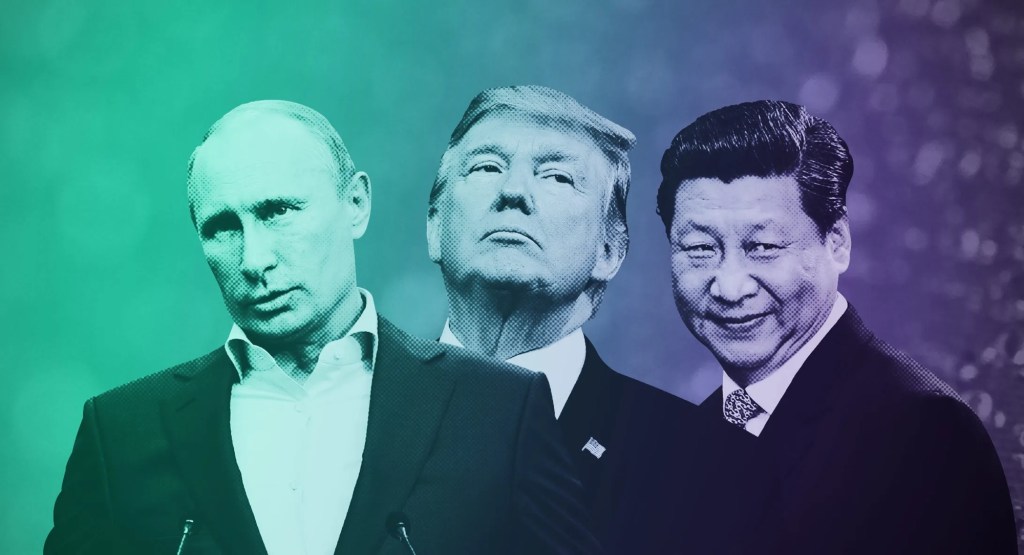
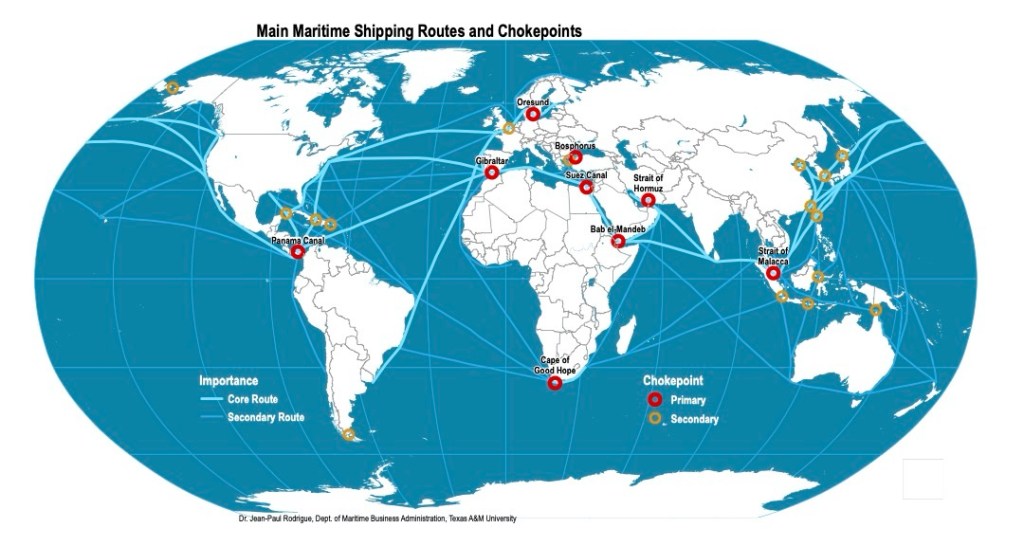






 HUMAN ADVISOR PROJECT