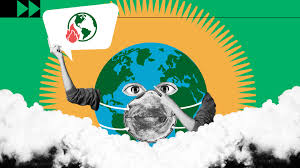
Climate change on the threshold of the 2020s:Consequences and benefits of Covid-19

Between saying and doing lies the sea, in this case an increasingly polluted sea. Forests burn for days, biodiversity is increasingly at risk, in some cities the air is so polluted and almost unbreathable: climate change is a reality now more relevant than ever.

It is not surprising, then, that climate change, environmental degradation and overexploitation of resources are some of the biggest problems facing the international community today of which society at large-especially younger generations-is becoming increasingly aware.

As early as 1997, with the Kyoto Protocol, the United Nations Framework Convention on Climate Change (UNFCCC) laid the groundwork for reducing greenhouse gas emissions. Under the Kyoto mechanisms, parties were ranked according to emission levels, with a corresponding responsibility to reduce them by a given amount; thus, richer countries were given greater responsibility for reducing emissions than poorer countries (which is why, for example, the United States did not support the Protocol).

Despite broad support for the Protocol, global emissions over the past 20 years have grown rapidly, and climate change has remained a major international concern.

Average global temperatures have continued to rise, peaking between 2010 and 2019. The parallel increase in greenhouse gas emissions has contributed considerably to global warming, so much so that the European Earth Observation Program – Copernicus – has designated 2020 as the warmest year ever recorded in Europe.

On average, global temperature has increased by 0.94-1.03°C since the late 19th century, with potentially catastrophic long-term effects on the environment and climate. In order to curb this increase, the international community agreed – at COP21 – on the so-called Paris Agreement, whose aim is to keep global warming below 2°C.

Indeed, since the Paris Agreement places equal responsibilities on all parties, not only poorer countries are in a position where they have less room to develop their economies, but the asymmetries present in the distribution of wealth and political power are increasing. Moreover, because the global economic model is built on competition and growth, which are linked and translated into geopolitical power, it is unlikely that any country will adopt measures in the future that disproportionately damage its position on the world stage. However, despite these issues, the European Union has sought, and still seeks, to position itself as an international leader in issues of climate change resilience and sustainability, as well as to promote the importance of joint environmental action on the international stage and among the European population.

Although the official goal of global environmental policy has long been to limit global warming to below 2°C, a special report by the Intergovernmental Panel on Climate Change (IPCC) on the state of global warming – published in 2018 – indicated that average global temperatures have increased by about 1°C since the pre-industrial era and predicted that average global warming is likely to reach an increase of 1.5°C between 2030 and 2050. The onset of the pandemic crisis in 2020 was certainly a game changer; the temporary slowdown in global greenhouse gas emissions due to significantly reduced economic activity in the first half of the year has, in fact, allowed the Earth to “breathe,” having led to 19 percent reductions in daily emission levels compared to April 2019. This has benefited the reduction of climate change risks, however, it is presumed that this slowdown will be temporary. The environmental benefits of the global economic slowdown due to COVID-19, however, extend far beyond lower greenhouse gas emissions. Indeed, there has also been a significant decline in commercial fishing operations as the instability of global supply chains has prompted a renewed focus on strengthening local supply chains to support community fishers and reduce food insecurity risks. This, in turn, has also had indirect impacts on carbon footprints.

A further feature of the global response to the pandemic has been the willingness of most governments to rely on the advice of doctors and experts; a rationale that many commentators have urged to apply to global responses to climate change as well, arguing that the threats of climate change are far more widespread and enduring.

Francesca Teresi

The psychological fallout of the war in Ukraine

Life has changed in so many ways for us, the Ukrainian people. We have lost the many basic comforts of our lives and our houses, while our beliefs, our opinions, and our attitudes toward living have all changed dramatically. We are fearful of potential nuclear war, and the current war that could, if it continues to escalate, affect people around the world.

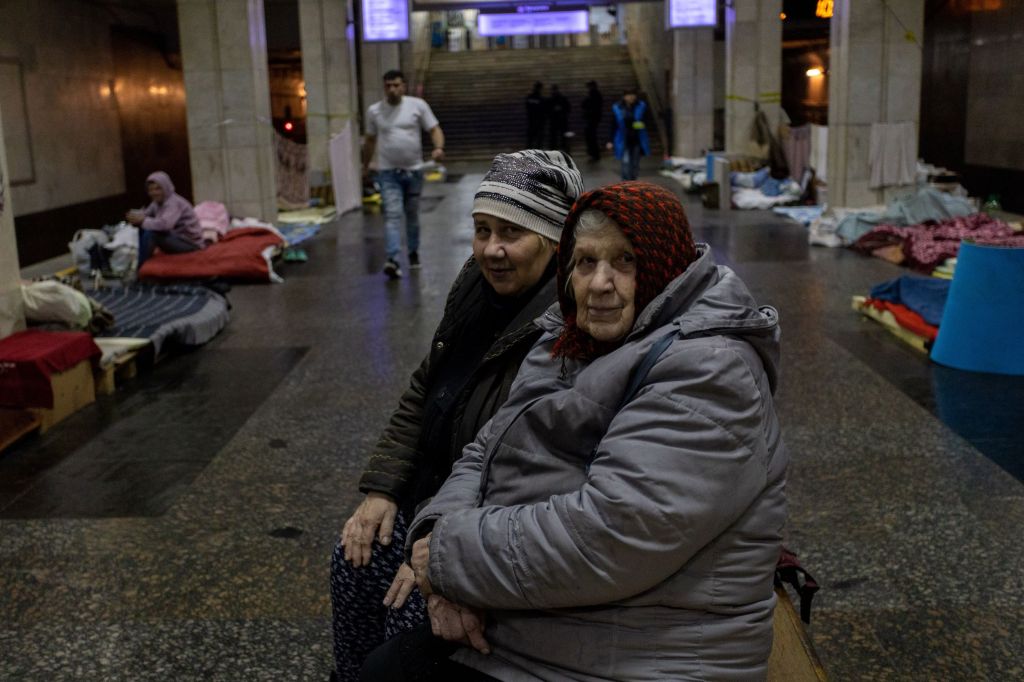
Hundreds of people live in the Kharkiv metro because of the war. Photo by David Peinado / Pexels

As an academic, I view the effects in multiple dimensions. Through personal research, I know the shock and uncertainty Ukrainians are facing; the changes they are experiencing in their psychological wellbeing that have come about from an uncertain existence. At the same time, my everyday life has evolved into something that doesn’t feel real. Immense traffic jams as people flee their homes, people clad in military gear and weapons walking on the streets, explosions and alarms urging us to take shelter from an imminent threat. And we don’t know when any of this will end.

A mental burden we all bear

The Ukrainian people have acted with an extraordinary resilience though. Voluntary organizations have formed quickly to help, some providing defense and patrolling neighborhoods, while others have set up mental health hotlines to provide people with much needed psychological support. Many of those volunteering have been misplaced  thousands of people who have been forced to leave their homes, their jobs, and their lives behind are offering to support millions of people just like them.

It’s hard for many of us to comprehend the immense psychological strength these efforts take. I spent time volunteering at the very beginning of this war, helping those fleeing their homes to find a place to go. On that day, our team met an estimated 35,000 refugees who all needed shelter. But our social infrastructure simply wasn’t built for such a crisis; the organizational skills simply didn’t and don’t exist. We are left with a situation of not being able to help people who are in dire need. Yes, we can provide food and clothes, but where can people go?

For those that do make it to a refugee shelter, life now consists of living in a shared space with others. Often these spaces are massively over-populated, some housing thousands of people. The smells, lack of oxygen, and external noises all present discomforts, while a lack of structure brings its own psychological burden. People now have no purpose. They simply wait for mealtimes while digesting information that further aggravates their stress during their free time.

Worse still, outdated stigmas get in the way of them receiving help. In Ukraine, when you offer psychological support, many people hear the prefix ‘psych’ and immediately shut down any avenues of discussion. They don’t want to be thought of as having ‘mental disorders’ or mentally ‘ill’. They simply will not accept the help you can offer them.

Diversification of reality

The shock of this war is not being felt by everyone in the same way. A phenomenon called ‘diversification of reality’ is currently at play, creating individual narratives to something that from the outside looks like it could only ever exist in one form.

Ukrainians living in war-affected areas of the country, for example, are experiencing something very different to those living in unaffected cities or towns. These different perspectives are more damaging to societal attitudes than you might think. Those who have lived under imminent threat will be dealing with extreme stress and potential post-traumatic stress disorder, while those who haven’t been directly affected will likely be dealing with less severe psychological distress.

Ultimately this means that when refugees from affected areas relocate and settle in unaffected areas, it is difficult for both parties to understand each other. A directly affected refugee may for example feel resentment toward the unaffected, while the unaffected will likely struggle to comprehend or empathize with the affected.

And this isn’t just between strangers: the same goes for families. Husbands or fathers who have been called up to fight will be dealing with entirely different scenarios and emotions to their loved ones. Their loved ones may be living in shelters which, as I described, may mean they are living in extreme discomfort. Men on the front line may also be feeling extreme distress but in a different way. When these family members meet again, their understanding of each other has forever been transformed and may never recover.

Societal division

With all this happening, you are also met with something that war very quickly creates: societal division. You are either an ally or an enemy, and many refugees who aren’t Ukrainian are met with a new-found patriotism from natives who see them as ‘outsiders’. This tension, combined with the fact that personal, financial, and social needs are already severely unmet for many refugees, leads to emotional burnout for everyone involved.

Societal division is further stoked by a curious means. Due to a lack of wanting to face reality, a willingness to close oneself off from the trauma of war, people turn toward any possible method of distraction. Currently, this tends to be television or social media.

With little else to do, people begin to consume this media in large quantities, allowing for a unique characteristic to blossom among society: a virtualization of expertise. As people consume more and more media related to the war, they begin to believe themselves to be experts on what is happening. This becomes a problem if their sources are biased to present a specific version of events. This leads to a variety of experts with a variety of different perspectives on the war, many of whom struggle to comprehend the perspectives of others, leading to societal tension and bitterness.

The will to carry on

You would think it would be easy for individuals to collapse under such a hefty psychological weight. But humans are strong. And I can tell you first hand that this particularly applies the proud people of Ukraine.

I have witnessed people arrive at a refugee shelter after an 18-hour journey on a packed train where they have had to stand for the entire time. The scenes many of them have witnessed and the basic comforts they have been denied are inconceivable to the rest of us. Even as I helped them with their bags, guided their children to a safe place, and reassured them that they were safe, my imagination could never fully understand their trauma. And yet, even in the face of the psychological scars they now undoubtedly bear, they continue to seek to survive.

Building bridges

Even with a fierce will to survive, the people of Ukraine need mental health support now more than ever. And that’s why a team of fellow psychologists and I are in the process of developing a method of allowing people to provide others with mental assurance. A kind of ‘horizontal diplomacy’ that lets people from around the world to act as a virtual shoulder to lean on for the people in Ukraine who have been affected by this war. Because together we can help each other, and together we can make a difference.

Dr Viktor Vus

Published with permission from https://www.talkingmentalhealth.com/

Afghanistan Needs Voice

The international community’s silence on the humanitarian crisis, terrorist activities and human rights in Afghanistan is worrying. We’ve just receive report of many rights violated:

– Closure of schools for girls;

Although it has been almost a month since the start of the schools in Afghanistan, girls above the sixth class are still not allowed to go to school. A number of political parties, civil society groups and tribal councils in Kabul have called on the Taliban to reopen girls schools as soon as possible and not to allow girls’ schools in Afghanistan to remain closed. The political parties, civil society and tribal councils have issued a statement saying that girls education is red line of the people of Afghanistan and the doors of the schools should not remain closed for girls anymore. They also warned that closed schools for girls would force people to migrate, causing severe economic and political damage to the country.

– Two out of three children in Afghanistan do not have access to adequate food:

Business Standard publication wrote an article quoting international foundations about the fact that the raising hunger and poverty in Afghanistan have had a direct negative impact on the lives of children. Two out of three Afghan children do not have access to adequate food: The source said that the current situation is terrible and the families have been forced to sell their children or force them to do hard labor to get dome money for survival expenses. The International Children’s Fund, or Save the Children, also estimates that nearly five million Afghan children are starving. The agency also noted that the current drought in Afghanistan, political and economic conflicts and the suspension of international aid have affected services for children such as education, health and food security. According to various UN agencies, about 95 percent of Afghans do not have enough food, and children and women are the main culprits.

– Security and political crisis:

The wave of suicide attacks and bombings in the country has generated fear of Afghanistan falling into the hands of terrorist groups. There have been several deadly attacks in Kabul, Balkh and Kunduz in the past few days. A recent attack on civilians targeted a mosque in the Imam Sahib district of Kunduz province, killing more than 40 people and injuring more 50 people. Earlier a mosque in Mazar-e-Sharif and an education center in Kabul were drugged, killing and injuring dozens. The killings of Hazaras and Shiites are the latest wave of violence, and the militant groups currently fighting in Afghanistan are slowly spiraling out of control. Over the past 20 years, they have maintained close ties with al Qaeda, ISIS, the Islamic Movement of Uzbekistan, the East Turkestan Islamic Movement, the Pakistani Taliban, and Lashkar-e-Taiba. Theese groups sees opportunity of rebuild their ranks for West and Central Asia.

Afghanistan is once again at the center of jihadi extremism, The firing of 10 missiles by ISIS on Uzbekistan last week sends a message that the groups are trying to destabilize Afghanistan’s neighbors, which destroyed the geopolitical situation of the region. Economic stagnation, harsh sanctions, exclusion of women and girls from human rights, and the legal vacuum will once again turning Afghanistan into an exporter of terrorism. Recent attacks on civilian targets in Afghanistan have been condemned by many countries and political institutions. The United Nations Assistance Mission in Kabul (UNAMA), Amnesty International, Human Rights Watch, the Norwegian delegation to the United Nations, the United Arab Emirates and a number of other governments and international organizations expressed sorrow over the recent attacks, which killed and injured hundreds of civilians. But humanitarian aid and condemnation of incidents alone cannot solve the problem of Afghans, Humanitarian aid is good, it solves the urgent needs of the people, condemnation of incidents is also a moral generator of courage and hope.

But we must not forget that the security situation in Afghanistan, has a direct impact to the whole world, especially on the region. After the war in Ukraine, Afghanistan seems to have been overlooked by the international community, which will have dire consequences in the future. The international community must not allow this country to once again become a breeding ground for terrorism and terrorist groups to once again become a source of profit for pro-government. It is necessary to find permanent solutions to help Afghanistan achieve sustainable economic growth and save the lives of millions of people. It is needed a structure to connect Afghanistan to the world and establish an agreement between Afghanistan and the U.N. about human rights, women rights, freedom of speech and all the values a democracy need, to prevent a humanitarian catastrophe.

Noorwali Khpalwak, Afghan Journalist, Human Advisor Afghanistan

Questo blog non rappresenta una testata giornalistica in quanto viene aggiornato senza alcuna periodicità . Non può pertanto considerarsi un prodotto editoriale ai sensi della legge n° 62 del 7.03.2001. L’autore non è responsabile per quanto pubblicato dai lettori nei commenti ad ogni post.Verranno cancellati i commenti ritenuti offensivi o lesivi dell’immagine o dell’onorabilità di terzi, di genere spam, razzisti o che contengano dati personali non conformi al rispetto delle norme sulla Privacy. Alcuni testi o immagini inserite in questo blog sono tratte da internet e, pertanto, considerate di pubblico dominio; qualora la loro pubblicazione violasse eventuali diritti d’autore, vogliate comunicarlo via email. Saranno immediatamente rimossi.L’autore del blog non è responsabile dei siti collegati tramite link né del loro contenuto che può essere soggetto a variazioni nel tempo. Di ogni contenuto è responsabile solo l’autore del post.
This blog is not a newspaper as it is updated without any periodicity. It cannot therefore be considered an editorial product within the meaning of Law No. 62 of 7.03.2001.The author is not responsible for what is published by the readers in the comments to each post. Comments deemed offensive or harmful to the image or good repute of third parties, of spam, racist or that contain personal data that does not comply with the Privacy Policy will be deleted.Some texts or images included in this blog are taken from the internet and, therefore, considered in the public domain; if their publication violates any copyright, please communicate it by email. They will be removed immediately. The author of the blog is not responsible for linked sites or their content which may be subject to change over time. Only the author of the post is responsible for the content.