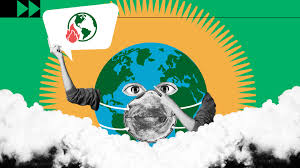
Between saying and doing lies the sea, in this case an increasingly polluted sea. Forests burn for days, biodiversity is increasingly at risk, in some cities the air is so polluted and almost unbreathable: climate change is a reality now more relevant than ever.
It is not surprising, then, that climate change, environmental degradation and overexploitation of resources are some of the biggest problems facing the international community today of which society at large-especially younger generations-is becoming increasingly aware.
As early as 1997, with the Kyoto Protocol, the United Nations Framework Convention on Climate Change (UNFCCC) laid the groundwork for reducing greenhouse gas emissions. Under the Kyoto mechanisms, parties were ranked according to emission levels, with a corresponding responsibility to reduce them by a given amount; thus, richer countries were given greater responsibility for reducing emissions than poorer countries (which is why, for example, the United States did not support the Protocol).
Despite broad support for the Protocol, global emissions over the past 20 years have grown rapidly, and climate change has remained a major international concern.
Average global temperatures have continued to rise, peaking between 2010 and 2019. The parallel increase in greenhouse gas emissions has contributed considerably to global warming, so much so that the European Earth Observation Program – Copernicus – has designated 2020 as the warmest year ever recorded in Europe.
On average, global temperature has increased by 0.94-1.03°C since the late 19th century, with potentially catastrophic long-term effects on the environment and climate. In order to curb this increase, the international community agreed – at COP21 – on the so-called Paris Agreement, whose aim is to keep global warming below 2°C.
Indeed, since the Paris Agreement places equal responsibilities on all parties, not only poorer countries are in a position where they have less room to develop their economies, but the asymmetries present in the distribution of wealth and political power are increasing. Moreover, because the global economic model is built on competition and growth, which are linked and translated into geopolitical power, it is unlikely that any country will adopt measures in the future that disproportionately damage its position on the world stage. However, despite these issues, the European Union has sought, and still seeks, to position itself as an international leader in issues of climate change resilience and sustainability, as well as to promote the importance of joint environmental action on the international stage and among the European population.
Although the official goal of global environmental policy has long been to limit global warming to below 2°C, a special report by the Intergovernmental Panel on Climate Change (IPCC) on the state of global warming – published in 2018 – indicated that average global temperatures have increased by about 1°C since the pre-industrial era and predicted that average global warming is likely to reach an increase of 1.5°C between 2030 and 2050. The onset of the pandemic crisis in 2020 was certainly a game changer; the temporary slowdown in global greenhouse gas emissions due to significantly reduced economic activity in the first half of the year has, in fact, allowed the Earth to “breathe,” having led to 19 percent reductions in daily emission levels compared to April 2019. This has benefited the reduction of climate change risks, however, it is presumed that this slowdown will be temporary. The environmental benefits of the global economic slowdown due to COVID-19, however, extend far beyond lower greenhouse gas emissions. Indeed, there has also been a significant decline in commercial fishing operations as the instability of global supply chains has prompted a renewed focus on strengthening local supply chains to support community fishers and reduce food insecurity risks. This, in turn, has also had indirect impacts on carbon footprints.
A further feature of the global response to the pandemic has been the willingness of most governments to rely on the advice of doctors and experts; a rationale that many commentators have urged to apply to global responses to climate change as well, arguing that the threats of climate change are far more widespread and enduring.
After two years of pandemic, Bill Gates delivers a book that in about three hundred pages can serve as both a warning and a handbook for the future. How to prevent the next pandemic, published on 3 May by the Allen Lane publishing house, has been the talk of the town since its release. The Coronavirus pandemic, in fact, has not yet died out and continues to plague governments around the world with its social, political, health and economic implications, but Mr. Gates is already looking to the future, trying to find an answer to the existential question that also gives this book its title ‘How can we prevent the next pandemic?
The Microsoft founder is firmly convinced – and personally, after reading his book, I find myself agreeing with him – that by learning from the current pandemic and implementing a series of strategies for the future, we can avoid the outbreak of a global health crisis like the one caused by Covid-19.
Based on the shared views of the world’s leading experts and his own experience fighting deadly diseases through the Gates Foundation, in How to prevent the next pandemic Bill Gates clearly and convincingly sets out the importance of being better prepared for the spread of new viruses.
The book consists of nine chapters plus an Introduction and an Afterword, the core of which revolves around the idea that while epidemics are inevitable, pandemics are optional. The world, therefore, in Gates’ thinking should not live in fear of the next pandemic, but should make the right investments for the benefit of all, with a view to making Covid-19 the last pandemic ever.
As many will recall, Bill and Melinda Gates have been committed to fighting the virus from the earliest days, collaborating with experts inside and outside the Gates Foundation who have been fighting infectious diseases for decades. This commitment inevitably led Mr. Gates to reflect on many factors in the pandemic response that could have been faster and more efficient.
Starting with the fact that respiratory viruses, including influenza and coronaviruses, are particularly dangerous because they spread very quickly, Bill Gates explains that the likelihood of a pandemic striking the world is steadily increasing; partly because human beings with urbanisation are encroaching on countless natural habitats and, as a result, interacting with animals more often, creating the conditions that allow a disease to pass from animal to human. In addition to this, another key point to consider is the lack of technical preparedness that all countries around the world have generally shown in responding to the virus. Back in 2015, during a speech at the TED conference entitled “The next epidemic? We’re not ready”, Gates had emphasised the importance of planning for all kinds of scenarios – from vaccine research to the training of health workers – to prevent the outbreak of increasingly dangerous viruses. Reflecting this importance, How to Prevent the Next Pandemic sets out how governments, scientists, companies and individuals can build a system capable of containing the inevitable outbreaks so that they do not turn into pandemics. Specifically, each chapter of the book explains a different step to take in order to be ready, and together, all these steps form a plan to eliminate future pandemics and reduce the likelihood that society will have to go through another Covid-19.
The first chapter traces the importance of learning from the pandemic caused by Covid-19. The starting point is swift action. It is no coincidence that many of the countries that experienced low excess mortality – Australia, Vietnam, New Zealand, South Korea – at the start of the pandemic quickly tested a large portion of the population, abruptly isolated individuals who tested positive and those who had been exposed to the virus, and put in place a plan to track, monitor, and manage cases that crossed their borders. Of course, Gates explains, just as some countries show us what to do and how to act, others show us the opposite. Not everyone did the right thing. Some people refused to wear a mask or vaccinate. Some politicians have denied the seriousness of the disease and avoided implementing the necessary closures to stop the spread of the virus.
Another fundamental point, repeatedly emphasised by the author, is that investing in innovation today will pay off in the future. In this regard, in the second chapter Gates emphasises the importance of putting in place a global body of experts whose task is to study how to respond to diseases that could kill thousands of people. Simply put, the world has never before invested in the mechanisms needed to prevent future pandemics and now is the time to do so.
Today, there are many organisations working to respond to pandemics, the best known being the Global Outbreak Alert and Response Network (GOARN) which does heroic work but does not have the personnel, funds or global mandate to deal with any threat.
What Bill Gates therefore advocates is the creation of a permanent organisation of experts, fully paid and prepared to organise, at any time, a coordinated response to any dangerous outbreak. Mr. Gates proposes to call this group GERM – Global Epidemic Response and Mobilisation – and to fill it with experts from all over the world with a wide range of expertise (epidemiology, genetics, diplomacy, logistics, computer models, communication, etc.) who, when not actively working in the field, are based in the public health agencies of individual countries, in the regional offices of the WHO, and at the headquarters in Geneva.
Several times throughout the book, Gates explains how the most important job of this team would be to help run epidemic response exercises to see if the world is ready for the next big pandemic. However, GERM’s impact would not be limited to stopping pandemics, the group would also improve overall health worldwide, especially in poorer countries.
Another important part of prevention is to study and constantly monitor the spread of different viruses. Indeed, with the right investment and preparation, we will be able to rapidly test large numbers of people during an epidemic in the future. A rapid and efficient response is inevitably linked to the development of digital data collection systems so that public health offices can keep abreast of the situation in their communities, as well as the ability of governments around the world to establish working relationships with infectious disease experts from both the public and private sectors.
In the fourth chapter, the author explores an issue that has plagued countless countries and governments over the past two pandemic years: the need to teach and help people to protect themselves and others. The most useful way we can all do our part is through so-called ‘non-pharmaceutical inventions’ – NPIs – (masks, sanitisers, lockdowns, etc.). The irony of NPIs is that the more useful and effective they are, the easier they are to criticise. However, as our recent past shows, lockdowns – for example – have allowed the world’s economies to recover faster, simply by forcing people to stay indoors and thus saving lives. Of course, not everything that governments have implemented during the current pandemic has been right, nor will it be necessary in the future to repeat every single action taken in the fight against Covid-19. In particular, Gates focuses on the closure of schools, emphasising that schools will not need to be closed for extended periods of time in the future, especially if the world community is able to provide vaccines for everyone within six months.
However, what works for one place or country does not necessarily work for another. Lockdowns are a clear example of this disparity. As explained by the author, social distancing and lockdowns work more for wealthier countries and neighbourhoods; this is because wealthier people tend to work jobs that do not require them to travel and go out to work and because they can afford to stay indoors. Consequently, just as it is important to develop and implement the study of new vaccines, new tests for infectious diseases, and new treatments, it is equally important to work on the inequalities that afflict the global community and that, consequently, slow down the fight against future pandemics. Both locally and globally. A further recurring theme of the book is that the global community does not have to choose between preventing future pandemics or implementing global health: these are in fact mutually reinforcing. The greatest medical breakthrough of this pandemic – and one of the most important in recent decades – was the creation of vaccines against Covid-19. One study found that in the first year they saved more than 1 million lives and prevented 10 million hospitalisations in the US alone. The creation and distribution of the vaccines has been quite rapid, yet there are a number of problems that need to be solved before the next potential pandemic arrives, such as the huge disparity between those who have been vaccinated and those who have not. It is important to remember that the speed with which the vaccines against Covid-19 were implemented depends largely on a matter of ‘luck’. In fact, coronaviruses had already caused two previous outbreaks (SARS and MERS), allowing scientists to learn a great deal about the structure of the virus. In particular, the scientific community – before 2020 – had already identified Covid’s characteristic spike protein – the crown-like spikes of the virus of which countless images have been disseminated – as a potential target for vaccines, so when it came time to create new vaccines, scientists suddenly realised which part of the virus was most vulnerable to attack. In the next outbreak,’ Mr Gates warns us, ‘we might not be so lucky. It could be caused by a virus that scientists have not yet studied.
That is why, according to the author, the global community must adopt a serious plan for the development, production and distribution of new vaccines to prevent another pandemic. However, it is good to keep in mind the difficulty and especially the high costs of such processes. Production alone is a huge challenge: to avoid the inequalities we have seen in Covid-19, the world will have to be able to produce enough vaccines for everyone on the planet within six months of the discovery of a new pathogen (around 8 billion doses for a single-dose vaccine and 16 billion for a two-dose version). To do this, Bill Gates proposes – in chapter six – a four-step plan, starting with accelerating the invention of new vaccines.
All this inevitably requires a lot of practice. ‘Practice, practice, practice’, not surprisingly, is how the author wanted to call the next chapter, in which he advocates a series of simulation plans for the future that will help the global community prevent future pandemics from breaking out. So, just as countless governments spend millions on military exercises, so too should they in the future invest in health exercises that will make us all better prepared should another virus spread. Such exercises will not only be useful in preventing further pandemics, but will also help governments to be prepared in the event of a bioterrorist attack (which is the deliberate use of biological agents – such as viruses, bacteria or toxins – in actions against public safety). The very possibility of a bioterrorism attack is one of the reasons why governments around the world should invest more money in research, study and prevention of diseases that can ‘go global’. Inevitably, investments of public money – as well as the ability to cope with crises – are easier and more possible in richer countries, which greatly contributes to widening inequalities between developed and undeveloped or developing countries. In this regard, Mr. Gates proposes for the immediate future to start decreasing the gaps between rich and poor countries, especially in the area of public health since “where we live and how much money we have determines the chances we have of dying young or becoming wealthy adults”. Narrowing the gaps between wealthier and poorer countries not only helps to eliminate inequities in health and healthcare, but also helps to prevent the spread of new pandemics. Thus, both rich and poor countries benefit.
In conclusion, Bill Gates reminds us that investing public money in planning and preventing new pandemics will make people healthier, save lives and reduce the health gap between rich and poor, even when the world is not actually facing an active epidemic. How to prevent the next pandemic is therefore a handbook, an opportunity not only to prevent things from getting worse, but also to make them better. “We must not give up,” says Mr Gates, “living in perpetual fear of another global catastrophe. But we must be aware of this possibility and be willing to do something about it. I hope the world seizes this moment and invests in the necessary steps to make Covid-19 the last pandemic’.
Personally, I found reading this book extremely interesting, but above all enlightening. Reading How to prevent the next pandemic made me realise how many things are often taken for granted nowadays, especially for people like me who live in developed countries. From the distribution of vaccines to the possibility of finding sanitary devices or swabs, everything is easier if we just leave the house and walk a few metres to find a pharmacy. The Covid-19 pandemic affected every country in the world without distinction, but the ability of governments to respond to it was inevitably related to the type of country (rich or poor, developed or underdeveloped). I believe, therefore, that reading this handbook – as it should be read – can be extremely useful, both for individuals and for governments themselves.
Dopo due anni di pandemia, Bill Gates ci consegna un libro che in circa trecento pagine può fungere sia da monito che da manuale per il futuro. How to prevent the next pandemic, pubblicato lo scorso 3 maggio dalla casa editrice Allen Lane, ha fatto parlare di sé sin dal momento della sua divulgazione. La pandemia da Coronavirus, infatti, non si è ancora estinta e continua ad affliggere i governi di tutto il mondo con le sue implicazioni sociali, politiche, sanitarie ed economiche, ma Mr. Gates rivolge già il suo sguardo al futuro, cercando di trovare una risposta all’esistenziale domanda che da anche il titolo a questo libro “Come possiamo prevenire la prossima pandemia?”. Il fondatore di Microsoft è fermamente convinto – e personalmente, dopo aver letto il suo libro, mi trovo d’accordo con lui – che imparando dall’attuale pandemia e mettendo in atto una serie di strategie per il futuro, potremo evitare il divampare di una crisi sanitaria globale come quella causata dal Covid-19.
Basandosi sulle opinioni condivise dei maggiori esperti mondiali e sulla propria esperienza nella lotta alle malattie mortali attraverso la Fondazione Gates, in How to prevent the next pandemic Bill Gates espone in modo chiaro e convincente l’importanza di essere più preparati al diffondersi di nuovi virus.
Il libro si articola in nove capitoli più un’Introduzione ed una Postfazione, il cui nucleo fondamentale ruota attorno all’idea che se da una parte le epidemie sono inevitabili, dall’altra le pandemie sono facoltative. Il mondo, quindi, nel pensiero di Gates non deve vivere nella paura della prossima pandemia, ma deve fare i giusti investimenti a beneficio di tutti, nell’ottica di rendere il Covid-19 l’ultima pandemia di sempre.
Come molti ricorderanno, Bill e Melinda Gates si sono impegnati nella lotta al virus fin dai primi giorni, collaborando con esperti interni ed esterni alla Fondazione Gates che da decenni combattono le malattie infettive. Questo impegno ha inevitabilmente portato Mr. Gates a riflettere su molti fattori della risposta alla pandemia che avrebbero potuto essere più veloci ed efficienti.
Partendo dal fatto che i virus respiratori, inclusi influenza e coronavirus, sono particolarmente pericolosi poiché si diffondono molto rapidamente, Bill Gates ci spiega che le probabilità che una pandemia colpisca il mondo sono in continuo aumento; in parte perché l’essere umano con l’urbanizzazione sta invadendo innumerevoli habitat naturali e, di conseguenza, interagisce con gli animali più spesso creando le condizioni che permettono ad una malattia di passare dall’animale all’uomo. Oltre a ciò, altro punto fondamentale da considerare è l’assenza di preparazione tecnica che in generale tutti i paesi del mondo hanno dimostrato nel rispondere al virus. Già nel 2015, nel corso di un discorso alla conferenza TED intitolato The next epidemic? We’re not ready, Gates aveva sottolineato l’importanza di pianificare ogni tipo di scenario – dalla ricerca sui vaccini alla formazione degli operatori sanitari – per evitare il divampare di virus sempre più pericolosi. Ricalcando tale importanza, How to prevent the next pandemic espone come governi, scienziati, aziende ed individui possono costruire un sistema in grado di contenere gli inevitabili focolai così da evitare che questi si trasformino in pandemie. Nello specifico ogni capitolo del libro spiega un diverso passo da compiere per essere pronti e, nell’insieme, tutti questi passi costituiscono un piano per eliminare future pandemie e ridurre le probabilità che la società debba attraversare un altro Covid-19.
Il primo capitolo ricalca l’importanza dell’imparare dalla pandemia causata dal Covid-19. Il punto di partenza è costituito da un’azione repentina. Non a caso, molti dei paesi che hanno avuto un basso eccesso di mortalità – Australia, Vietnam, Nuova Zelanda, Corea del Sud – all’inizio della pandemia hanno testato rapidamente una grande parte della popolazione, isolato repentinamente gli individui risultati positivi e quelli che erano stati esposti al virus, e messo in atto un piano per tracciare, sorvegliare e gestire i casi che avevano attraversato i loro confini. Ovviamente – spiega Gates – così come alcuni paesi ci mostrano cosa fare e come agire, altri ci mostrano il contrario. Non tutti hanno fatto la giusta cosa. Alcune persone si sono rifiutate di indossare la mascherina o di vaccinarsi. Alcuni politici hanno negato la gravità della malattia ed evitato di mettere in atto le chiusure necessarie ad arrestare la diffusione del virus.
Un altro punto fondamentale, più volte rimarcato dall’autore, è che investire nell’innovazione oggi ripagherà in futuro. A questo proposito, nel secondo capitolo Gates sottolinea l’importanza di mettere in campo un corpo globale di esperti il cui compito è studiare come rispondere a malattie che potrebbero uccidere migliaia di persone. In poche parole, il mondo non ha mai investito prima nei meccanismi necessari a prevenire future pandemie ed ora è il momento di farlo.
Oggi, le organizzazioni che lavorano per rispondere alle pandemie sono molte, la più nota è sicuramente la Global Outbreak Alert and Response Network (GOARN) che svolge un lavoro eroico senza tuttavia avere il personale, i fondi o il mandato globale necessari ad affrontare ogni minaccia.
Ciò che dunque Bill Gates auspica è la creazione di un’organizzazione permanente di esperti, completamente retribuiti e preparati ad organizzare, in qualsiasi momento, una risposta coordinata ad un’eventuale epidemia pericolosa. Mr. Gates propone di chiamare questo gruppo GERM – Global Epidemic Response and Mobilization – e di riempirlo di esperti provenienti da tutto il mondo con un’ampia gamma di competenze (epidemiologia, genetica, diplomazia, logistica, modelli informatici, comunicazione, ecc..) i quali, quando non lavorano attivamente sul campo, sono basati nelle agenzie di salute pubblica dei singoli Paesi, negli uffici regionali dell’OMS e nella sede centrale di Ginevra.
A più riprese nel corso del libro, Gates spiega come il lavoro più importante di questo team sarebbe quello di aiutare a gestire le esercitazioni di risposta alle epidemie per verificare se il mondo è pronto per la prossima grande pandemia. Tuttavia, l’impatto del GERM non si limiterebbe a fermare le pandemie, il gruppo, infatti, migliorerebbe anche la salute generale in tutto il mondo, soprattutto nei Paesi più poveri.
Un’altra parte importante della prevenzione è rappresentata dallo studiare e tenere sotto controllo costante il diffondersi dei diversi virus. Infatti, con i giusti investimenti e la giusta preparazione in futuro, durante un’epidemia, saremo in grado di testare rapidamente un elevato numero di persone. Una risposta rapida ed efficiente è inevitabilmente connessa allo sviluppo di sistemi di raccolta dati digitali così da permettere agli uffici di salute pubblica di essere sempre aggiornati sula situazione della propria comunità, nonché alla capacità dei governi di tutto il mondo di stabilire relazioni lavorative con esperti di malattie infettive provenienti sia dal settore pubblico che da quello privato.
Nel quarto capitolo, l’autore approfondisce una tematica che nel corso di questi ultimi due anni di pandemia ha afflitto innumerevoli paesi e governi: la necessità di insegnare ed aiutare le persone a proteggere sé stesse e gli altri. Il modo più utile con cui tutti noi possiamo fare la nostra parte è costituito dalle cosiddette “invenzioni non farmaceutiche” – NPI – (mascherine, igienizzanti, lockdown, ecc..). L’ironia delle NPI è che più sono utili ed efficaci, più è facile che vengano criticate. Tuttavia, come il nostro recente passato dimostra, i lockdown – ad esempio – hanno permesso di alle economie mondiali di riprendersi più velocemente, semplicemente obbligando le persone a stare in casa e salvando così delle vite. Ovviamente, non tutto ciò che i governi hanno messo in atto nel corso dell’attuale pandemia è stato giusto, né tanto meno sarà necessario in futuro ripetere ogni singola azione compiuta nella lotta al Covid-19. In particolare, Gates si focalizza sulla chiusura delle scuole, sottolineando come per l’avvenire non sarà necessario chiuderle per periodi di tempo prolungati, soprattutto se la comunità mondiale sarà in grado di fornire vaccini per tutti nel corso di 6 mesi.
Tuttavia, ciò che funziona per un posto o un paese non funziona necessariamente anche per un altro. I lockdown sono un chiaro esempio di tale disparità. Come spiegato dall’autore, il distanziamento sociale e le chiusure forzate funziona maggiormente per i paesi ed i quartieri più ricchi; questo perché le persone più ricche fanno tendenzialmente lavori che non li obbligano a spostarsi e ad uscire per andare a lavorare e perché possono permettersi di stare chiusi in casa. Di conseguenza, così come è importante sviluppare ed implementare lo studio di nuovi vaccini, nuovi test per le malattie infettive e nuovi trattamenti, allo stesso modo è importante lavorare sulle disparità che affliggono la comunità globale e che, di conseguenza, rallentano il contrastare future pandemie. Sia a livello locale, sia a livello globale.
Un ulteriore tematica ricorrente del libro è che la comunità globale non deve scegliere se prevenire le future pandemie o implementare la salute globale: queste infatti si rinforzano a vicenda.
La più grande scoperta medica di questa pandemia – nonché una delle più importanti degli ultimi decenni – è stata la creazione dei vaccini contro il Covid-19. Uno studio ha rilevato che nel primo anno hanno salvato più di 1 milione di vite e impedito 10 milioni di ricoveri solo negli Stati Uniti.
La creazione e la distribuzione dei vaccini è stata piuttosto rapida, tuttavia ci sono una serie di problemi che necessitano di essere risolti prima che arrivi la prossima potenziale pandemia, come l’enorme disparità tra chi è stato vaccinato e chi no.
È importante ricordare che la rapidità con cui i vaccini contro il Covid-19 sono stati messi in atto dipende in buona parte da una questione di “fortuna”. I coronavirus, infatti, avevano già causato due precedenti epidemie (SARS e MERS), consentendo agli scienziati di imparare molto sulla struttura del virus. In particolare, la comunità scientifica – prima del 2020 – aveva già identificato la caratteristica proteina spike del Covid – le punte del virus simili a una corona di cui sono state diffuse innumerevoli immagini – come un potenziale bersaglio per i vaccini, così quando è arrivato il momento di creare nuovi vaccini, gli scienziati hanno repentinamente capito quale parte del virus era più vulnerabile all’attacco. Nella prossima epidemia – ci mette in guardia Mr. Gates – potremmo non essere così fortunati. Potrebbe essere causata da un virus che gli scienziati non hanno ancora studiato.
Ecco perché, secondo l’autore, la comunità globale deve adottare un piano serio per lo sviluppo, la produzione e la distribuzione di nuovi vaccini per prevenire un’altra pandemia. Tuttavia, è bene tenere a mente la difficoltà e soprattutto i costi elevati di tali processi. La sola produzione è una sfida enorme: per evitare le disuguaglianze che abbiamo visto nel Covid-19, il mondo dovrà essere in grado di produrre vaccini sufficienti per tutti gli abitanti del pianeta entro sei mesi dalla scoperta di un nuovo agente patogeno (circa 8 miliardi di dosi per un vaccino a dose singola e 16 miliardi per una versione a due dosi). Per fare questo Bill Gates propone – nel sesto capitolo – un piano in quattro fasi, a partire dall’accelerazione dell’invenzione di nuovi vaccini.
Tutte ciò necessita inevitabilmente di molta pratica. “Practice, practice, practice”, non ha caso così l’autore ha voluto chiamare il capitolo successivo, nel quale auspica per il futuro una serie di piani di simulazione che aiuteranno la comunità globale ad evitare l’esplodere di future pandemie. Dunque, così come innumerevoli governi spendono milioni in esercitazioni militari, allo stesso modo dovranno in futuro investire in esercitazioni sanitarie che ci renderanno tutti più preparati qualora un altro virus dovesse diffondersi. Tali esercitazioni saranno utili non solo a prevenire ulteriori pandemie, bensì aiuteranno anche i governi ad essere preparati nel caso di attacchi di Bioterrorismo (che consiste nell’utilizzo intenzionale di agenti biologici – come virus, batteri o tossine – in azioni contro l’incolumità pubblica). Proprio la possibilità di un attacco di bioterrorismo è una delle ragioni per cui i governi di tutto il mondo dovrebbero investire più denaro nella ricerca, nello studio e nella prevenzione di malattie che possono “diventare globali”. Inevitabilmente, gli investimenti di denaro pubblico – così come la capacità di affrontare le crisi – sono più semplici e possibili nei paesi più ricchi, fatto che contribuisce enormemente ad acuire le disparità tra paesi sviluppati e paesi non sviluppati o in via di sviluppo. A questo proposito Mr. Gates propone per l’immediato futuro di cominciare a diminuire le distanze tra i paesi ricchi e i paesi poveri, soprattutto in ambito di salute pubblica dato che “dove viviamo e quanti soldi abbiamo, determinano le possibilità che abbiamo di morire giovani o diventare adulti abbienti”. Diminuire le distanze tra i paesi più o meno abbienti non solo contribuisce ad annullare le ingiustizie in termini di salute e sanità, ma aiuta anche a prevenire il diffondersi di nuove pandemie. Dunque, ne beneficiano sia i paesi ricchi sia i paesi poveri.
In conclusione, Bill Gates ci ricorda che investire denaro pubblico nel pianificare e nel prevenire nuove pandemie renderà le persone più sane, salverà vite e ridurrà il divario sanitario tra ricchi e poveri, anche quando il mondo non sia effettivamente di fronte a un’epidemia attiva. How to prevent the next pandemic rappresenta dunque un manuale, un’opportunità non solo per impedire che le cose peggiorino, ma anche per migliorarle. “Non dobbiamo arrenderci – dice Mr. Gates – a vivere nella perenne paura di un’altra catastrofe globale. Ma dobbiamo essere consapevoli di questa possibilità ed essere disposti a fare qualcosa. Spero che il mondo colga questo momento e investa nei passi necessari per rendere il Covid-19 l’ultima pandemia”.
Personalmente ho trovato la lettura di questo libro estremamente interessante, ma soprattutto illuminante. Leggere How to prevent the next pandemic mi ha fatto capire quante cose vengono spesso date per scontate oggigiorno, specialmente per chi come me vive in paesi sviluppati. Dalla distribuzione dei vaccini alla possibilità di trovare dispositivi sanitari o tamponi, tutto è più semplice se ci basta uscire di casa e fare pochi metri per trovare una farmacia. La pandemia da Covid-19 ha colpito tutti i paesi del mondo senza distinzioni, ma la capacità dei governi di rispondere a tale crisi è stata inevitabilmente correlata alla tipologia di paese (ricco o povero, sviluppato o sottosviluppato). Credo, dunque, che la lettura di questo manuale – come tale dovrebbe essere letto – possa rivelarsi estremamente utile, tanto per i singoli individui quanto per i governi stessi.
Life has changed in so many ways for us, the Ukrainian people. We have lost the many basic comforts of our lives and our houses, while our beliefs, our opinions, and our attitudes toward living have all changed dramatically. We are fearful of potential nuclear war, and the current war that could, if it continues to escalate, affect people around the world.
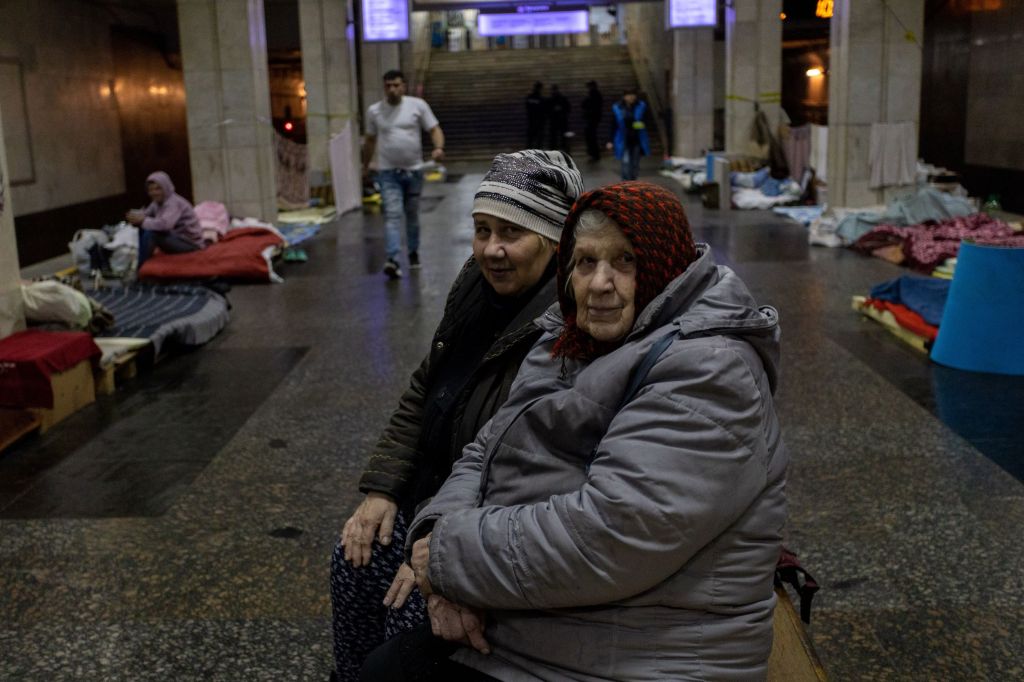
Hundreds of people live in the Kharkiv metro because of the war. Photo by David Peinado / Pexels
As an academic, I view the effects in multiple dimensions. Through personal research, I know the shock and uncertainty Ukrainians are facing; the changes they are experiencing in their psychological wellbeing that have come about from an uncertain existence. At the same time, my everyday life has evolved into something that doesn’t feel real. Immense traffic jams as people flee their homes, people clad in military gear and weapons walking on the streets, explosions and alarms urging us to take shelter from an imminent threat. And we don’t know when any of this will end.
A mental burden we all bear
The Ukrainian people have acted with an extraordinary resilience though. Voluntary organizations have formed quickly to help, some providing defense and patrolling neighborhoods, while others have set up mental health hotlines to provide people with much needed psychological support. Many of those volunteering have been misplaced thousands of people who have been forced to leave their homes, their jobs, and their lives behind are offering to support millions of people just like them.
It’s hard for many of us to comprehend the immense psychological strength these efforts take. I spent time volunteering at the very beginning of this war, helping those fleeing their homes to find a place to go. On that day, our team met an estimated 35,000 refugees who all needed shelter. But our social infrastructure simply wasn’t built for such a crisis; the organizational skills simply didn’t and don’t exist. We are left with a situation of not being able to help people who are in dire need. Yes, we can provide food and clothes, but where can people go?
For those that do make it to a refugee shelter, life now consists of living in a shared space with others. Often these spaces are massively over-populated, some housing thousands of people. The smells, lack of oxygen, and external noises all present discomforts, while a lack of structure brings its own psychological burden. People now have no purpose. They simply wait for mealtimes while digesting information that further aggravates their stress during their free time.
Worse still, outdated stigmas get in the way of them receiving help. In Ukraine, when you offer psychological support, many people hear the prefix ‘psych’ and immediately shut down any avenues of discussion. They don’t want to be thought of as having ‘mental disorders’ or mentally ‘ill’. They simply will not accept the help you can offer them.
Diversification of reality
The shock of this war is not being felt by everyone in the same way. A phenomenon called ‘diversification of reality’ is currently at play, creating individual narratives to something that from the outside looks like it could only ever exist in one form.
Ukrainians living in war-affected areas of the country, for example, are experiencing something very different to those living in unaffected cities or towns. These different perspectives are more damaging to societal attitudes than you might think. Those who have lived under imminent threat will be dealing with extreme stress and potential post-traumatic stress disorder, while those who haven’t been directly affected will likely be dealing with less severe psychological distress.
Ultimately this means that when refugees from affected areas relocate and settle in unaffected areas, it is difficult for both parties to understand each other. A directly affected refugee may for example feel resentment toward the unaffected, while the unaffected will likely struggle to comprehend or empathize with the affected.
And this isn’t just between strangers: the same goes for families. Husbands or fathers who have been called up to fight will be dealing with entirely different scenarios and emotions to their loved ones. Their loved ones may be living in shelters which, as I described, may mean they are living in extreme discomfort. Men on the front line may also be feeling extreme distress but in a different way. When these family members meet again, their understanding of each other has forever been transformed and may never recover.
Societal division
With all this happening, you are also met with something that war very quickly creates: societal division. You are either an ally or an enemy, and many refugees who aren’t Ukrainian are met with a new-found patriotism from natives who see them as ‘outsiders’. This tension, combined with the fact that personal, financial, and social needs are already severely unmet for many refugees, leads to emotional burnout for everyone involved.
Societal division is further stoked by a curious means. Due to a lack of wanting to face reality, a willingness to close oneself off from the trauma of war, people turn toward any possible method of distraction. Currently, this tends to be television or social media.
With little else to do, people begin to consume this media in large quantities, allowing for a unique characteristic to blossom among society: a virtualization of expertise. As people consume more and more media related to the war, they begin to believe themselves to be experts on what is happening. This becomes a problem if their sources are biased to present a specific version of events. This leads to a variety of experts with a variety of different perspectives on the war, many of whom struggle to comprehend the perspectives of others, leading to societal tension and bitterness.
The will to carry on
You would think it would be easy for individuals to collapse under such a hefty psychological weight. But humans are strong. And I can tell you first hand that this particularly applies the proud people of Ukraine.
I have witnessed people arrive at a refugee shelter after an 18-hour journey on a packed train where they have had to stand for the entire time. The scenes many of them have witnessed and the basic comforts they have been denied are inconceivable to the rest of us. Even as I helped them with their bags, guided their children to a safe place, and reassured them that they were safe, my imagination could never fully understand their trauma. And yet, even in the face of the psychological scars they now undoubtedly bear, they continue to seek to survive.
Building bridges
Even with a fierce will to survive, the people of Ukraine need mental health support now more than ever. And that’s why a team of fellow psychologists and I are in the process of developing a method of allowing people to provide others with mental assurance. A kind of ‘horizontal diplomacy’ that lets people from around the world to act as a virtual shoulder to lean on for the people in Ukraine who have been affected by this war. Because together we can help each other, and together we can make a difference.
Abortion is still a highly contested issue, whether for patriarchal, religious or social reasons. Latin American women are still fighting for their rights. The message is clear: Women will have the decision about their bodies. The aim of the movement is to put on the agenda the situation of women in relation to their reproductive health, which needs reform. Also, the importance of having sexual education in schools.
Under the motto of legal, safe and free abortion; Latin American women protest in favor of abortion, pointing to as a precedent the history of many women who have aborted in secrecy and precariousness (most of them died). Likewise, abortion is criminalized in many countries of the continent, leaving women in a state of vulnerability.
Status of the legalization of abortion in Latin America
Actually, only in 5 countries is the interruption of pregnancy legalized (within the established deadlines) :
Colombia
Argentina
Uruguay
Cuba
Puerto Rico
In the case of Mexico, it is only legalized in the cities of Mexico City and Oaxaca
In the rest of the Latin American countries, abortion is only allowed in specific cases: when the life of the mother or the baby is in danger, or in cases of sexual abuse; with the exception of countries such as Honduras, El Salvador, Haiti and the Dominican Republic, where abortion is criminalized in its entirety.
The Green Wave Movement
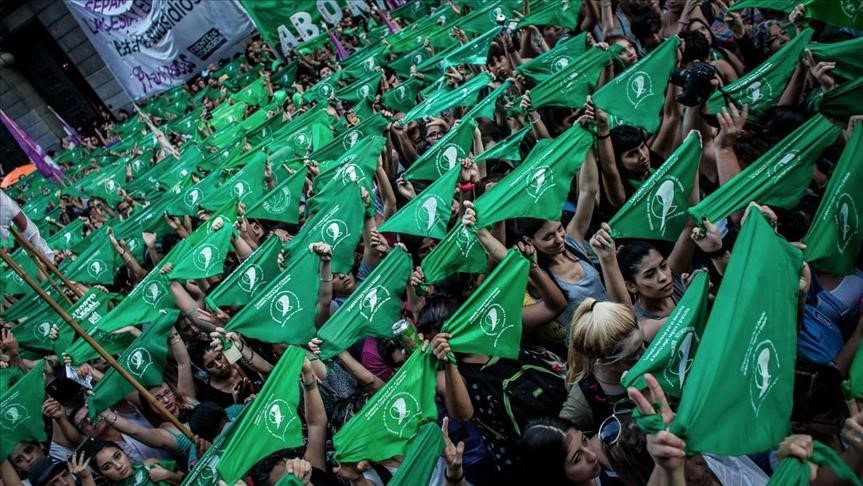
Under a perspective of intersectional and anti-capitalist feminism, the movement of the Green Wave arises. This movement originates in Argentina, where under the use of green scarves and with the participation of women of all ages and all social strata, legal, safe and free abortion is collectively demanded in the nation.
The “Argentinian Green Wave” influenced women’s collectives in other Latin American countries, where women’s collectives hold performances and songs where not only the legalization of abortion is demanded, but also slogans such as “the patriarchy is going to fall” are exposed. Thus generating a new social movement and debating in various spaces on the subject, but above all, generating an awakening in many women, who for the first time join a collective struggle in defense of their rights and the rights of thousands of women.
The discourses of the Green Wave not only influence thousands of women on the continent, but also generate new practices in the community, through which a community of struggle can be observed in an area where women survive on a daily basis and whose rights are not protected for centuries. The speech of “que sea ley” and “el patriarcado se va a caer” has come to stay until the fight is victory.
Movement Challenges
In Latin America, there is a strong presence not only of the Catholic Church, but also of Christian and Evangelical churches. These churches still have social influence and are against the legalization of abortion. Although there are secular states in Latin America, there are also conservative societies. Essentially, this creates pressure in society for policies that limit women’s rights.
Latin American women not only face this problem, but also problems with patriarchal structures. In a continent where there is wide inequality and those who are affected are women from low social strata, as well as women who are victims of a patriarchy that tries to dominate them the main challenge is to put women’s reproductive rights on the agenda, and in an attempt to make visible the need for public policies that address the issue, the community unites women from all nations, with the hope that tomorrow abortion will be legal for all.
The EU’s closest neighbor is undoubtedly Africa, with which there are deep historical and cultural ties.
A strong partnership is needed here, as economic, political, social, climate and environmental changes in Africa are creating new perspectives and new challenges. New perspectives include low-cost renewable energy, green transition, low-carbon economy, blue economy and circular economy. There are also key challenges: climate change, environmental degradation and pollution.
This is why Africa and the EU must work together to address challenges and opportunities by building a partnership that promotes, among other things, sustainable livelihoods, the fight against climate change, sustainable economic growth based on healthy ecosystems, access to sustainable energy and the protection of biodiversity and natural resources. This partnership is therefore crucial for the achievement of the goals set by the Paris Agreement (December 2015) and the 2030 Agenda (September 2015).
Over the past two decades, the African continent has experienced significant economic and demographic growth, making Africa a dynamic and young population. Alongside this growth, there is a clear need for reliable and sustainable energy sources that can provide Africa with the necessary supplies. There is no doubt that the African continent has great potential in terms of renewable energy, however today only 2% of energy comes from renewable sources. The limits to the development of these technologies in Africa are linked as much to internal political issues as to relations with regional and international actors.
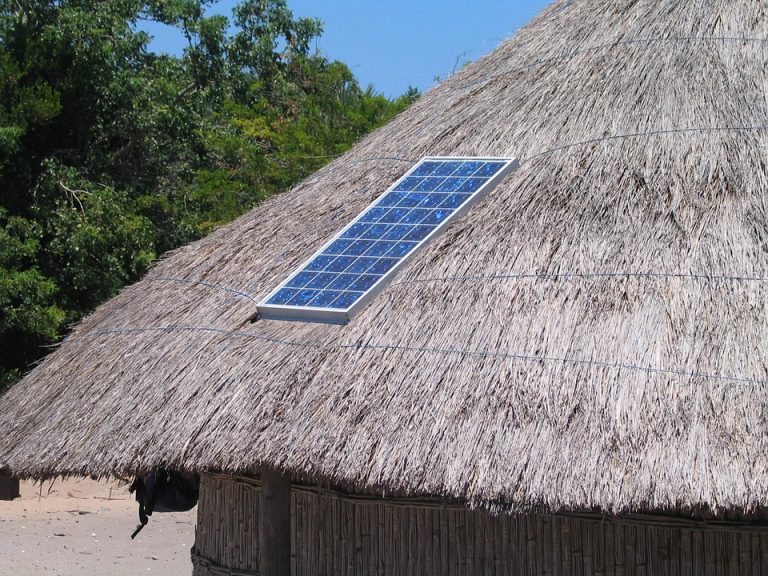
As a fast-growing continent, Africa has an extremely high demand for energy, which explains the high-energy potential of a continent where renewable energy sources are used in many countries to meet local energy needs. Small wind, solar and geothermal power plants are present in many places in Africa and provide energy in remote areas where there is no distribution network. However, studies show that about 50% of renewable energy investments in Africa between 2009 and 2018 came from Foreign Direct Investment making the African renewables sector particularly dependent on foreign financiers. Undoubtedly, such investments have grown over the years, but they still remain few when compared to those directed towards other continents such as Asia. This lack of investment is rooted in certain political and regulatory constraints that make investment in Africa unstable and risky, discouraging international players. It is no coincidence that, despite the growing demand for energy and the huge potential for renewable electricity generation on the African continent, investment in renewable energy in Africa is still limited and highly dependent on internal, regional and international political and economic variables.
Right time in the right place
Africa has significant advantages and prospects for renewable energy because of its abundant sun, wind, and geothermal resources.
Mineral resources are rich in Central and Southern Africa, which are critical for the development of electric batteries, wind turbines, and other low-carbon technology.
Only 2% of worldwide renewable energy investments were made in Africa over the last two decades, with considerable regional differences.
Africa employs less than 3% of the world’s renewable energy workers.
In 2019, the electrification rate in Sub-Saharan Africa remained stable at 46%, with 906 million people still lacking access to clean cooking fuels and technologies.
For its part, on 15 April 2021, the European Union supported the initialing of a new partnership between the EU and the members of ACP (Africa, Caribbean and Pacific). This agreement provides for a ‘3+1’ structure, a common basis for all 88 countries involved, setting out values and priorities, complemented by three different regional protocols (one for Africa, one for the Caribbean and one for the Pacific). The 20-year agreement provides for the achievement of the goals set out in the European Green Deal, the SDGs of the 2030 Agenda and the Paris Agreement. Moreover, precisely in relation to African demand for renewable energy, the EU has supported the African-led “African Renewable Energy Initiative” (AREI), which aims to accelerate and increase the exploitation of the continent’s huge renewable energy potential (10GW by 2020 and 300GW by 2030). The EU has a strategic interest in supporting this initiative, whose objectives, identified in the Partnership for Green Transition and Energy Access included in the future comprehensive strategy for Africa, are aligned with the European Green Deal.
El pasado 08 de marzo, el Congreso Peruano, promulgó la Ley 31168 (la cual fue aprobada el día 14 de abril): Ley que promueve el empoderamiento de las mujeres rurales e indígenas, el cual tiene como objetivo fortalecer, a través de acciones afirmativas, el empoderamiento, la igualdad de oportunidades y el desarrollo integral de las mujeres rurales e indígenas, potenciando su autonomía económica, cultural, social, a través de la capacitación y el financiamiento productivo[i].
Al implementar esta ley, se busca que las mujeres peruanas de zonas rurales fortalezcan sus capacidades y de esta manera puedan acceder a mayores oportunidades de desarrollo económico y social; asimismo, las mismas pueden ser más independientes en diversos ámbitos, siendo protagonistas en las cadenas productivas rurales, e incluso, en temas de interés actual como la producción agrícola y el desarrollo sostenible, dentro de un mundo rural en el cual, por tradición, el hombre es el encargado de liderar la cadena económica y social de cada grupo social.
Mujeres y empoderamiento
Actualmente, aproximadamente hay más de 3 millones 500 mil mujeres que habitan en las zonas rurales del país, según datos del Instituto Nacional de Estadística e Informática (INEI). Las mujeres rurales e indígenas cumplen un papel importante en el desarrollo de sus comunidades, de sus familias y como proveedoras de alimentación ganadera y agricultora a nivel nacional.
Abrir en discusión la desigualdad de género existente y empoderar a las mujeres en las cadenas productivas, aporta a brindar herramientas para su crecimiento a través de capacitaciones, debido a que este es un avance para ir reduciendo la brecha existente de género y que tanto las empresas privadas que realicen proyectos de esta índole como el sector público que genera políticas sociales, asegurando el empoderamiento de la mujer rural e indígena, el acceso a una igualdad de oportunidades rompiendo un sistema patriarcal en el cual la mujer ya empieza a tener mayor protagonismo, asegurando su desarrollo sostenible en el tiempo.
Visibilizar la labor que realizan las mujeres en zonas rurales a través de su empoderamiento, contribuiría a que la mujer tome mayor acción en el desarrollo económico rural, mejorando de esta manera los beneficios de las mismas y siendo agentes de cambio para el cambio de las estructuras rurales (pobreza, desigualdad, accesos a servicios, etc.)
Reflexión
Parte de los objetivos de la ODS 5 (Lograr la igualdad entre los géneros y empoderar a todas las mujeres y las niñas) son: a. Emprender reformas que otorguen a las mujeres igualdad de derechos a los recursos económicos, así como acceso a la propiedad y al control de la tierra y otros tipos de bienes, los servicios financieros, la herencia y los recursos naturales, de conformidad con las leyes nacionales, b. Mejorar el uso de la tecnología instrumental, en particular la tecnología de la información y las comunicaciones, para promover el empoderamiento de las mujeres, y c. Aprobar y fortalecer políticas acertadas y leyes aplicables para promover la igualdad de género y el empoderamiento de todas las mujeres y las niñas a todos los niveles.
Las mujeres rurales e indígenas realizan actividades de diversos tipos, entre ellas son labradoras de terrenos agrícolas. A su vez, garantizan en muchos casos la alimentación de sus comunidades y son activas voces frente a los cambios sociales y climáticos que se viven actualmente.
Históricamente, el sistema patriarcal en la sociedad peruana es la base de diversos contextos sociales, lo cual se ha derivado en existentes brechas de desigualdad entre hombres y mujeres en múltiples sistemas de producción. En las zonas rurales e indígenas, muchos derechos de las mujeres son vulnerados a través de la inequidad de accesos y fortalecimiento en contexto sociales, económicos, políticos y culturales, lo cual se ve representado en la falta de acceso a fortalecimiento de oportunidades y capacitaciones que podría dar herramientas para mejorar la productividad de las mujeres rurales.
Empoderando a las mujeres rurales e indígenas (Y también abriendo un camino a las niñas rurales) no sólo cumpliría el ODS 5, sino también generaría que los derechos de las mujeres se cumplan, y que sean incluídas en un espacio del cuál ya son parte, sin embargo, son invisibilizadas, generando que no solo sean incluidas, sino también las niñas sientan que se está abriendo camino a una nueva sociedad en la cual serán consideradas y podrán tener las mismas oportunidades que los hombres.
El Gobierno Peruano no sólo debe asegurar el cumplimiento de la Ley 31168, sino también debe generar mayor políticas públicas hacia un sector que no ha tenido mayor voz en un país no solo patriarcal, sino también desigual entre clases sociales.
[i] Diario Oficial “El Peruano”. Lima: Congreso de la República (15.03.2021). Ley Nº 31168
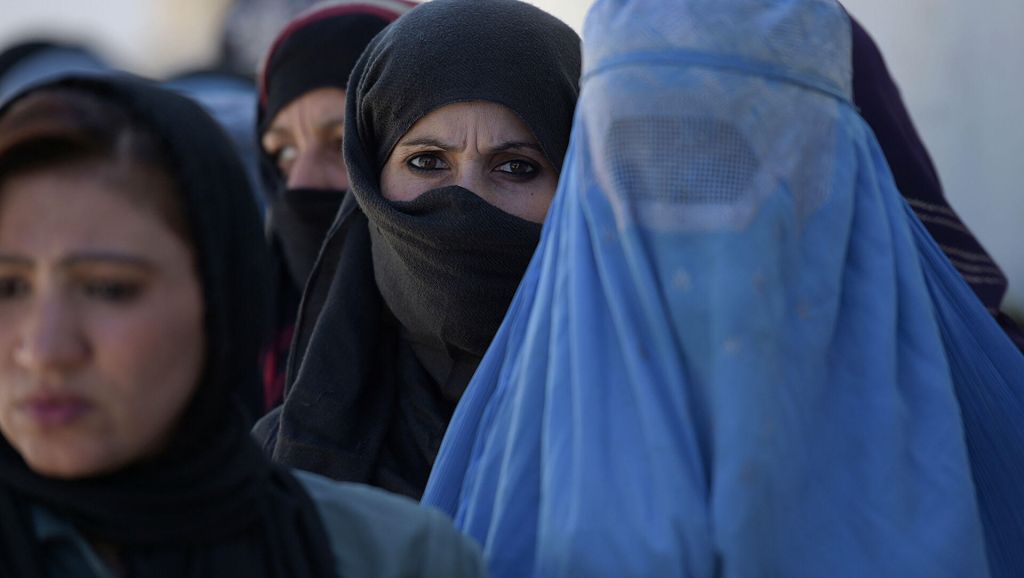
In Afghanistan, as almost everywhere in the world, a person’s family is the most important part of his or her identity in society, and a family’s honor is a key factor in how other families evaluate its social standing. Women’s rights and fairness, which are components of human rights, are supported by Islamic law and philosophy, which has its goals in the realization of justice, fairness, and dignity for all people. Afghan legal documents likewise supports gender equality and fairness, as seen by the 1964 Constitution.
In a general view of the situation of women in Afghanistan, in the first step, I consider it necessary to have a comparative view in order to clarify the situation of women before and after the Islamic Emirate. Has imposed a history on the women of Afghanistan. Also, at the macro level, there are three basic questions in the discussion of the current of feminism; During the reign of Amir Abdur Rahman Khan (r. 1880–1901), a women’s rights movement arose in Afghanistan.
First: Why did women get into this situation?
Secondly: How did she become isolated?
Thirdly: What were the consequences for women?
These are the three basic questions of the current of feminism, the answer to which can be found in three waves, which here is not an opportunity to examine the waves of formation of the current of feminism, and it must be said that its head is the beliefs of men and beliefs that It has historically perpetrated oppression and discrimination against women, but so has it in Afghanistan. In ancient times, the view was that women who could not go hunting and could not provide alimony, and then the thesis of practical work and work outside the home was pushed out and forced to go home and spend time working around the house arena.
Tribal laws and punishments have frequently taken precedent over Islamic and constitutional laws in determining gender roles, particularly in rural areas where family hierarchies exist. Women’s positions and rights have been jeopardized by tribal power maneuvers, honor structures, and inter-tribe displays of patriarchal control. Hence, making men’s historical views spread to everyone.
In Afghanistan values and culture are subject to belief and religion, and it depends on the religious practices whether religion is tolerant or not.
Afghan women today
Women’s rights were significantly improving in Afghanistan over some years when relatively few national and international institutions and authorities were active in defending and protecting women’s rights. Women were present in government offices, political jobs, social activities, and there were the largest conferences and programs for women. Women were allowed to talk freely because their presence in administrative positions and women voters in elections.
However, while these advantages and possibilities were available to women in Kabul, women and girls in Afghanistan’s countryside remained primarily trapped in religious practices with little news of political and civic activity rights. There was no work, even to the point where their basic human rights were unknown, and for the past two decades, the space for Afghan women and girls has been generally open, with opportunities for growth and education, yet all these efforts to attain rights were gone and dreams became unachievable with the arrival of the current regime which is conservative.
Women’s faces have been barred from all forms of media, including advertisements and television; schools for girls have been closed; and women are not allowed to leave their houses without a male companion.
According to a 2019 poll performed by UN Women and Promundo and summarized by Reuters, only 15% of Afghan males feel women should be permitted to work after marriage, and two-thirds worry that Afghan women have “too many rights.”
There appears to be little hope that conditions will improve in the near future, given the Taliban’s failure to follow through on their first promises regarding women’s rights. The only way out is to persuade the rest of the world of the magnitude of the situation and apply diplomatic pressure on the Taliban to fulfill their promises.
The Resolution 1325 on “Women, Peace and Security”, unanimously approved by the UN Security Council on 31 October 2000, is the first ever to explicitly mention the impact of war on women and their contribution to conflict resolution for lasting peace.
Since its creation, the “Women, Peace and Security” agenda (WPS) has emerged as a key component of the international security framework and in this agenda the location of Resolution 1325 is well recognized and appreciated. The historic resolution marked the international community’s full attention to the gender aspects of peace and conflict and its commitment to the active involvement of women in formal peace processes.
It was one of the most crucial UN resolutions on peace and security policy as it mandated all Member States to adopt specific policies to ensure women’s active involvement in peace. It made a case for gender-inclusive peacebuilding and called for full participation of women in all efforts toward peacemaking, conflict prevention and resolution, and post-conflict reconstruction. But twenty-two years later, the recent dramatic events in Ukraine and the consequent humanitarian crisis highlight once again the need to more explicitly and comprehensively develop and integrate a human rights strategy that shifts the focus from a reactive to a proactive model that pursues gender equality and women’s rights regardless of whether conflicts break out or not.
Despite the complex network of frameworks, initiatives, plans and training programmes, the overall participation of women in peace processes is still troubling. The numerical strength of women at peace tables remains alarmingly low. The UN Women’s 2015 report, while appreciating limited progress, notes that much of the progress towards the implementation of resolution 1325 continues to be measured in “firsts”, rather than as standard practice. Obstacles and challenges still persist and hinder gender equality in peace processes, sexual and gender-based violence in conflict areas remains high, women remain marginal in peace processes with less than 4% as signatories to peace agreements and less than 10% as negotiators at peace tables and processes.
However, the rather modest substantial progress in increasing women’s participation in peace and security structures and processes should not diminish the importance and necessity of such action, but it should alert us to the fact that the women and security aspect of the WPS agenda is limited in its ability to produce more transformative responses and to alter gender power relations and the subordination of women in society.
It is widely accepted that in particular women and children are the population most affected by the consequences of a conflict, this is evident nowadays when looking at the reckless wave of violence in Ukraine against the civilian population and especially against women. Reports of violence against Ukrainian women have increased since the start of the Russian invasion. In this regard, the lawyer Yulia Anosova – who was involved in defending women in Ukraine even before all this started – pointed out the difficulty of collecting the testimonies and complaints of these understandably frightened and traumatised women.
Considering the above and the fact that the WPS agenda has pursued a reactive paradigm whereby policies and institutional responses have been oriented towards addressing conflict and post-conflict situations, paying little attention to the concept of “women and peace”, it is true that the “women and peace” and “women and conflict” aspects of WPS may be on a continuum but it is also true that they require distinct modes of intervention. A human rights-infused WPS preventive agenda should be preceded on the one hand by a clear understanding and endorsement of the meaning of gender equality and on the other by the creation of mechanisms and processes that strengthen the role of international and regional human rights regimes. In particular, strong regional human rights systems have the potential to create forums for participation and interaction with national constituencies in the region. This may in turn lead to the development of participatory and context-sensitive solutions based on international human rights law to existing forms of discrimination against women, which during conflicts can be exacerbated, for example, in the form of sexual slavery and abduction as reported in recent and older conflicts.
The international community’s silence on the humanitarian crisis, terrorist activities and human rights in Afghanistan is worrying. We’ve just receive report of many rights violated:
– Closure of schools for girls;
Although it has been almost a month since the start of the schools in Afghanistan, girls above the sixth class are still not allowed to go to school. A number of political parties, civil society groups and tribal councils in Kabul have called on the Taliban to reopen girls schools as soon as possible and not to allow girls’ schools in Afghanistan to remain closed. The political parties, civil society and tribal councils have issued a statement saying that girls education is red line of the people of Afghanistan and the doors of the schools should not remain closed for girls anymore. They also warned that closed schools for girls would force people to migrate, causing severe economic and political damage to the country.
– Two out of three children in Afghanistan do not have access to adequate food:
Business Standard publication wrote an article quoting international foundations about the fact that the raising hunger and poverty in Afghanistan have had a direct negative impact on the lives of children. Two out of three Afghan children do not have access to adequate food: The source said that the current situation is terrible and the families have been forced to sell their children or force them to do hard labor to get dome money for survival expenses. The International Children’s Fund, or Save the Children, also estimates that nearly five million Afghan children are starving. The agency also noted that the current drought in Afghanistan, political and economic conflicts and the suspension of international aid have affected services for children such as education, health and food security. According to various UN agencies, about 95 percent of Afghans do not have enough food, and children and women are the main culprits.
– Security and political crisis:
The wave of suicide attacks and bombings in the country has generated fear of Afghanistan falling into the hands of terrorist groups. There have been several deadly attacks in Kabul, Balkh and Kunduz in the past few days. A recent attack on civilians targeted a mosque in the Imam Sahib district of Kunduz province, killing more than 40 people and injuring more 50 people. Earlier a mosque in Mazar-e-Sharif and an education center in Kabul were drugged, killing and injuring dozens. The killings of Hazaras and Shiites are the latest wave of violence, and the militant groups currently fighting in Afghanistan are slowly spiraling out of control. Over the past 20 years, they have maintained close ties with al Qaeda, ISIS, the Islamic Movement of Uzbekistan, the East Turkestan Islamic Movement, the Pakistani Taliban, and Lashkar-e-Taiba. Theese groups sees opportunity of rebuild their ranks for West and Central Asia.
Afghanistan is once again at the center of jihadi extremism, The firing of 10 missiles by ISIS on Uzbekistan last week sends a message that the groups are trying to destabilize Afghanistan’s neighbors, which destroyed the geopolitical situation of the region. Economic stagnation, harsh sanctions, exclusion of women and girls from human rights, and the legal vacuum will once again turning Afghanistan into an exporter of terrorism. Recent attacks on civilian targets in Afghanistan have been condemned by many countries and political institutions. The United Nations Assistance Mission in Kabul (UNAMA), Amnesty International, Human Rights Watch, the Norwegian delegation to the United Nations, the United Arab Emirates and a number of other governments and international organizations expressed sorrow over the recent attacks, which killed and injured hundreds of civilians. But humanitarian aid and condemnation of incidents alone cannot solve the problem of Afghans, Humanitarian aid is good, it solves the urgent needs of the people, condemnation of incidents is also a moral generator of courage and hope.
But we must not forget that the security situation in Afghanistan, has a direct impact to the whole world, especially on the region. After the war in Ukraine, Afghanistan seems to have been overlooked by the international community, which will have dire consequences in the future. The international community must not allow this country to once again become a breeding ground for terrorism and terrorist groups to once again become a source of profit for pro-government. It is necessary to find permanent solutions to help Afghanistan achieve sustainable economic growth and save the lives of millions of people. It is needed a structure to connect Afghanistan to the world and establish an agreement between Afghanistan and the U.N. about human rights, women rights, freedom of speech and all the values a democracy need, to prevent a humanitarian catastrophe.
Noorwali Khpalwak, Afghan Journalist, Human Advisor Afghanistan
Questo blog non rappresenta una testata giornalistica in quanto viene aggiornato senza alcuna periodicità . Non può pertanto considerarsi un prodotto editoriale ai sensi della legge n° 62 del 7.03.2001. L’autore non è responsabile per quanto pubblicato dai lettori nei commenti ad ogni post.Verranno cancellati i commenti ritenuti offensivi o lesivi dell’immagine o dell’onorabilità di terzi, di genere spam, razzisti o che contengano dati personali non conformi al rispetto delle norme sulla Privacy. Alcuni testi o immagini inserite in questo blog sono tratte da internet e, pertanto, considerate di pubblico dominio; qualora la loro pubblicazione violasse eventuali diritti d’autore, vogliate comunicarlo via email. Saranno immediatamente rimossi.L’autore del blog non è responsabile dei siti collegati tramite link né del loro contenuto che può essere soggetto a variazioni nel tempo. Di ogni contenuto è responsabile solo l’autore del post. This blog is not a newspaper as it is updated without any periodicity. It cannot therefore be considered an editorial product within the meaning of Law No. 62 of 7.03.2001.The author is not responsible for what is published by the readers in the comments to each post. Comments deemed offensive or harmful to the image or good repute of third parties, of spam, racist or that contain personal data that does not comply with the Privacy Policy will be deleted.Some texts or images included in this blog are taken from the internet and, therefore, considered in the public domain; if their publication violates any copyright, please communicate it by email. They will be removed immediately. The author of the blog is not responsible for linked sites or their content which may be subject to change over time. Only the author of the post is responsible for the content.










 HUMAN ADVISOR PROJECT