Reporters Without Borders (RSF) and its consortium partners Canal France International (CFI), SINGA and the Maison des Journalistes (MDJ) have launched Voices in Exile, a project to make France a leading host country for journalists in exile. Supported by the French Ministry of Europe and Foreign Affairs, this aid program will allow journalists and media outlets exiled in Paris to continue their vital work delivering reliable information to their fellow citizens and the world.
Gaza, Ukraine, Russia, Sudan – as violent crises and authoritarian regimes grow, hundreds of journalists and media outlets are forced to flee their countries, not just for their own survival, but that of their work. Without their honest, fact-based reporting, how can we fight to uphold the right to information in the places that need it most?
That’s why RSF, the non-profit SINGA, the Maison des Journalistes, and CFI – the operator of the Ministry of Europe and Foreign Affairs – have launched Voices in Exile, which will help these media professionals face the daily challenges inherent to exile in both their personal and professional lives.
“The Voices in Exileproject responds to a long-standing need and furthers our work at RSF. Many of the 250 journalists who found refuge in France with RSF’s help in the past three years have expressed the need for a connection with the French media ecosystem and professional integration. In countries where free speech is gagged, these journalists and media in exile are sometimes our only access to free and independent information. It is therefore vital to empower them to continue the combat that led them into exile, and support them in their mission to inform.
Antoine Bernard
RSF’s Director of Advocacy and Assistance
The program, which will run for at least three years, is centered around three major objectives:
ensuring the reception and security of the program’s benificiaries, and providing them with administrative, social and cultural support;
strengthening the beneficiaries’ journalistic work and supporting the production of independent, objective information;
ensuring the visibility of exiled journalists and media outlets, and encouraging collaborations and shared experiences.
Four groups of 18 journalists will be hosted and supported by the program until March 2027. They will be housed in a residence for journalists located in the Île-de-France region, and participate in a media incubator at the Gaîté Lyrique in Paris.
Introduction: The U.S. Department of State published its report on terrorism in 2022 on November 30. The statistical information in the report details the activity of terrorist groups globally, covering all countries. Notably, the report highlights ISIS (Islamic State) as a leading terrorist group, with concerns regarding its ISIS-Khorasan branch operating in Afghanistan and the region. This prompts an interest in understanding the general position of Afghanistan and Pakistan based on the report’s data.
About the report: About the 2022 Annex of Statistical Information Title 22, Section 2656f, of the United States Code requires the U.S. Department of State to present in its annual report on terrorism “to the extent practicable, complete statistical information on the number of individuals, including United States citizens and dual nationals, killed, wounded, or kidnapped by each terrorist group during the preceding calendar year.”
Defining Terrorism “For the annual Annex of Statistical Information, an incident is deemed a terrorist act if it conforms with Title 22, Section 2656f, of the U.S. Code. It is therefore defined as a violent act carried out by nonstate actors that meets the following inclusion criteria”:
The violent act aims to attain a political, economic, religious, or social goal.
The violent act includes evidence of an intention to coerce, intimidate, or convey some other message to an audience (or audiences) larger than the immediate victims.
The violent act occurred outside the precepts of international humanitarian law, as far as it targeted non-combatants.
In 2022, terrorist incidents resulted in 21,943 deaths, 12,470 injuries, and 4,508 kidnappings, reflecting a 7% decrease in deaths, 27% in injuries, and 20% in kidnappings. These incidents occurred in 73 countries, with 84.9% concentrated in South Asia, East Asia, and Sub-Saharan Africa. The countries experiencing the highest number of terrorist incidents were the Democratic Republic of Congo, Syria, Nigeria, Pakistan, India, Iraq, Yemen, Burma, Burkina Faso, and Somalia. Notably, Pakistan ranked fourth in the countries with the most terrorist incidents, while Afghanistan did not appear on that list according to the report.
In 2021, ISIS-Core and affiliated groups were responsible for numerous incidents globally, including Afghanistan and Pakistan. ISIS-Khorasan (ISIS-K) carried out 54 attacks in these regions, resulting in 443 fatalities.
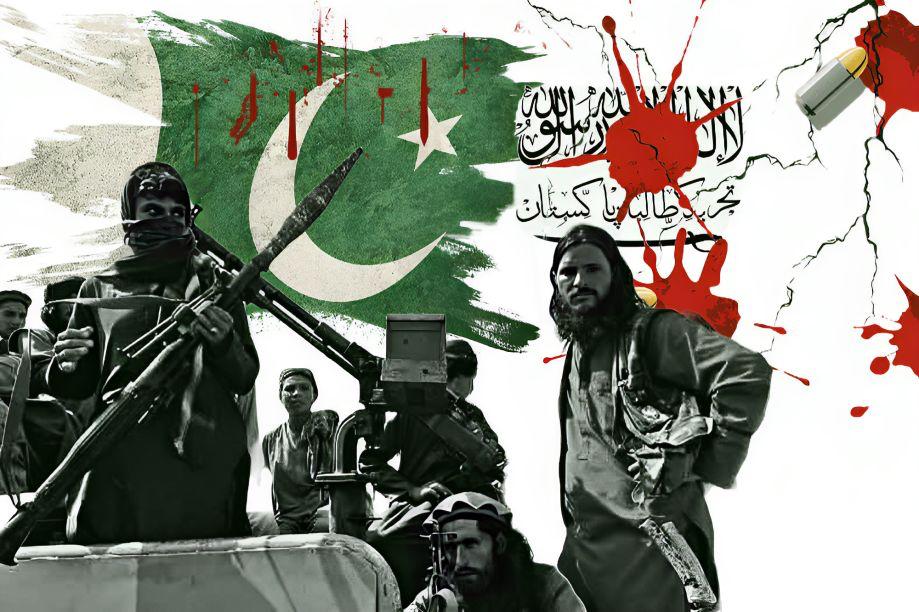
In 2022, Al-Qaeda networks continued operations mainly in the Middle East, South Asia, and Africa. Following ISIS, Tehreek-e-Taliban Pakistan (TTP) is considered the largest terrorist group in the region, responsible for most attacks in Pakistan and some in Afghanistan. TTP executed 34 attacks, resulting in 134 casualties.
This year’s report includes, for the first time, figures for unknown or unidentifiable criminals. The data reveals that 67.6% of these criminals in 2022 were “religious-jihadi,” and 33.2% were “separatist nationalists.” Worldwide, including Pakistan, 369 incidents involving unidentified criminals were documented.
Geographic trend of terrorism: In the list of the most global terrorist incidents for 2022, showcasing the highest number of incidents and casualties, Afghanistan surprisingly does not appear a departure from previous years. The top five countries with the most terrorist incidents are the Democratic Republic of Congo, Syria, Nigeria, Pakistan, and India. Pakistan secures the fourth position among the 10 countries with the most terrorist incidents.
However, when considering the list of 10 countries with the most casualties in 2022, the order is as follows: the Democratic Republic of Congo (DRC), Nigeria, Burma, Syria, Mali, Burkina Faso, Somalia, Pakistan, Afghanistan, and Yemen. In the 2022 report, Pakistan ranks eighth, while Afghanistan is ninth. Notably, in the 2021 report, Afghanistan held the top position for the most casualties. These figures indicate a striking 88% decrease in casualties for Afghanistan, contrasted with a 90% increase in casualties for Pakistan.
Afghanistan: In the overview section of the report, it’s noted that the United States does not recognize the Taliban or any other entity as the government of Afghanistan. The Taliban provided shelter to al-Qaeda leader Ayman al-Zawahiri before his death in a US airstrike on July 30. The Tehreek-e-Taliban Pakistan (TTP) officially ended their ceasefire in November.
The report highlights the Taliban’s conflict with ISIS-Khorasan (ISIS-K), considering it the main threat. The United States has urged the Taliban to fulfill their commitments in fighting terrorism based on the 2020 Doha Agreement. The Taliban, referred to as the Islamic Emirate of Afghanistan in the agreement, made commitments to prevent any group or individual in Afghanistan from threatening the security of the United States and its allies. Despite these commitments, terrorist groups remained active in Afghanistan in 2022, carrying out attacks against Iran, Tajikistan, Uzbekistan, and Pakistan.
In 2022, Afghanistan experienced several significant terrorist incidents:
On April 22, a suicide bombing during a religious gathering at a mosque and school in Kunduz resulted in at least 33 deaths and 43 injuries.
On April 29, an explosion during a religious gathering in a mosque in Kabul led to at least 10 deaths and 30 injuries.
On August 17, an unidentified bombing in a Kabul mosque killed at least 21 people, including a prominent cleric, and injured at least 33 others.
On September 5, a suicide bombing claimed by ISIS-Khorasan (ISIS-K) at the Russian embassy in Kabul resulted in at least six deaths, including a Russian diplomat, and wounded at least 10 others.
On September 30, a suicide bombing at an educational center in Kabul left 54 dead and 114 injured, predominantly Hazara Shia women and girls.
The fight against ISIS-Khorasan (ISIS-K): According to the Armed Conflict Location and Event Data Project (ACLED), the Taliban conducted 40 operations against ISIS-Khorasan (ISIS-K) during the reporting period. The Taliban publicly announced arrests or killings of ISIS-Khorasan members, including those responsible for attacks. However, in July, Human Rights Watch reported cases of alleged Taliban summary executions and forced disappearances of ISIS-Khorasan members. It remains unclear whether the Taliban have the capability to completely dismantle secret terrorist networks in urban areas.
Notably, there have been no changes related to countering terrorism financing, extremism, or international and regional cooperation since 2021.
South and Central Asia: In the overview of South and Central Asia for 2022, it is noted that terrorist activities will persist in Afghanistan and Pakistan, along with insurgent attacks against security forces and terrorist incidents in the Indian Union of Jammu and Kashmir (J&K). There are also ongoing ISIS-Khorasan (ISIS-K) threats against Tajikistan and Uzbekistan. Al Qaeda and its regional branch, Al Qaeda in the Indian Subcontinent (AQIS), appear unchanged according to the Taliban’s mandate.
ISIS-Khorasan, Al-Qaeda elements, including Al-Qaeda, and groups targeting Pakistan like Tehreek-e-Taliban Pakistan (TTP), continue to utilize Afghan soil near the Pakistani border as a safe haven.
Central Asian countries express concerns about violent extremist elements from Afghanistan crossing borders, launching cross-border rocket attacks, and the potential threat of returning citizens who fought in Iraq or Syria. In Tajikistan, U.S. assistance focuses on building capacity to secure the 843-mile border with Afghanistan, with expectations of continued support in 2023. The region also receives security assistance from Russia, the People’s Republic of China, and other nations.
Pakistan: In the overview section, it is reported that in 2022, Pakistan implemented measures to counter terrorism financing and address certain groups with a focus on India. Notably, Sajid Mir, the FBI’s most wanted criminal and a senior leader of Lashkar-e-Taiba, was successfully prosecuted in May, resulting in a 15-year prison sentence.
In September, Pakistan deported three American citizens to the United States after they completed prison terms in Pakistan, facing prosecution for terrorism-related crimes. While Pakistan has taken steps to restrict the activities of terrorist groups, it has yet to fully fulfill its commitment to eliminate all terrorist organizations promptly and without discrimination.
Pakistan experienced an increase in terrorist threats in 2022, with a higher number of attacks and casualties compared to 2021. Separatist militant groups conducted terrorist attacks in Balochistan, Punjab, and Sindh. Tehreek-e-Taliban Pakistan (TTP) posed a significant threat to Pakistan’s police, army, and security services in Khyber Pakhtunkhwa. Terrorists employed various tactics, including improvised explosive devices, suicide bombs, and targeted assassinations, in attacking diverse targets.
Terrorist incidents in 2022: In 2022, Pakistan faced an increase in terrorist attacks, leading to a “high” or “critical” threat rating. Religious minority groups were particularly targeted by violent extremist organizations. Notable incidents include attacks by the Baloch Liberation Army (BLA) on militia bases, a suicide bombing at a Shiite mosque in Peshawar claimed by ISIS-Khorasan (ISIS-K), a BLA suicide bombing outside the Confucius Institute in Karachi, a Tehreek-e-Taliban Pakistan (TTP)
attack on a police convoy, and a TTP suicide bombing in the suburbs of Islamabad.
The Government of Pakistan continued implementing counter-terrorism measures, including the Counter-Terrorism Act of 1997, the National Counter-Terrorism Agency Act (NACTA), and amendments to the Anti-Terrorism Act in 2014 and 2020. Pakistani military and security forces conducted operations against anti-government fighters, establishing specialized courts for terrorism cases. The country also enforced international border security measures, collected biometric information at land crossings, and managed dual-use chemicals to prevent diversion for improvised explosive devices.
February 2: Militants attacked two Pakistani militia bases in Baluchistan. The Baloch Liberation Army (BLA) claimed responsibility, using small arms and rocket-propelled grenades, resulting in at least four soldiers killed and over 20 wounded.
March 4: A suicide attack on a Shiite mosque in Peshawar during Friday prayers claimed over 60 lives and injured more than 100. ISIS-Khorasan (ISIS-K) claimed responsibility.
April 26: BLA suicide bomber targeted the Confucius Institute in Karachi, killing five institute employees and two Pakistani nationals. This marked the first instance of a female suicide bomber from the BLA.
November 15: Six police officers were killed in an attack on a police convoy in Khyber Pakhtunkhwa (KP). Tehreek-e-Taliban Pakistan (TTP) claimed responsibility.
December 23: A suicide bomber, affiliated with Tehreek-e-Taliban Pakistan (TTP), killed a police officer and injured several others by exploding a hand grenade in the suburbs of Islamabad.
The Government of Pakistan continued implementing counter-terrorism measures, including the Counter-Terrorism Act of 1997, the National Counter-Terrorism Agency Act (NACTA), the Investigation for Fair Trial Act of 2014, and major amendments to the Anti-Terrorism Act in 2014 and 2020, providing additional powers to law enforcement, judiciary, and the Attorney General in terrorism cases.
In 2022, Pakistani military and security forces conducted nationwide operations against anti-government fighters and established specialized courts to address terrorism cases. Pakistan enhanced border security by collecting biometric information at land crossings and enforced anti-money laundering and foreign exchange regulations at major airports in coordination with other agencies. Customs managed the entry of dual-use chemicals for legal purposes through end-use verification, aiming to prevent their diversion for use in improvised explosive devices.
Combating the financing of terrorism:
Pakistan is a member of the Asia/Pacific Group on Money Laundering and FIU is the Financial Supervision Unit of Pakistan. FATF removed Pakistan from its gray list in October. Pakistan continued to face significant risks of money laundering and terrorist financing. In 2022, several terrorist organizations, including UN-listed groups, operated in the country and raised funds through various means such as direct sponsorship, public fundraising, exploitation of non-profit organizations and criminal activities.
Funds are transferred through official and unofficial channels (hawala) and through mass smuggling of cash. Pakistan’s geographical landscape and borders increase its vulnerability and risk to terrorist financing.
The presence of the Pakistani Taliban “TTP” in Afghanistan and the terrorist activities carried out by this group against Pakistan are considered to be the main reasons for the conflict between the Taliban and Pakistan in the last two years. The country which the Taliban has had many border disputes is Pakistan. Pakistani officials have visited Kabul several times in the past two years and have discussed and negotiated with the Taliban officials about suppressing the “TTP” or expelling them from the territory of Afghanistan.
Pakistan’s Ministry of Defense claims that Afghan soil is being used against Pakistan.
Pakistan’s Defense Minister Khawaja Asif says that although the Taliban government has agreed that Afghan territory will not be used against Pakistan, he claims that the Pakistani Taliban “TTP” is planning attacks against Pakistan in Afghanistan.
At the same time, former Pakistani ambassador to Afghanistan, Mansoor Ahmed Khan, in an article recently published by Arab News, said that the Taliban did not comply with the Doha agreement regarding non-use of Afghan territory against other countries.
Mansoor Ahmad Khan said that in 2022, Al-Qaeda and ISIS continued their terrorist activities in Afghanistan and the movements of Pakistani Taliban, along with Tajik and Uzbek militants, are of concern to Pakistan and China in Central Asia.
After the disagreements between the Taliban and Pakistan, some sources in the National Resistance Front (NRF) which is led by Ahmad Masoud have confirmed that the Taliban and Pakistan have reached an agreement that will push the “TTP” from the Durand Line and possibly moving them to the northern regions of Afghanistan.
The question is, are the Taliban really? And for what purpose they planes to transfer the “TTP” and other groups to the northern regions?
It seems that the “TTP” and other armed groups present in Afghanistan are in the process of moving to the borders of Central Asia and this may be done for the geopolitical interests of the West in order to destabilize Central Asia. Which has a direct impact on Moscow, this is the reason why Putin has increased his visits to the Central Asian countries, in the relevant meetings, he pays a lot of attention to the Central Asian countries, especially Tajikistan and Uzbekistan, which has a long border with Afghanistan. The deployment of Russian troops in Tajikistan along with the border with Afghanistan is has also been reported.
Former President Hamid Karzai’s chief of office and former Interior Minister Mohammad Omar Daudzi said in an interview that armed groups are still active in Afghanistan, with the number of 19 to 21 groups.
To clarify the issue here, I would like to briefly mention some groups which are considered a danger for the region and the information has been published in the media.
IS-Khorasan group
When the republic collapsed and the Taliban came to power, the prisons were opened and the IS-K group in Afghanistan, which numbered at least “2000” radical fighters, escaped.
IS-K is also accused of carrying out a suicide attack on Kabul International Airport on August 28, which killed 13 Americans and more than 170 Afghans.
Upon their arrival, the Taliban immediately executed the former leader of IS-K, Abu Omar Khorasani.
It is believed that the number of IS-K fighters may be more than twice as many as half of them may be foreigners.
The main group of al-Qaeda
With the success of the Taliban, Al-Qaeda leader Ayman al-Zawahiri congratulated the Taliban on their success at the end of August. Later, he was killed in an attack by an American drone in the Wazir Akbar Khan area of Kabul. It is a question who gave the quadrant of his residence to the Americans during the rule of the Taliban.?
However, with the departure of the Americans and the Taliban’s rule, Al-Qaeda has benefited a lot, because some of Al-Qaeda’s closest sympathizers are now cabinet members in the Taliban government, and have important responsibilities.
Mullah Abdul Latif Mansour, the Minister of Water and Energy of the Taliban, said in a meeting, “They (al-Qaeda) are not a terrorist, but our brothers.”
Al-QAIDA IN THE INDIAN SUBCONTINENT
An important branch of Al-Qaeda is Al-Qaeda in the Indian Subcontinent, It is estimated that Al-Qaeda in the Indian subcontinent has about “400” fighters in Afghanistan.
Al-Qaeda in the Indian Subcontinent includes Afghans, citizens of Bangladesh, Pakistan, India, and Myanmar (Burma) who are said to have fought alongside the Taliban against the previous government of Afghanistan.
It is believed that Osama Mahmoud, the leader of Al-Qaeda in the Indian subcontinent, and his deputy, Atif Yahya, are both living inside Afghanistan.
Est. In Xinjiang China (ETIM)
The East Turkestan Islamic Movement (ETIM) also known as the Turkestan Islamic Party (TIP) was first established in China’s Xinjiang region, and reported its first attack in 1998.
According to intelligence assessments, the East Turkestan Islamic Movement has between “200” to “700” fighters in Afghanistan who are planning military exercises and attacks on Chinese targets.
The Islamic Movement of Uzbekistan (IMU)
The Islamic Movement of Uzbekistan “IMU” was formed in the late 1990s with the help and funding of al-Qaeda founder Osama bin Laden and several “IMU” leaders held positions in the al-Qaeda group.
This group wants to overthrow the government of Uzbekistan and replace it with an Islamic system.
“IMU” in February 1999 carried out its first attack and detonated five car bombs at the same time in Tashkent the capital of Uzbekistan. It is also believed that this group has also carried out attacks in Afghanistan and Pakistan.
Recent intelligence reports show that when the Taliban occupied Afghanistan, the remaining fighters of “IMU” were with them and the Taliban provided them with a free environment to travel.
Lashkar-e-Taiba
Lashkar-e-Taiba was founded in Pakistan in the 1990s and is sometimes known as Jamaat-e-Dawa. The leader of Lashkar-e-Taiba, Hafiz Muhammad Saeed, was a friend of Al-Qaeda. The most significant attack related to this group was the deadly attacks in Mumbai, India in November 2008, in which more than 160 people were killed.
In 2006, Lashkar-e-Taiba opened an office in Quetta, Pakistan to help the Taliban in Afghanistan, and it is said that Lashkar-e-Taiba sent fighters to Afghanistan to help the Taliban fight.
Khatiba Imam Al-Bukhari (KIB)
“KIB” It was formed in 2011 by fighters who were part of the “IMU” and fought alongside the Taliban against the former government of Afghanistan.
The leader of this group is “Dilshad Dehkhanov” who is a citizen of Tajikistan.
Some information shows that “Dehqanov” went to Kabul in last September and asked the Taliban to unite “IMU” under his leadership. According to reports, “Dehkhanov’s” request was not accepted.
Islamic Jihad
The Islamic Jihad group is considered “the most prepared group of Central Asia for the war in Afghanistan” and is known for having special skills “in combat tactics and bomb making”.
The leader of this group is a citizen of Kyrgyzstan named “Alam Beg Mohamedov”. The deputy leader of the Islamic Jihad group is “Amsatur Atabayev”, who is also a citizen of Tajikistan.
All the those groups that were mentioned were created to achieve Islamic goals, but it is also a fact that these groups are used directly and indirectly for the geopolitical goals of different countries.
In this article, I am trying to understand the strategic goals of the “TTP” its effects on the Taliban and Pakistan relation and how much it is considered as a real and active danger in the region and Pakistan.
Since the Taliban took the power, there were many meetings which participated most of regional countries in the Central Asia including the Taliban, at end of those meetings issued declarations.
“That Tehreek-e-Taliban Pakistan, Balochistan Liberation Force, Jaish-ul-Adl and all other terrorist groups in Afghanistan are a serious threat to the security of the region and the world”.
These countries have asked the Taliban to fight hard against those groups that these countries consider a threat to their territory and security.
For example, China accuses the East Turkestan group of unrest in its territory and has repeatedly asked the Taliban to take measures against this group.
Iran accuses “Jaish al-Adl” of vandalism and terrorist attacks in its territory.
“TTP” and Baloch are accused of attacks against Pakistan. Also the Central Asian countries consider the related groups as a threat to themselves.
“TTP” Tabrik-e-Taliban Pakistan and “TTA” Tahrik-e-Taliban Afghanistan:
The current leader of TTP Noor Wali Mehsud has openly declared his allegiance to the leader of the Taliban of Afghanistan.
It is said that the re-establishment of the Taliban in Afghanistan has given the “TTP” a lot of encouragement, and they have become convinced that they can also overthrow the Pakistani government and impose the Sharia system.
There is a deep friendship between the Taliban and the “TTP”. That is because “TTP” has fought alongside the Taliban against the US and the former government of Afghanistan for many years. Both groups have a single ideological goal: “the establishment of an Islamic Emirate in Afghanistan and Pakistan”. In addition, it is said that the “TTP” has pledged allegiance to the leader of Taliban behind the scenes and this may further strengthen the relationship between the two groups.
When the Afghan Taliban came to power, they openly gave shelter to members of the Tehreek-e-Taliban Pakistan. The Afghan Taliban released the “TTP” leaders and fighters who were imprisoned by the former Afghan government.
The Afghan Taliban have repeatedly said that they will not allow anyone, including Tehreek-e-Taliban Pakistan, to attack another country, including Pakistan, from Afghanistan. But the Pakistani officials said that the words and actions of the Afghan Taliban which can stop the “TTP” attacks inside Pakistan, do not match, and the Afghan Taliban have not yet been able to stop these attacks.
Abdullah Khan, a senior defense analyst and head of the Institute of Security and Conflict Studies in Islamabad, says that the Pakistani Taliban have pledged allegiance to the leader of the Afghan Taliban.
Khan worries that Pakistan will witness an escalation of violence in the coming weeks and months.
Abdul Hameed Khorasani, the head of Naser Badri’s operational unit, had a conversation with Mufti Noor Wali Mehsud, the leader of the Tehreek-e-Taliban Pakistan “TTP” about how to “fight against the government of Pakistan and bring down the government of this country “.
Speaking to Amaj news, Abdul Hamid Khorasani said that this meeting took place during his trip with a group of his forces in South Waziristan.
According to his statements, in this meeting he discussed “how to fight against the government of Pakistan.”
Khorasani promised the leader of Tehreek-e-Taliban Pakistan any kind of cooperation and declared her support for this group that “one day they will overthrow the government of Pakistan and establish the Islamic Emirate system in Pakistan.”
(TTP) actual and potential threats to Pakistan.
“TTP” which mostly operates in the 2,640 kilometer border (Durand line) region between Afghanistan and Pakistan, is an insurgent group that has carried out attacks in both countries.
Former government of Afghanistan, American forces and the Pakistani army have killed or captured several “TTP” leaders in the past 20 years.
The TTP stepped up its attacks against the Pakistani army and police in November after the group unilaterally ended a ceasefire agreement with the Pakistani government. The agreement that was reached in Kabul through the mediation of the Afghan Taliban.
Zhob Attack
The recent militant attack in the Zhob town of Balochistan, where the Pakistan military lost nine soldiers, was one of the latest in a string of attacks targeting security forces in areas that were previously considered relatively free of militancy.
This is a separate phenomenon from the insurgency that plagues the Baloch-majority areas of the province; outfits linked to the banned “TTP” and its offshoots are now stepping up their attacks against security personnel in the province’s northern parts traditionally considered Pakhtun-majority areas.
Though these areas are closer to the border with Afghanistan and also in close proximity to tribal districts such as South Waziristan, they had remained comparatively less affected by terrorist activities in the past.
Asif Baloch, a Quetta-based newspaper editor, believes that since the US withdrawal from Afghanistan, two fronts have been opened against the state, “TTP” has stepped up its attacks in Khyber Pakhtunkhwa as well as the Pakhtun belt of Balochistan.
In the recent months, the “TTP” has even been trying to make inroads in the Baloch-majority areas of the province, releasing propaganda videos in Balochi.
As for the new outfit that claimed the audacious attack on the military installation in Zhob using the moniker of Tehreek-i-Jihad Pakistan experts believe that it is a “cover name” for the “TTP” or one of its affiliated outfits.
China-Pakistan Economic Corridor (CPEC)
The western route of China-Pakistan Economic Corridor a flagship project of Beijing also passes through the Pakhtun-dominated parts of the province.
Since China has been trying to consolidate its position in the region, this may as one of the possible reasons behind the rise in attacks there. The security of CPEC has been the responsibility of the Pakistan military, which has tasked the special security division with protecting its assets and infrastructure.
A security official also pointed out that hostile agencies had been trying to disrupt the peace in Balochistan, attributing such attacks to their intervention in the province.
American weapons
A security official told to Dawn news paper that the Zhob attack on 12 of July was carried out by five “highly trained and well-equipped terrorists.”
“These terrorists had night vision scopes and the latest gadgets with American weapons,” he said, adding that the attackers seemed to be planning a hostage situation along the lines of the Muslim Bagh attack in Balochistan, that claimed the lives of six soldiers and at least one civilian earlier this year.
Pakistan side believe that the “TTP” who have spiritual and operational linkages with the Afghan Taliban, had managed to arm themselves with the same spoils of war that fighters of the Islamic Emirate have been using.
And there is little question of “TTP” fighters seizing these arms by force, given the bonhomie that exists between the two Taliban factions.
They believe that the availability of such advanced weapons has created significant challenges for the security forces in combating terrorism in Pakistan.
Security sources also believe that the Zhob attack “clearly indicating involvement from the Afghan side”.
While responsibility for the attack was claimed by a little known group calling itself the Tehreek-i-Jihad Pakistan (TJP), Pakistan believe that TJP is a wing of TTP.
Conclusion:
As a conclusion, one scenario can be discussed as a possibility.
Russian President Putin said in a meeting that the weapons sent to Ukraine by the West reached the Middle East through the illegal market and were sold to the Taliban.
After the Mayawali airport attack in this country, Pakistan published pictures of the American weapons that the attackers used in the attack, although Stanakzai, the deputy minister of the Taliban’s foreign affairs ministry, said that these weapons were used It was not given to the perpetrators, but the weapons that Pakistan received during NATO transportation to Afghanistan. At the same time, according to the report of the Iranian media, 3 Iranian “Mossad spies” were arrested on the border with Afghanistan, who were trying to target in Iran by drones. Looking at this hot market of weapons businesses, and looking at the movements in the region it is believed that the region may once again become the center of training and financing of terrorism and another proxy war. This time, this “proxy war” will be more complicated than before, because there are more possibilities of using new technology.
More than any other country in the region, the most damage of this new game reaches two countries “Pakistan and Afghanistan”. If the Taliban continues to strengthen the extremists in this form and based on the current policies, so that finally the people may be trained in extremist ideology. In the same time Pakistan and Afghanistan are not economically and politically capable enough to be able to manage this game, and neither is Pakistan which is struggling with internal conflicts to manage the game. First of all, the world should create such frameworks of interaction with the Taliban that connect Afghanistan with the world politically and economically, and establish good neighborly relations with
Sources:
Author(s): Sajjad Shaukat
Publication Date: oct/08/2023
Title: TTP worsens Pak-Afghan Ties
Publisher: Pakistan Today.
Author(s): Tahir Khan
Publication Date: July/18/2023
Title: how do you solve a problem like Kabul?
Publisher: Dawn
Author(s): Muhammad Akabar Notezai
Publication Date: July/15/2023
Title: why TTP is opening another front in Balochistan.
Publisher: Dawn
Author(s): Shujaudin Amini
Publication Date: Jin/10/2023
Title: د پولې له سیمو نه د پاکستاني طالبانو لېږدولو طرحه په څه مانا ده؟
“Every street you go, you hear people mourning the deaths of their beloved ones,” a journalist in Paktika province told the BBC.
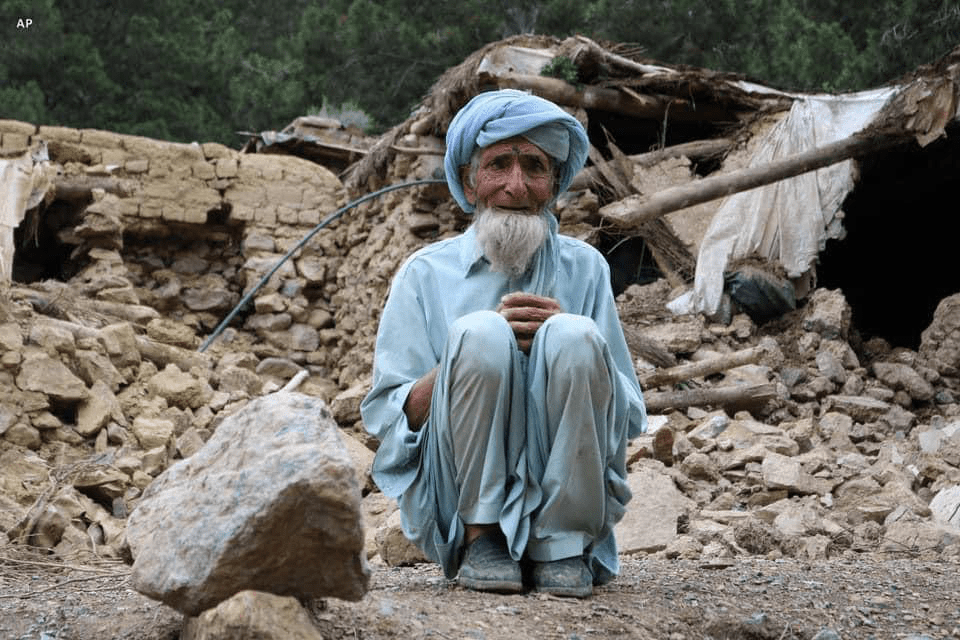
On Wednesday, June 22, 2022 the earthquake struck Paktika and Khost provinces at 1:30 AM while people were asleep. Many people have been killed and several others injured in, at least in Gyan and Barmal districts of Paktika 1,000 People have been killed and more than 1500 others have been injured, Maulvi Sharafuddin Muslim, Deputy Minister of State for Disaster Management of Taliban said. The Gyan district police chief told the media that the death toll could rise further as the quake destroyed many homes and they were busy removing people from the rubble.
Complete villages are destroyed, a 5 years old girl lost her all 5 members of the family, a kid who is only 8 years lost her all family, a man who is 55 years old lost his family’s 17 member.
Rescue workers said the casualties from the quake, which struck during the early hours of Wednesday, were likely to increase further.
The U.S. Geological Survey (USGS) said the magnitude 6.1 quake struck about 44 kilometers from the provincial capital of Khost.
Speaking to the BBC, a doctor in Paktika said medical workers were among the victims.
“We didn’t have enough people and facilities before the earthquake, and now the earthquake has ruined the little we had,” they said. “I don’t know how many of our colleagues are still alive.”
Communication following the quake is difficult because of damage to mobile phone towers and the death toll could rise further still, another local journalist in the area told the BBC.
“Many people are not aware of the well-being of their relatives because their phones are not working,” he said. “My brother and his family died, and I just learned it after many hours. Many villages have been destroyed.”
Karim Nyazai was in the provincial capital and returned immediately to find his village devastated and 22 members of his extended family dead.
“I was away from my family who live in a remote village in the Gyan district. I went there as soon as I could find a car in the early morning,” he told the Guardian.
“The entire village is buried. Those who could manage to get out before everything fell down were managing to take out the bodies of their loved ones out of the rubble. There were bodies wrapped in blankets everywhere.
“I lost 22 members of my [extended family] including my sister, and three of my brothers. More than 70 people in the village died.”
Global and domestic reactions:
The United States has expressed sorrow over the recent quake and casualties in the country. The State Department said it had received “grave reports” of reports of earthquakes and casualties in Afghanistan.
A statement issued by the Chinese Foreign Ministry said that China extends its condolences to the Afghan people over the recent earthquakes in Paktika and Khost provinces.
The Chinese Foreign Ministry said it was “deeply saddened” by last night’s quake and its aftermath.
French President Emmanuel Macron
“Our thoughts are with the hundreds of victims of the earthquake which has hit Afghanistan and Pakistan with indescribable force, the thousands of injured, the families who have lost everything and everyone facing this terrible ordeal.”
Pope Francis, the leader of the world’s Catholic Christians, has expressed his condolences to the victims of the earthquake in Khost and Paktika. He said that international aid agencies should work together to help Afghans alleviate their hardships and problems. He hoped that humanitarian assistance to Afghans would increase.
In a tweet, US Secretary of State Anthony Blanken called the Afghan earthquake a “great tragedy” and said it had exacerbated the humanitarian crisis in the country.
Iran has shown readiness to help the victims of the recent earthquake. Saeed Khatibzada, a spokesman for Iran’s foreign ministry, said in a recent statement. He says Iran is deeply saddened by the incident and shares its grief with Afghans.
Manzoor Ahmad Pashtun, PTM leader;
“We are deeply saddened by the loss of life and property caused by the earthquake in Paktika and Khost provinces.
We share the grief of the bereaved families and the people of this region.”
At present, we call on the Pashtun Afghan people and the international community to urgently provide financial and medical assistance to these areas.
Former President Ashraf Ghani, in a message issued on last night’s earthquake, He called on the international aid agencies, national businesses and charities to reach out to the needy and fulfill their national, cultural, religious and social duty at this critical time.
Turkey has also expressed its condolences over the recent death toll from the quake. The Turkish embassy in Kabul said it shared its condolences with the families of the victims.
Former President Hamid Karzai has called for help for the quake victims. A statement from the office of former President Hamid Karzai said that last night’s earthquake had caused financial and personal losses to many people in the country and was deeply saddening.
He called on charities, national businesses, humanitarian organizations and other agencies to help the affected families and help them in this difficult situation.
Abdullah Abdullah“It is with great sadness that some of our compatriots have been martyred and some others injured due to the severe earthquake in Gyan district and surrounding areas of Paktika”. According to reports, some people are still trapped under the rubble due to the collapse of houses.
I urge the authorities, domestic and foreign social and charitable organizations to do everything possible to help and cooperate with the injured and the victims of the accident.
Pakistan’s Prime Minister Shehbaz Sharif extended his condolences and an offer of support in a tweet on Wednesday.
“Deeply grieved to learn about the earthquake in Afghanistan, resulting in the loss of innocent lives,” he wrote. “People in Pakistan share the grief and sorrow of their Afghan brethren. Relevant authorities are working to support Afghanistan in this time of need.”
India expressed “sympathy and condolences to the victims and their families,” according to a tweet by the spokesperson of the Indian Ministry of External Affairs on Wednesday.
Taliban appeal for international aid
The government sadly is under sanctions so it is financially unable to assist the people to the extent that is needed,” said Abdul Qahar Balkhi, a senior Taliban official.
“International relief agencies are helping, neighboring countries, regional countries, and world countries have offered their assistance which we appreciate and welcome.
“The assistance needs to be scaled up to a very large extent because this is a devastating earthquake which hasn’t been experienced in decades.”
Taliban authorities said people were still under the rubble and. They also urged all aid organizations working in Afghanistan to help in the rescue operations.
Acting Foreign Minister of Taliban Amir Khan Mottaki. called on international community and Afghan businessmen to help and reach out to the families affected by the recent earthquake. He called on Afghan businessmen pledge to reach out to their countrymen as much as they can and are ready for humanitarian aid.
“The government is working within its capabilities,” tweeted Anas Haqqani, a senior Taliban official. “We hope that the International Community & aid agencies will also help our people in this dire situation.”
Assistance is done as four helicopters and few ambulances had arrived in the quake-hit area of Paktika. “A couple of helicopters came to help but it is not clear what else they can do other than moving the dead bodies.” Four families are in one tent, there are some other aids which is by the international community and people but it’s not enough and it can take a place.
Humanitarian aid is needed urgent
People are in immediate need of shelter, food, and water. We ask you to donate and do your best as it becomes our moral duty to help others when life gets difficult. Our people are hopeless and devastated. It’s that time they need our help; every dollar you donate can make a huge impact. Our donation may not cure the pain of this tragedy but will certainly aid those who are immediately in need of basics such as food, water, shelter, clothing, medicine and other essential items
Although many international aid agencies have stopped operating in Afghanistan since the fall of the Taliban regime, some of those who do exist have spoken of obstacles to aid delivery.
The incident is new and so far, the Taliban government or other international organizations have not surveyed how much aid will be needed for the quake victims in Khost and Paktika, but aid agencies based in Afghanistan say millions of dollars may be needed to deal with the damage.
Now the main obstacle to the delivery of aid is the lack of a sound banking system, which many institutions are facing. With the emergence of the Taliban regime, it has become difficult to transfer money to Afghanistan, only the United Nations can.
I propose below a report of the situation in theese days in my country, which I really hope can change with the diplomatic support of the international community:
Summer is the season of war in Afghanistan. Small resistance groups have emerged in many parts of the country. In recent months, many smaller groups have signaled their readiness to fight and pledge to fight against the Taliban. In addition to these groups, an increase in attacks by ISIS or the Islamic State terrorist group could push Afghanistan back to the brink of war.
Coordination of small groups for war.
While the goal of all these groups is to overthrow the Taliban government, they are facing difficulties due to lack of coordination and unity. The Institute for Studies of War, headquartered in Washington DC, released a research report on March 9 entitled “The Taliban and Opposition Groups Prepare for a New Spring War in Afghanistan” prepared by Mr. Peter Mills. “The National Resistance Front (NRF) has stated that it is preparing for attacks in the spring of this year and will continue to carry out attacks targeting the Taliban government,” it said.
The NRF is the first non-IS group to oppose the Taliban, led by Ahmad Massoud, the son of former Northern Alliance leader Ahmad Shah Massoud.
According to reports, the Taliban’s mass arrest campaign is likely to increase local support for the NRF, a campaign led by a senior Taliban commander Gorzang with links to the Haqqani network.
Peter Mills said that in order for these groups to have a decisive influence in competing with the Taliban government, more coordination and unity is needed.
Jonathan Schroeder, director of the Threats and Challenges Program at a non-profit research and analysis organization, says the lack of coordination between these groups has led to the group’s inability to form a broad-based resistance movement. Experts say the uprisings could last for years and that what is today a small group of, these groups could turn into a full-scale and bloody uprising.
The Taliban and the readiness for war.
The Taliban are also actively sending troops to northern and other parts of Afghanistan to limit the capabilities of anti-Taliban forces in the spring. Shortly after the Interior Ministry’s Special Forces entered the Panjshir Valley on January 31, the Taliban began sending aid to the Panjshir Valley, including the Taliban’s Red Brigade forces, on February 2, local reporters reported. The Ministry of Interior has sent several thousand Taliban fighters to the valley. Abdul Haq Wasiq, the Taliban’s intelligence chief, visited the Panjshir Valley on February 7 to assess the security situation. According to reports, Mullah Mohammad Yaqub, the Taliban’s defense minister, entered Panjshir province on February 21 to conduct a military operation against the NRF.
Overall, these actions show that the Taliban leadership is concerned about (NRF) attacks in the Panjshir Valley and wants to take a more proactive stance against (NRF) forces. In Herat province, the Taliban-Al-Farooq corps deployed three battalions on February 10 in Jawand, Ab Kamari and Tagab Alam districts of Badghis province. The Taliban’s Al-Farooq Corps deployed another battalion in the Barchman district of Farah province on 14 February. The 3rd Brigade of the 217 Omari Corps of the Taliban conducted military exercises and maneuvers in Baghlan province on 19th February. The 7th Brigade of the 207 Taliban Omari Corps conducted a military exercise near Farkhar district in the southeast of Taloqan city in Takhar province on 21 February.
The Taliban’s 203 Mansoori Corps sent 1500 troops from Paktia province to Bamyan province on February 22th.
The deployments and exercises come as popular pro-Taliban social media accounts report that the Taliban sent thousands of additional security forces to Takhar and Badakhshan provinces, some Afghan journalists reporting that the Taliban government has been deployed ten thousands additional troops in Badakhshan, Takhar, Baghlan and Kunduz provinces, under the guise of additional deployments, and it appears the Taliban may be sending more troops to northern Afghanistan.
The Taliban formed a new battalion in the Kohistan district of Kapisa province on 12 February. Taliban security forces, led by Mullah Fazel Mazloom, the Taliban’s deputy defense minister, began conducting house-to-house searches on February 25 in Kabul and nearby provinces to crack down on insurgents, according to reports from the Haqqani network and Both Taliban groups in Kandahar support the operation.
The Taliban are also conducting security operations in eastern Afghanistan, In Nangarhar province, the local Taliban leadership has inaugurated a new military unit called the (Panipat) Operational and Security Unit at the Nangarhar governor’s office, according to reports The unit will be responsible for conducting (special targeted operations), according to Abdul Hamid Khorasani, the unit was created to counter the IS-KP re-emergence, although in the past few weeks IS-KP There has been a significant drop in activity, but it should also not be overlooked that the Taliban continue to build new military forces in the region, indicating that they are concerned about IS-KP.
War and Pakistan.
Pakistan has been controlled by the military since its inception. The civilian governments there are only symbolic, Foreign policy, especially against Afghanistan and India is determined by the Pakistani military, Foreign policy instruments against it should be war issues, especially terrorism. The recent tensions between the Taliban and Pakistan along the Durand Line have made Pakistan anxious to rethink the Durand Line, and how Afghanistan Make it a battleground to facilitate the activities of terrorist groups and their transition to the region.
ISI.
Pakistan’s intelligence chief Nadeem Anjum is probably meet with key Afghan politicians, including Abdul Rashid Dostum, Atta Mohammad Noor and Mohammad Mohaqiq, in Ankara, Turkey, on February 13, according to reports, Ahead of this meeting, Anjum meet the NRF chief Ahmad Massoud in an undisclosed regional country, possibly in Tajikistan.
Anjum called on the meeting to respond to Pakistan’s concerns over the (deteriorating situation) in Afghanistan and claimed that Pakistan wanted to maintain strategic relations with non-Pashtun Afghan politicians who were well-suited for a compromise on the Durand Line.
According to reports, Atta Noor’s close aide Wasif Hakimi said that Anjum was unhappy with the Taliban government for not including other Afghan political parties in the government.
Popular pro-Taliban social media accounts denounced the meeting as a “betrayal” of Pakistan and called for military action against Pakistan, the ongoing border violence would further complicate relations between Pakistan and the Taliban government. This will cause Pakistan to increase its ties with the anti-Taliban forces.
New warlords
1- Freedom Front.
One of these new militant groups is the Afghan Liberation Front, which released a video on February 4 showing its determination to fight the Taliban, using a special flag and so on, Apparently not affiliated with the NRF, the group’s spokesman criticized the Taliban as a “terrorist group” that has kidnapped and killed women, journalists and civil society activists and starved millions of Afghans.
2- Wolf Unit
Unconfirmed reports in early February suggest that Yar Mohammad Dostum, the eldest son of the famous Uzbek commander in Afghanistan, Abdul Rashid Dostum, is preparing to enter Afghanistan and has formed a new group called the “Wolf Unite”.
3-National Liberation Front of Afghanistan.
The Afghan National Liberation Front (ANLF) has released a video announcing its presence in the mountains of Kapisa province to launch an armed resistance against the Taliban. The video also includes several women protesting against the Taliban government, Speaking and referring to them as “occupiers”, the speakers spoke in Dari and Pashto, suggesting that the group may be multi-ethnic.
The group has not identified its leader, but recent reports suggest that former Afghan Defense Minister and Chief of Staff Yasin Zia is one of its leaders.
4- Turkestan’s Freedom Tigers.
Another armed militant group, the Freedom Tigers of Turkestan, attacked a Taliban checkpoint south of the city of Sheberghan in Jawzjan province on 7 February.
5-National Islamic Movement for the Independence of Afghanistan.
The group, led by Abdul Matin Sulemankhel, a former commander of the Afghan National Army’s Special Forces, announced its existence on February 16 and is believed to be the largest Pashtana anti-Taliban group in the country, Suleimankhel said, Formed in response to executions of former Afghan army members and desert courts. He called the Taliban’s amnesty a lie.
Suleimankhel claimed in an interview with Afghanistan International Television on April 13 that the group had military and political activities in 26 provinces of Afghanistan.
The group’s allegations about the killing of a Taliban commander in Helmand appear to be credible.
5- General Sami Sadat
General Sami Sadat, a well-known military general in Afghanistan, has considerable experience fighting the Taliban, leading a historic battle in Helmand that has resulted in numerous casualties for the Taliban, a modern-day technologist and an internationalist. He has also declared war, expressed his support for the National Resistance Front, and a voicemail related to him on social media indicates that he is working on the integration of the Afghan Special Forces and will continue his work after Eid. Start activities.
6- Unidentified armed group in Herat zone (Badghis).
Unidentified gunmen bombed a mosque in Qala-e-Naw, the capital of Badghis province, on February 11, according to reports, two local Tajik Taliban commanders, Noor Agha and Saleh Mohammad Pardel, operating in Ab Kamari and Qadis districts, who revolted against the Taliban leadership in Badghis province in mid-January, Idris Mubarez, the (NRF) commander, announced a new NRF group in the same district on 18 February.
7- Other groups
In recent weeks, small anti-Taliban groups linked to former Balkh governor Atta Mohammad Noor have appeared in a series of videos apparently taken in northern Afghanistan.
In a recent video, several armed men wearing masks and posing as members of the “High Council of Resistance” identified themselves as “Noors” These men then threaten to start guerrilla warfare if they receive orders from (Noor).
Other groups that have made their efforts public in recent weeks and have little information about their leadership and capabilities include the Freedom Squad, the Hazaristan Army, the Democracy and Liberation Front.
Conclusion.
Afghanistan’s complex geographical location, geopolitical situation and history indicate that these small groups will be used for foreign political purposes and the country will once again be plunged into war.
On the other hand, looking at the current Taliban government, it seems that no country has been recognized so far and no country has stood behind this government, so it will be difficult for the Taliban to resist, given that the republic has resisted the Taliban for 20 years, The reason given was that the whole world stood with the Afghan government politically, economically, culturally and militarily. And also some mistakes in policies of the Taliban could lead the world to conclude that reconciliation with the Taliban is impossible and that publicly, it must stand with the opposition and provide them with logistical support. Taliban would need to rethink their strategy and find diplomatic solutions inside and outside the country to avoid constant war situations and to gain position in the international community.
These and many other indications are that the country is once again heading for a bloody war, and that the Taliban need to change its hardline policies in order to establish a clear engagement with the world, Place all sides in and step together with the world.
The international community must also pay close attention to Afghanistan’s fragile political, economic and security situation so that it does not once again fall into the trap of terrorism, so that the world does not witness the 9/11 attacks again.
Sources has been used in this article.
1- (AFGHANISTAN IN REVIEW: TALIBAN AND OPPOSITION GROUPS PREPARE FOR A NEW SPRING FIGHTING SEASON IN AFGHANISTAN Publishing by Institute for the Study of War, written by Peter Mills, date march 9- 2022
In Afghanistan, as almost everywhere in the world, a person’s family is the most important part of his or her identity in society, and a family’s honor is a key factor in how other families evaluate its social standing. Women’s rights and fairness, which are components of human rights, are supported by Islamic law and philosophy, which has its goals in the realization of justice, fairness, and dignity for all people. Afghan legal documents likewise supports gender equality and fairness, as seen by the 1964 Constitution.
In a general view of the situation of women in Afghanistan, in the first step, I consider it necessary to have a comparative view in order to clarify the situation of women before and after the Islamic Emirate. Has imposed a history on the women of Afghanistan. Also, at the macro level, there are three basic questions in the discussion of the current of feminism; During the reign of Amir Abdur Rahman Khan (r. 1880–1901), a women’s rights movement arose in Afghanistan.
First: Why did women get into this situation?
Secondly: How did she become isolated?
Thirdly: What were the consequences for women?
These are the three basic questions of the current of feminism, the answer to which can be found in three waves, which here is not an opportunity to examine the waves of formation of the current of feminism, and it must be said that its head is the beliefs of men and beliefs that It has historically perpetrated oppression and discrimination against women, but so has it in Afghanistan. In ancient times, the view was that women who could not go hunting and could not provide alimony, and then the thesis of practical work and work outside the home was pushed out and forced to go home and spend time working around the house arena.
Tribal laws and punishments have frequently taken precedent over Islamic and constitutional laws in determining gender roles, particularly in rural areas where family hierarchies exist. Women’s positions and rights have been jeopardized by tribal power maneuvers, honor structures, and inter-tribe displays of patriarchal control. Hence, making men’s historical views spread to everyone.
In Afghanistan values and culture are subject to belief and religion, and it depends on the religious practices whether religion is tolerant or not.
Afghan women today
Women’s rights were significantly improving in Afghanistan over some years when relatively few national and international institutions and authorities were active in defending and protecting women’s rights. Women were present in government offices, political jobs, social activities, and there were the largest conferences and programs for women. Women were allowed to talk freely because their presence in administrative positions and women voters in elections.
However, while these advantages and possibilities were available to women in Kabul, women and girls in Afghanistan’s countryside remained primarily trapped in religious practices with little news of political and civic activity rights. There was no work, even to the point where their basic human rights were unknown, and for the past two decades, the space for Afghan women and girls has been generally open, with opportunities for growth and education, yet all these efforts to attain rights were gone and dreams became unachievable with the arrival of the current regime which is conservative.
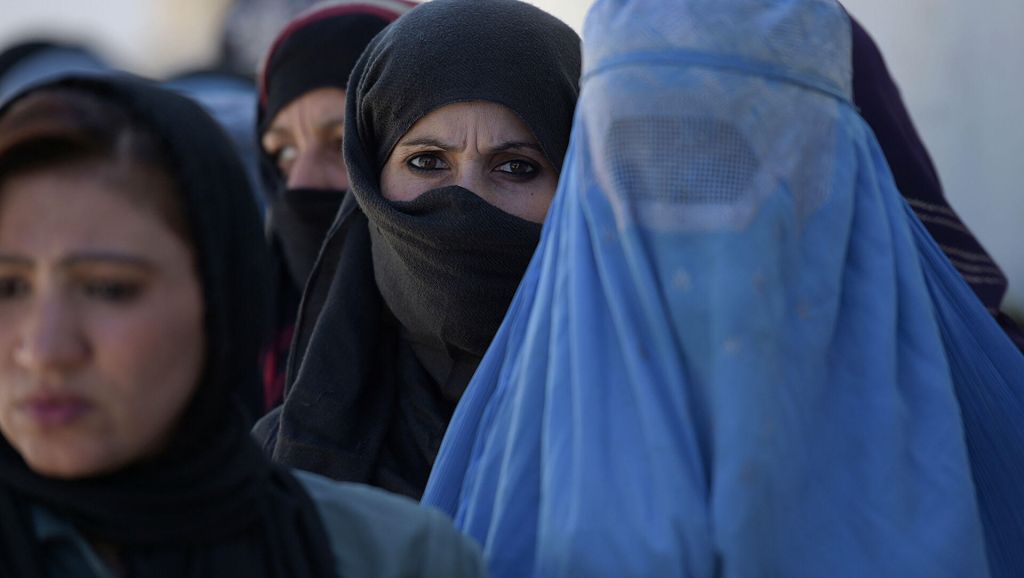
Women’s faces have been barred from all forms of media, including advertisements and television; schools for girls have been closed; and women are not allowed to leave their houses without a male companion.
According to a 2019 poll performed by UN Women and Promundo and summarized by Reuters, only 15% of Afghan males feel women should be permitted to work after marriage, and two-thirds worry that Afghan women have “too many rights.”
There appears to be little hope that conditions will improve in the near future, given the Taliban’s failure to follow through on their first promises regarding women’s rights. The only way out is to persuade the rest of the world of the magnitude of the situation and apply diplomatic pressure on the Taliban to fulfill their promises.
The international community’s silence on the humanitarian crisis, terrorist activities and human rights in Afghanistan is worrying. We’ve just receive report of many rights violated:
– Closure of schools for girls;
Although it has been almost a month since the start of the schools in Afghanistan, girls above the sixth class are still not allowed to go to school. A number of political parties, civil society groups and tribal councils in Kabul have called on the Taliban to reopen girls schools as soon as possible and not to allow girls’ schools in Afghanistan to remain closed. The political parties, civil society and tribal councils have issued a statement saying that girls education is red line of the people of Afghanistan and the doors of the schools should not remain closed for girls anymore. They also warned that closed schools for girls would force people to migrate, causing severe economic and political damage to the country.
– Two out of three children in Afghanistan do not have access to adequate food:
Business Standard publication wrote an article quoting international foundations about the fact that the raising hunger and poverty in Afghanistan have had a direct negative impact on the lives of children. Two out of three Afghan children do not have access to adequate food: The source said that the current situation is terrible and the families have been forced to sell their children or force them to do hard labor to get dome money for survival expenses. The International Children’s Fund, or Save the Children, also estimates that nearly five million Afghan children are starving. The agency also noted that the current drought in Afghanistan, political and economic conflicts and the suspension of international aid have affected services for children such as education, health and food security. According to various UN agencies, about 95 percent of Afghans do not have enough food, and children and women are the main culprits.
– Security and political crisis:
The wave of suicide attacks and bombings in the country has generated fear of Afghanistan falling into the hands of terrorist groups. There have been several deadly attacks in Kabul, Balkh and Kunduz in the past few days. A recent attack on civilians targeted a mosque in the Imam Sahib district of Kunduz province, killing more than 40 people and injuring more 50 people. Earlier a mosque in Mazar-e-Sharif and an education center in Kabul were drugged, killing and injuring dozens. The killings of Hazaras and Shiites are the latest wave of violence, and the militant groups currently fighting in Afghanistan are slowly spiraling out of control. Over the past 20 years, they have maintained close ties with al Qaeda, ISIS, the Islamic Movement of Uzbekistan, the East Turkestan Islamic Movement, the Pakistani Taliban, and Lashkar-e-Taiba. Theese groups sees opportunity of rebuild their ranks for West and Central Asia.
Afghanistan is once again at the center of jihadi extremism, The firing of 10 missiles by ISIS on Uzbekistan last week sends a message that the groups are trying to destabilize Afghanistan’s neighbors, which destroyed the geopolitical situation of the region. Economic stagnation, harsh sanctions, exclusion of women and girls from human rights, and the legal vacuum will once again turning Afghanistan into an exporter of terrorism. Recent attacks on civilian targets in Afghanistan have been condemned by many countries and political institutions. The United Nations Assistance Mission in Kabul (UNAMA), Amnesty International, Human Rights Watch, the Norwegian delegation to the United Nations, the United Arab Emirates and a number of other governments and international organizations expressed sorrow over the recent attacks, which killed and injured hundreds of civilians. But humanitarian aid and condemnation of incidents alone cannot solve the problem of Afghans, Humanitarian aid is good, it solves the urgent needs of the people, condemnation of incidents is also a moral generator of courage and hope.
But we must not forget that the security situation in Afghanistan, has a direct impact to the whole world, especially on the region. After the war in Ukraine, Afghanistan seems to have been overlooked by the international community, which will have dire consequences in the future. The international community must not allow this country to once again become a breeding ground for terrorism and terrorist groups to once again become a source of profit for pro-government. It is necessary to find permanent solutions to help Afghanistan achieve sustainable economic growth and save the lives of millions of people. It is needed a structure to connect Afghanistan to the world and establish an agreement between Afghanistan and the U.N. about human rights, women rights, freedom of speech and all the values a democracy need, to prevent a humanitarian catastrophe.
Noorwali Khpalwak, Afghan Journalist, Human Advisor Afghanistan
Questo blog non rappresenta una testata giornalistica in quanto viene aggiornato senza alcuna periodicità . Non può pertanto considerarsi un prodotto editoriale ai sensi della legge n° 62 del 7.03.2001. L’autore non è responsabile per quanto pubblicato dai lettori nei commenti ad ogni post.Verranno cancellati i commenti ritenuti offensivi o lesivi dell’immagine o dell’onorabilità di terzi, di genere spam, razzisti o che contengano dati personali non conformi al rispetto delle norme sulla Privacy. Alcuni testi o immagini inserite in questo blog sono tratte da internet e, pertanto, considerate di pubblico dominio; qualora la loro pubblicazione violasse eventuali diritti d’autore, vogliate comunicarlo via email. Saranno immediatamente rimossi.L’autore del blog non è responsabile dei siti collegati tramite link né del loro contenuto che può essere soggetto a variazioni nel tempo. Di ogni contenuto è responsabile solo l’autore del post. This blog is not a newspaper as it is updated without any periodicity. It cannot therefore be considered an editorial product within the meaning of Law No. 62 of 7.03.2001.The author is not responsible for what is published by the readers in the comments to each post. Comments deemed offensive or harmful to the image or good repute of third parties, of spam, racist or that contain personal data that does not comply with the Privacy Policy will be deleted.Some texts or images included in this blog are taken from the internet and, therefore, considered in the public domain; if their publication violates any copyright, please communicate it by email. They will be removed immediately. The author of the blog is not responsible for linked sites or their content which may be subject to change over time. Only the author of the post is responsible for the content.









 HUMAN ADVISOR PROJECT