The Era of Contested Hegemony

by Gianpaolo Marcucci

Table of Contents

  1. Geopolitics: Where Are We?
  2. Geopolitics: How Did We Get Here? U.S. Mistakes and Imperial Fatigue
  3. Geopolitics: Where Are We Going? Perspectives and Future Scenarios
  4. Geopolitics: How Do We Prepare? Strategies for Italy in the Era of Contested Hegemony

1. Geopolitics: Where Are We?

Introduction: The Contested Hegemony of the United States

To understand contemporary geopolitics, it is fundamental to analyze the current context of the international order, characterized by an increasingly contested American hegemony. In this part of the lecture, we will explore the global landscape where the United States, while still being a dominant power, must face growing difficulties in maintaining its primacy due to competition with other international actors. We will analyze how the unipolar order, established at the end of the Cold War, is transforming into a multipolar system, characterized by emerging rivalries and increasing uncertainty. This transformation forces us to reflect on how power dynamics are rapidly changing and how these changes are influencing international relations.

In particular, we will analyze the rise of new geopolitical actors such as China, Russia, and Iran, the resulting economic and technological challenges, the United States’ reaction to these developments, and the emergence of a multipolar system. The focus will be on how the transformation of global power influences not only U.S. foreign policy but also the entire geopolitical framework, making it increasingly fragmented and unstable.

1.1 The New Geopolitical Complexity: The End of the Unipolar Order

After the collapse of the Soviet Union in 1991, the United States enjoyed a position of global predominance, a true unipolar hegemony. However, today this dominance is contested by new emerging actors, particularly China, Russia, and Iran, who propose alternative visions to the liberal order promoted by Washington. The current geopolitical scenario can therefore be described as a phase of contested hegemony, in which the United States must constantly confront global dynamics that reduce its room for maneuver.

In the years following 1991, there was a belief in the United States and Western countries that economic and political liberalism would triumph globally, ushering in an era of stability and prosperity. However, this idea of the “end of history,” as theorized by Francis Fukuyama, proved illusory. The current reality shows a much more complex and competitive world, in which the United States must face challenges that go beyond the military sphere, involving economic, technological, and cultural dimensions. This new geopolitical reality is characterized by local conflicts, technological competition, trade tensions, and ideological rivalries that make the management of international relations increasingly difficult.

The end of the unipolar order implies not only a reduction in American influence but also increasing global uncertainty. While the United States remains a dominant military and economic power, it can no longer count on unanimous international consensus. Global dynamics have become more fragmented, with fluid alliances and emerging conflicts challenging Washington’s ability to dictate the global agenda. Furthermore, the crisis of multilateralism and the weakening of international institutions have further complicated the United States’ ability to maintain a stable global order.

1.2 The Rise of China: The Economic and Technological Challenge

China is undoubtedly the main challenger to U.S. supremacy. Its economic growth over the past thirty years has been extraordinary, transforming the country from a developing economy into one of the world’s major economic powers. China has been able to make the most of globalization, attracting foreign investment and developing a powerful industrial and technological network. Its model, which combines state capitalism with authoritarian political control, has proven extremely effective in ensuring rapid and sustained growth.

The Belt and Road Initiative, launched in 2013, represents the clearest example of China’s ambition to extend its influence on a global scale. Through infrastructure investments in Asia, Africa, and Europe, Beijing is building a network of economic and political relations that directly challenges American hegemony. This strategy has allowed China not only to increase its economic weight but also to consolidate strategic alliances in areas of the world often neglected by the West, creating a network of dependencies that strengthen its geopolitical role.

Chinese growth is not only economic but also technological: China is at the forefront in developing technologies such as 5G, artificial intelligence, and digital surveillance, which represent strategic sectors for future global competition. Through substantial investments in research and development, Beijing has built a technological infrastructure that rivals the American one and, in some sectors, surpasses it. Chinese leadership in these areas not only guarantees significant economic advantages but also allows it to exercise increasing geopolitical influence, as many nations have become dependent on Chinese technologies for their critical infrastructure.

1.3 Russia: Geopolitical Revanchism

Russia, while not having the same economic power as China, remains a key player in the international system. Under Vladimir Putin’s leadership, Moscow has adopted a foreign policy aimed at recovering the prestige and influence lost after the Soviet Union’s collapse. Russia views NATO’s eastward expansion as a direct threat to its security and has responded aggressively to reaffirm its sphere of influence, especially in former Soviet bloc countries.

The war in Ukraine, which began in 2014 with the annexation of Crimea and continued with the conflict in Donbass, is a clear example of this policy of reaction against Western expansion. Russia has sought to block Ukraine’s rapprochement with Europe and NATO through direct actions and support for separatist movements. This conflict has brought Europe back to a state of tension similar to that of the Cold War, where spheres of influence are once again at the center of geopolitical strategy.

The Russian strategy is based on a combined use of military force, hybrid warfare, and energy diplomacy. Hybrid warfare represents one of the most innovative elements of Russian foreign policy, combining conventional military operations with cyber attacks, disinformation, and intelligence operations aimed at destabilizing adversaries. Moscow’s ability to influence elections and fuel social discontent in various Western countries has demonstrated the effectiveness of this strategy in undermining Western unity and strengthening its position.

1.4 Iran: Regional Influence and the Challenge to Western Order

Iran represents another fundamental actor that is challenging American hegemony, especially in the Middle East. After the 1979 Islamic revolution, Iran has sought to build its own regional sphere of influence, openly challenging the order supported by the United States and its allies in the region, such as Israel and Saudi Arabia. Iran has used a combination of diplomacy, support for paramilitary groups, and nuclear development programs to increase its influence and consolidate a position of power in the region.

One of the main tools of Iranian influence is support for paramilitary groups and militias in countries like Lebanon, Syria, Iraq, and Yemen. Through support for Hezbollah, Shiite militias in Iraq, and the Houthi rebels in Yemen, Tehran has managed to build a network of alliances that allows it to extend its influence and directly counter U.S. and Saudi interests in the region. This policy has led to growing tension with the United States and has made the Middle East one of the main theaters of global geopolitical competition.

The Iranian nuclear program represents another key factor in regional and international tension. Iran has developed a nuclear program that has raised concerns among the United States and its allies, particularly Israel, which fears that Tehran might acquire the capability to develop nuclear weapons. The Abraham Accords, signed between Israel and some Arab countries, represent an attempt to create a common front against Iran and stabilize the region through new alliances. However, as observed by Dario Fabbri, Iran has sought to counter this process by destabilizing the region, as demonstrated by Hamas’s attacks against Israel, which Tehran has indirectly supported to prevent the normalization of relations between Israel and Arab countries.

Iran’s strategy is therefore aimed at maintaining high tension and preventing the Abraham Accords from consolidating as a new regional security architecture that would isolate Tehran. Through support for non-state actors and through its influence in Syria, Iran seeks to prevent Israel and its new Arab allies from building a stable and united bloc against it. This approach has contributed to making the Israeli-Palestinian conflict once again central to the regional geopolitical landscape, shifting attention from cooperation towards competition and confrontation.

1.5 The War Between Israel and Palestinians: A Reignited Conflict

The conflict between Israel and Palestinians, particularly with Hamas, represents another front of tension with profound geopolitical implications. The recent escalation between Israel and Hamas has been partly fueled by Iran’s desire to counter the Abraham Accords. Dario Fabbri emphasizes how Iran has every interest in keeping the conflict active, using Hamas as a tool to destabilize the region and prevent new diplomatic relations between Israel and some Arab countries from leading to greater stability.

Hamas’s attacks, financially and logistically supported by Iran, aim to reignite the Israeli-Palestinian conflict and push Arab countries to reconsider their position regarding the normalization of relations with Israel. This represents a direct challenge to U.S. strategy in the Middle East, which aims to consolidate a regional alliance against Iran and reduce the level of conflict in the region.

For its part, Israel, supported by the United States, has responded forcefully to Hamas’s attacks, seeking to weaken the militant group and send a clear message to other regional actors. However, the situation remains extremely volatile, and the risk of a broader escalation involving other regional actors, such as Hezbollah in Lebanon, remains high. This dynamic highlights how the Israeli-Palestinian conflict, far from being a local issue, has significant implications for the entire geopolitical structure of the Middle East and for the ambitions of the United States and its allies in the region.

Conclusion: An Evolving Order

In conclusion, the current geopolitical context is characterized by a transition from a unipolar order to a multipolar system, where U.S. hegemony is constantly challenged by emerging new actors and dynamics that make the international order increasingly complex and unpredictable. Competition between great powers, the return of spheres of influence, and the evolution of strategic technologies are reshaping the global landscape.

The United States remains a central power, but its ability to shape the international system is limited by its internal crises, public opinion fatigue towards foreign interventionism, and the growing assertiveness of China, Russia, and Iran. Understanding where we are means recognizing that the era of unchallenged American dominance is giving way to a phase of uncertainty and competition, in which the balance of power is constantly being redefined. Emerging powers, fluid alliances, and new technological challenges are contributing to creating a world where power is distributed in a more fragmented way and where dynamics of cooperation and conflict are constantly evolving.

2. Geopolitics: How Did We Get Here? U.S. Mistakes and Imperial Fatigue

Introduction: The Roots of the Current Situation

After analyzing the current context of contested U.S. hegemony, it is fundamental to understand how we arrived at this situation. Recent geopolitical history is characterized by a series of decisions, strategic errors, and structural changes that have led to the erosion of the United States’ dominant position and the emergence of new challengers. The United States, after triumph in the Cold War, found itself in an apparently unassailable position, but a combination of misjudgments, failed military interventions, legitimacy crises, and internal changes has led to a progressive weakening of their global influence.

2.1 The End of the Cold War and the Illusion of Unipolar Triumph

With the fall of the Soviet Union in 1991, the United States found itself at the head of a unipolar world, where economic and political liberalism seemed destined to prevail without obstacles. Francis Fukuyama’s rhetoric of the “end of history” described a world in which the liberal-capitalist model had triumphed, ushering in an era of global peace and prosperity. This vision, however, soon proved overly optimistic and did not take into account the tensions and complexities that would emerge shortly thereafter.

One of the United States’ main strategic errors was underestimating the importance of managing the transition from bipolar to unipolar order in an inclusive way. NATO’s eastward expansion, without considering Russia’s security concerns, contributed to reigniting tensions with Moscow. The belief that democracy and free markets would automatically spread led Washington to underestimate cultural and political resistance in former Soviet bloc countries and other parts of the world.

2.2 NATO Expansion and Russian Resentment

NATO’s expansion eastward was one of the most controversial policies of the late 20th century. After the Cold War, many Central and Eastern European countries sought NATO membership to ensure protection from a possible resurgence of Russian imperialism. For the United States and its Western allies, enlargement represented a way to consolidate democracy and security in the European continent. However, from the Russian perspective, NATO expansion was perceived as an existential threat, an attempt at encirclement that fueled deep resentment.

Vladimir Putin, rising to power in Russia, exploited this resentment to consolidate his internal power and promote a return to Russian geopolitical influence. The narrative of NATO as an aggressive force and the idea that Russia was threatened by a hostile West justified a series of aggressive interventions, culminating in the annexation of Crimea in 2014 and support for separatists in Donbass. The United States, with its insistence on NATO expansion, failed to understand the importance of avoiding a new fracture with Moscow, contributing to creating the conditions for Russia’s return as the West’s main antagonist.

2.3 Middle East Interventions: The Wars in Afghanistan and Iraq

After the September 11, 2001 attacks, the United States declared war on terrorism and undertook two of the most significant and controversial wars of the 21st century: the invasion of Afghanistan in 2001 and Iraq in 2003. Initially, the invasion of Afghanistan was seen as a necessary response to eliminate the Al-Qaeda threat and overthrow the Taliban regime that had hosted them. However, the war quickly transformed into a prolonged conflict, in which the United States and its allies never managed to stabilize the country or build solid institutions. The lack of a clear exit strategy and continued difficulties on the ground led to the decision to finally withdraw only in 2021, in a context of chaos that highlighted the failure of twenty years of intervention.

The invasion of Iraq was, if possible, even more controversial. Justified with the pretext of the existence of weapons of mass destruction (never found), the operation concluded with the overthrow of Saddam Hussein’s regime, but also with the collapse of the Iraqi state and the beginning of a long phase of instability and sectarian conflicts. The war in Iraq had disastrous consequences for the region, contributing to the rise of extremist groups like ISIS, which exploited the power vacuum to expand and further destabilize the Middle East. The post-war management of Iraq highlighted the lack of planning and understanding of local dynamics by the United States, eroding their credibility globally.

2.4 The Crisis of American Legitimacy and “Imperial Fatigue”

The wars in Afghanistan and Iraq not only drained economic and human resources but also had a devastating impact on U.S. international legitimacy. The rhetoric of the “war on terror,” combined with human rights violations at detention centers like Guantanamo Bay and Abu Ghraib, contributed to creating an image of the United States as an arrogant power often willing to violate its own principles to pursue geopolitical objectives. This deterioration of image translated into a loss of trust from allies and growing hostility from non-aligned countries.

Internally, American public opinion began to show signs of imperial fatigue. Long and costly wars abroad, combined with the 2008 economic crisis, fueled a sense of disillusionment and growing demands to focus on domestic problems. Donald Trump’s presidency, with its “America First” slogan, represented a direct response to this fatigue, promoting a more isolationist approach and skepticism toward multilateralism and traditional international alliances. This tendency toward disengagement has further complicated the United States’ ability to exercise effective global leadership.

2.5 Iran and the Middle East: The Boomerang Effect of American Strategy

Iran is another example of how U.S. strategies ended up having unintended effects. After the 1979 Islamic revolution, Iran became one of the United States’ main adversaries in the Middle East. Economic sanctions, political isolation, and support for hostile regimes, such as the Iraqi regime during the Iran-Iraq war, helped consolidate the Ayatollahs’ regime and increase resentment toward Washington.

The Abraham Accords, promoted by the United States to normalize relations between Israel and some Arab countries, represented an attempt to create a regional coalition that would further isolate Tehran. However, as noted by Dario Fabbri, Iran responded by intensifying its support for groups like Hamas and Hezbollah, seeking to sabotage the Accords through attacks and provocations. Hamas’s attacks against Israel, often indirectly supported by Iran, are a clear attempt to reignite the Israeli-Palestinian conflict and prevent the Abraham Accords from leading to lasting regional stabilization.

This dynamic highlights how the American approach to the Middle East has often been counterproductive: each attempt to isolate Iran has led to greater radicalization of the regime and increased regional tensions, with devastating consequences for the stability of the entire area. The United States thus finds itself in a position where their containment strategies have not produced the desired results but have instead strengthened Tehran’s determination to counter American influence and expand its own sphere of influence.

2.6 China: A Silent but Relentless Rival

While the United States was engaged in Middle East conflicts, China adopted a completely different strategy. Beijing avoided direct military interventions and instead focused on extraordinary economic and technological growth. Through long-term policies, such as Made in China 2025 and the Belt and Road Initiative, China has extended its economic and geopolitical influence, positioning itself as the United States’ only true global rival.

The United States initially underestimated the scope of the Chinese challenge. The belief that economic growth would lead China toward political liberalization proved wrong. Instead, the Chinese Communist Party maintained tight political control, using economic growth to consolidate its power both internally and internationally. Competition with China then extended to the technological field, where Beijing has made enormous progress, challenging American dominance in key sectors such as 5G, artificial intelligence, and green technologies.

Conclusion: A Transitional Order and the Need for Adaptation

In conclusion, the current situation of contested hegemony is the result of a series of strategic errors, questionable choices, and global changes that have progressively eroded the United States’ position. The illusion of unipolar triumph after the Cold War, failed interventions in the Middle East, underestimation of Russia’s reactions, and inability to foresee China’s rise have contributed to creating a context in which American hegemony is constantly challenged.

Understanding how we got here means recognizing that the international order is continuously evolving and that political, economic, and strategic choices can have long-term effects often difficult to predict. The United States, to maintain a relevant role in the new world order, will need to adapt to a multipolar context, learn from past mistakes, and seek new forms of cooperation and leadership that respond to 21st-century challenges.

3. Geopolitics: Where Are We Going? Perspectives and Future Scenarios

Introduction: A Transforming International Order

After analyzing the current context of contested American hegemony and the roots of the present situation, it is now fundamental to look ahead and ask ourselves where we are going. The world is going through a transition phase where global power is no longer concentrated in a single pole but is distributed among different actors, each with their own ambitions and priorities. This section will examine possible future scenarios, emerging dynamics, and new geopolitical challenges that will define the world order in the coming decades. We will analyze existing and potential war fronts, the role of emerging powers, and the possibility that a new global order is forming or, conversely, a period of international disorder.

3.1 War Fronts between NATO and Adversaries: Current and Potential Conflict Scenarios

Today’s world is characterized by a series of open and potential conflicts that could reshape the international order in the coming years. Current and potentially escalating war fronts represent critical zones for global stability and for defining the spheres of influence of great powers. One of the most evident theaters of this competition is Eastern Europe, where Russia has consolidated its aggressive position against Western expansion while NATO has meanwhile strengthened its commitment to protecting Eastern European member states.

The conflict in Ukraine, which continues to be the focal point of rivalry between Russia and the West, is emblematic of the type of wars that could characterize the geopolitical future. Russia, in attempting to reaffirm its sphere of influence, has demonstrated its readiness to resort to military force to achieve its objectives, while the United States and NATO are engaged in military and financial support to Kiev, aiming to contain Russian expansionism. This conflict has generated a new arms race in Europe and has led NATO to strengthen its presence in the Baltic countries and Poland.

In the Middle East, the confrontation between Iran and its regional adversaries, including Israel and Saudi Arabia, continues to represent a source of tension. The Abraham Accords, although having led to partial normalization between Israel and some Arab countries, have not succeeded in resolving the underlying issues that fuel regional instability. Iran, through support for groups like Hezbollah and Hamas, aims to prevent these agreements from transforming into a true regional alliance against Tehran. The risk of a broader conflict between Iran and Israel remains high, especially in light of the Iranian nuclear program and continuous provocations between the two nations.

In Asia, the growing rivalry between the United States and China in the South China Sea and the Indo-Pacific region represents another potential conflict front. China has intensified its military activities in the region, building bases on contested islands and increasing pressure on Taiwan. The United States, for its part, has strengthened its military presence in the region and has intensified its alliances with Japan, South Korea, and Australia. This confrontation could become one of the main points of friction between the two superpowers in coming years, with the risk of military escalation should Beijing decide to act forcefully regarding Taiwan.

3.2 Towards a New Order or Just World Disorder?

The world faces a choice: evolve towards a new international order or slide into a period of disorder and chaos. After decades of American predominance, the global order appears increasingly fragmented, with emerging actors challenging traditional hegemony and international institutions struggling to respond to new challenges. The central question is whether this process will lead to the formation of a new stable equilibrium or whether we will instead find ourselves in a period of chronic instability, with local conflicts and rivalries preventing the construction of a shared order.

China seems to have ambitions to reform the international order to adapt it to its own interests and values. Through alternative institutions like the Belt and Road Initiative and the Asian Infrastructure Investment Bank (AIIB), Beijing is trying to build a network of economic dependencies that guarantees it a central role in the new international system. In contrast, the United States seems to want to maintain the status quo but is increasingly weakened by internal problems, including political polarization and public opinion fatigue regarding military interventions abroad.

Another fundamental element is the decline of multilateralism. International institutions, such as the United Nations and the World Trade Organization, have shown they are no longer able to ensure effective governance in the face of current challenges, such as climate change, global pandemics, and nuclear proliferation. The lack of global consensus on how to address these issues is leading to increasing disorder, where each power acts unilaterally to defend its own interests.

Russia and Iran, for their part, aim for a multipolar world where spheres of influence are respected and where no power can impose itself on others. This vision, however, risks leading to an unstable system, characterized by regional conflicts and continuous competition for control of resources and strategic routes. The Middle East and Eastern Europe could become permanent theaters of this competition, with devastating effects for local populations and global stability.

3.3 The Challenge of New Technologies and the Future of Global Competition

A key element in the future of international order is represented by new technologies and their ability to redefine power relationships between powers. Competition for technological supremacy is already underway and concerns sectors such as artificial intelligence, 5G, cybersecurity, and green technologies. China has invested enormously in these sectors, seeking to surpass the United States and become the global leader in technological innovation. A nation’s ability to dominate these technologies will be crucial in defining its geopolitical influence in the coming decades.

The United States, for its part, is trying to maintain its technological advantage but must deal with growing competition and a lack of internal coordination. Political polarization and internal divisions are weakening Washington’s ability to invest coherently and strategically in future technologies. Growing technological interdependence between nations also makes it more difficult to completely isolate rivals, as demonstrated by tensions with China over 5G and semiconductors.

Cyber wars and the use of technology as a tool of political and military influence represent another dimension of global competition. Cyber attacks against critical infrastructure, disinformation campaigns, and manipulation of public opinion have become increasingly used tools by great powers to destabilize adversaries without resorting to conventional military force. This type of asymmetric warfare represents a significant challenge to global stability and requires new forms of international cooperation to counter it.

3.4 Conclusion: How Do We Prepare for the Future?

The future of the international order is uncertain and characterized by growing competition between great powers, regional rivalries, and new global challenges. The United States, if it wants to maintain a central role, will need to adapt to a context where its predominance is no longer guaranteed and where cooperation with allies and partners will become essential. The ability to build coalitions, invest in future technologies, and address global challenges with a multilateral approach will be fundamental to ensuring its relevance.

China, Russia, and Iran, for their part, will seek to exploit Western weaknesses to expand their influence and build an international order more favorable to their interests. The challenge for the West will be to find a balance between containment and cooperation, avoiding the risk of military escalation and promoting an order based on shared rules.

In this context of uncertainty, it is crucial to prepare for a world where power dynamics will be more fluid and fragmented. The ability to adapt, understand new technological dynamics, and build international relations based on mutual trust will be essential to navigate an increasingly complex and unpredictable future.

4. Geopolitics: How Do We Prepare? Strategies for Italy in the Era of Contested Hegemony

Introduction: Preparing for the Future as a Country-System

The analysis of the current geopolitical situation and future prospects highlights how Italy must face a series of complex challenges, arising from competition between great powers, regional tensions, and the rapid evolution of strategic technologies. How can we prepare for such a fluid and uncertain international context? What strategies can Italy adopt to ensure a significant role in the transforming world order? In this section, we will discuss possible practical and concrete actions that Italy can undertake to protect its interests, ensure its security and prosperity, and assert its relevance in an increasingly fragmented international system.

4.1 Relaunching Italy’s Role in the Mediterranean

The Mediterranean is a region of crucial strategic importance for Italy. To relaunch its role in the region, Italy must adopt a series of concrete and practical actions:

  1. Creating a Permanent Mediterranean Forum: Establish a forum with Mediterranean countries’ participation, focused on issues such as maritime security, energy, and migration flow management. This would strengthen regional cooperation and increase Italian influence.
  2. Increasing Naval Presence: Strengthen the Italian Navy’s presence in strategic Mediterranean areas, actively participating in patrol missions against human trafficking and piracy, in collaboration with European partners.
  3. Energy Partnerships: Develop partnerships with North African countries for renewable energy production and transport, such as solar and wind power, and for natural gas supply. Create joint ventures with local companies for energy infrastructure construction.
  4. Local Economic Diplomacy: Create economic delegations that can regularly travel to Mediterranean countries to promote Italian investments, support Italian SMEs’ internationalization, and strengthen Italian economic presence in the region.

4.2 Strengthening National Defense and Security

To ensure national security, Italy must undertake practical and measurable actions:

  1. Increasing the Defense Budget: Gradually increase the defense budget to 2% of GDP, as requested by NATO, to improve the armed forces’ operational capability and modernize equipment.
  2. Creation of a National Cyber Command: Establish a unified Cyber Command to manage all cybersecurity operations, coordinating activities of different armed forces and security agencies for the protection of national critical infrastructure.
  3. Rapid Response Plans for Cyber Attacks: Develop emergency plans to respond quickly to cyber attacks. Create teams of cybersecurity experts ready to intervene in case of attack, ensuring continuity of essential services.
  4. Collaboration with Defense Industry: Support the development of new technologies in the defense sector in collaboration with Italian companies, focusing on drones, advanced surveillance systems, and artificial intelligence applied to defense.

4.3 Investing in New Technologies and Innovation

To maintain competitiveness in the international context, Italy must adopt concrete measures in the technological sector:

  1. Development of Regional Technology Hubs: Create technology poles in different regions of the country, specialized in sectors such as artificial intelligence, robotics, and renewable energy. These hubs should be supported by tax incentives to attract foreign investment and encourage innovative startups.
  2. Digital Skills Training: Launch intensive training programs for workforce requalification in advanced digital skills, such as programming, cybersecurity, and automation. Collaborate with universities and technical institutes to ensure young people are ready to enter the technological job market.
  3. Research and Development Incentives: Provide tax incentives to companies investing in research and development in strategic sectors. Create public-private partnerships to develop key technologies, such as 5G and AI, reducing dependence on foreign suppliers.
  4. European Technological Sovereignty Projects: Actively collaborate with other European countries to develop critical technologies, reducing technological dependence from abroad, particularly from China and the United States.

4.4 Promoting a Coherent and Visionary Foreign Policy

Italy must adopt a foreign policy oriented towards maximizing its national interests through practical actions:

  1. Strengthening Italian Leadership in the EU: Promote joint European initiatives, especially in common defense, energy policies, and migration flow management. Take a leading role in negotiations on strategic dossiers such as climate change and energy security.
  2. Proactive Economic Diplomacy: Organize annual trade missions in key regions such as Africa and Asia to promote Made in Italy and facilitate Italian companies’ access to new markets. Create a one-stop shop for foreign investments in Italy, simplifying bureaucratic procedures and offering assistance to investors.
  3. Strengthening Relations with G20 Countries: Build closer relationships with G20 countries through bilateral diplomacy, focusing on trade, investments, and cooperation on global issues such as health and climate.
  4. Developing an International Communication Strategy: Improve Italy’s image abroad through an international communication strategy that promotes the country’s successes in technological, cultural, and industrial fields. Use soft power tools, such as culture and education, to strengthen Italian influence.

4.5 Strengthening Multilateralism and International Cooperation

Italy can contribute to building a more stable and cooperative international system through practical actions:

  1. Active Participation in Peace Missions: Increase Italian participation in United Nations and European Union peace missions, providing troops, logistical expertise, and humanitarian support. This would allow Italy to consolidate its role as mediator in international crises.
  2. Creating Thematic Coalitions: Promote the formation of thematic coalitions between countries sharing common interests, such as fighting climate change, food security, and migration flow management. These coalitions could act within international institutions to pursue specific objectives.
  3. Leadership in Environmental Cooperation: Take a leading role in promoting sustainable environmental policies, developing cooperation projects with developing countries for energy transition. Use Italian experience in renewable energy to create partnerships that can promote the fight against climate change.
  4. Supporting International Institutions Reform: Work actively for the reform of the United Nations and other international institutions, proposing solutions to increase their efficiency and representativeness. Create working groups with other countries to present concrete reform proposals.

Conclusion: Preparing for a Complex and Uncertain Future

Preparing for the future in a rapidly changing geopolitical context requires practical actions, national cohesion, and strategic commitment on multiple fronts. Italy has the opportunity to play a significant role in the transforming international order, but must know how to exploit its resources, invest in new technologies, strengthen its security, and develop a coherent and visionary foreign policy.

The ability to adapt to new global dynamics, build alliances, and promote international cooperation will be fundamental to ensuring our country’s security and prosperity. In a world where power is increasingly distributed and challenges are increasingly complex, Italy must prepare to be a proactive actor, capable of facing future uncertainties with determination and pragmatism.

“Voices in exile”: the new project to make France a hub for exiled journalists

Reporters Without Borders (RSF) and its consortium partners Canal France International (CFI), SINGA and the Maison des Journalistes (MDJ) have launched Voices in Exile, a project to make France a leading host country for journalists in exile. Supported by the French Ministry of Europe and Foreign Affairs, this aid program will allow journalists and media outlets exiled in Paris to continue their vital work delivering reliable information to their fellow citizens and the world. 

Gaza, Ukraine, Russia, Sudan –  as violent crises and authoritarian regimes grow, hundreds of journalists and media outlets are forced to flee their countries, not just for their own survival, but that of their work. Without their honest, fact-based reporting, how can we fight to uphold the right to information in the places that need it most? 

That’s why RSF, the non-profit SINGA, the Maison des Journalistes, and CFI – the operator of the Ministry of Europe and Foreign Affairs – have launched Voices in Exile, which will help these media professionals face the daily challenges inherent to exile in both their personal and professional lives. 

The Voices in Exile project responds to a long-standing need and furthers our work at RSF. Many of the 250 journalists who found refuge in France with RSF’s help in the past three years have expressed the need for a connection with the French media ecosystem and professional integration. In countries where free speech is gagged, these journalists and media in exile are sometimes our only access to free and independent information. It is therefore vital to empower them to continue the combat that led them into exile, and support them in their mission to inform.

Antoine Bernard

RSF’s Director of Advocacy and Assistance

The program, which will run for at least three years, is centered around three major objectives:

  • ensuring the reception and security of the program’s benificiaries, and providing them with administrative, social and cultural support;
  • strengthening the beneficiaries’ journalistic work and supporting the production of independent, objective information;
  • ensuring the visibility of exiled journalists and media outlets, and encouraging collaborations and shared experiences.

Four groups of 18 journalists will be hosted and supported by the program until March 2027. They will be housed in a residence for journalists located in the Île-de-France region, and participate in a media incubator at the Gaîté Lyrique in Paris. 

source

The right to use the Catalan language in education

An in-depth analysis on the compliance of Spain’s national laws in accordance with the European Regional level

Introduction

Under the rule of dictator Franco, students were not allowed to learn Catalan due to an outright language ban. The prolonged hardship of four decades finally halted with his death in 1975. As a result, the post-Franco era saw a resurrection of Catalan.

The Spanish Constitution 1978(Constitution), under Art.3(1), mentions Castilian as the official language. Additionally, it recognises “other Spanish languages” under Art.3(2). They refer to the minority languages Catalan, Basque and Galician, which are also co-official languages of Spain. Catalan is spoken in many areas but mainly in Catalonia, the Balearic islands, and Valencia.

Additionally, statutes were tailored for the specific autonomous communities. Subsequently, the 1979 Statute of Autonomy of Cataloniawas created. At the EU level, Spain has assumed international legal obligations toward protecting the linguistic rights of the Catalan minorities in the educational context.

Generally, the fundamental means of preserving these rights is attributable to a well- functioning educational system. The compulsory stage notably begins at the elementary level. However, recently Catalan was constitutionally challenged, which instigated fear of another suppression of their linguistic rights.The European framework governing the right to use minority languages in primary education

At the European level, the leges speciales, comprise the European Charter for Regional and Minority Languages (Charter) and the Framework Convention for the Protection of National Minorities(FCNM), whereby Spain ratified both.

The European framework governing the right to use minority languages in primary education

At the European level, the leges speciales, comprise the European Charter for Regional and Minority Languages9 (Charter) and the Framework Convention for the Protection of National Minorities10 (FCNM), whereby Spain ratified both.

The Charter

According to De Witte11, the core attribute of the Charter is its “à la carte approach”, whereby Member States (MS) have a discretion to choose which regional/minority languages they wish to protect according to the different provisions.

Art.8 deals specifically with education. Art.8(1) states that “…the Parties undertake, within the territory in which such languages are used, … and without prejudice to the teaching of the official language(s) of the State:”. In effect, Art.8(1) relates solely to the territory where each regional/minority language is practised12. The interpretation of this provision is set as a condition, in that Parties can only provide the minority language as long as it does not disrupt the parallel teaching of the official language.

In relation to primary level education, Spain has assumed its obligations under Art.8(1)(b)(i) and Art.(8)(1)(h). The former states that MS are required “to make available primary education in the relevant regional or minority languages.”. The latter conveys that they are required “to provide the basic and further training of the teachers required to implement…” the said provisions to which the MS have accepted.

In regard to Art.8(1)(b)(i), this implies that MS are required to provide the minority language at the primary level. Additionally, Art.8(1)(h), is an equivalent provision for teachers, which completes the whole process of “making the language available”, as MS arrequired to  ensure the competence of their teaching staff at this level.

The FCNM

Under the FCNM, there are no provisions specific to primary education. Instead, the relevant articles cover linguistic rights at all levels. In contrast to the Charter, the characteristic of these articles embraces a collective aspect rather than individualised components13.

According to Thornberry14, the sub-articles of Art.12 FCNM are interconnected when dealing with the curriculum, inter-communal educational contacts, and access to education. Art.12(1) is a firm injunction that compels MS to take actions in the fields of education where “appropriate”, “…to foster knowledge” of both the minority languages and that of the majority. In essence, Art.12(1) must be executed in a critical and objective way, that is free from ideological manipulation such as xenophobic concepts and delivered with value to human rights15.

Additionally, Art.12(2) requires that MS shall “inter alia provide adequate opportunities for teaching and access to textbooks, and facilitate contacts among student and teachers of different communities.”. The term “inter alia” enables a widened scope for MS to materialise its obligations under Art.12(1). Additionally, “facilitate” refers to simplifying the process of socialisation.

Lastly, Art.12(3) is based on the principle of equality. It necessitates that MS “…promote equal opportunities for access to education at all levels for persons belonging to national minorities.”. This provision can be interpreted in two ways, either it implies that all national minorities are given the same equal rights, or that national minorities are given the same equal rights as that of the majority.

Furthermore, Art.14(1) obligates MS to allow a national minority to learn their language. It states that “…every person belonging to a national minority has the right to learn his or her minority language.”. Additionally, Art.14(2) reiterates “adequate opportunities” in relation to being taught or to “receive instruction” in the “minority language”. Although, Art.12(3) acts as a caveat to Art.14(2) in that it can only be activated as long as it does not prejudice the learning/teaching of the official language of the State. In effect, the whole provision is directly aimed at education by the use of the terms “learn” and “teach”. Hence, Art.14 FCNM protects not only the linguistic rights but also the identity of the national minorities16.

Therefore, at the European level, both instruments complement each other in terms of guaranteeing a wide scope of protection to the linguistic rights attached to the use of minority languages at a primary level of education.

The Spanish national laws governing the right to use Catalan in primary education

With the education system being decentralised in Spain, the Autonomous Communities are given constitutional powers to control education. This entails that the Generalitat (the Catalonian Government), inter alia, bears an obligation to protect linguistic rights in education17.

The Regional laws

The leges speciales applicable to primary education are The Reform of the Statute of Autonomy of Catalonia 200618 (Estatut) and The Linguistic Policy Act 199819(LPA). Under the Estatut, the relevant provision is Art.35, “Linguistic rights in the field of education”, which corresponds to Chapter III, “Education” of the LPA, more precisely, Art.20, “The language of education” and Art.21, “Non-university education” and Art.24, “Teaching staff”. Therefore, they shall be examined by themes.

The right to use Catalan in primary education is derived from Art.35(1)-(2) of the Estatut and Art.20, Art.21(1), and Art.21(3) of the LPA. Both Art.35(1)-(2) establish the right for every person “to receive an education in Catalan” at the “non-university level”. The term “non- university” refers to all education below this level which includes the primary level.

Furthermore, Art.35(2), in respect to the students, combines both a right and an obligation “to have sufficient oral and written knowledge of Catalan and Castilian upon completing compulsory education…”. Additionally, the said provision provides that both languages “…shall be sufficiently represented in the curricula.”. Art.21(3) guarantees the same but with reference to “teaching” instead of “learning”.

Upon completion of their primary education, students are granted a school-leaving certificate on the condition that they are proficient in both Catalan and Castilian20. Hence, both statutes systematically support the right to be educated at a primary level.

Moreover, the powerful combination of the right and obligation under the Estatut presents the following legal implication. The stringency of the obligation holds a higher threshold than “duty”21. Therefore, reinforcing the normative practises of the legal entitlement provided by the right. The obligation further insulates the said right by its legally binding attribute22. Thus, clearly aiming at its preservation.

In addition to Catalan being recognised as the official language of Catalonia together with Castilian23, it is also the “own language”24 which means native to Catalonia. The rights attached to its native and official value are derived from Art.6 of the Estatut which conveys that Catalan “…is the language of normal use for teaching and learning in the education system.” This notion is further carried under Art.35(1) of the Estatut, Art.20(2) and Art.21(1) of the LPA.

Under the provisions, the LPA emphasises the “vehicular” characteristic of Catalan as a means to achieve its normalisation in the bilingual model. Art.20(2) further requires

“educational establishments at all levels” to use Catalan “in their educational and administrative activities, both internally and externally.”. This implies that the ambit of the rights is not limited to elementary classrooms. The word “externally” denotes that Catalan extends to extra-curricular activities. Additionally, as Costa25 conveys, references to “non- university” under the Estatut and “all educational establishments” cover private and public schools. Reciprocally, the linguistic rights are further enhanced by Art.24(1), ensuring the competence of teachers. The teaching staff must “know” Catalan and Castilian and apply them to their “teaching tasks”.

In terms of prohibition of discrimination, both Art.35(3) of the Estatut and Art.21(5) of the LPA state that students shall not be separated, be it in centres or class groups, on the grounds of their habitual language. In essence, this provision protects against the “individualised treatment”26, which can occur in two ways either by treating Castilian as superior to Catalan or vice versa. Given the vulnerable age of students at the primary level, that is from six to twelve, these provisions are fundamental and facilitate the enjoyment of the rights.

Hence, it is evident that the leges speciales, the linguistic rights provide for full validation and legal effectiveness to any primary school students practising those rights.

The Constitution

By virtue of all Catalonians being Spanish citizens, the right to education is protected in a more general manner under the Constitution. Art.27(1) notably states that, “Everyone has the right to education…”. Art.27(4) further conveys that “Elementary education is compulsory and free.”. Hence, Art.27 interpreted in light of the constitutional acknowledgement of the statutes in the autonomous communities, confers that the scope of protection extends to the linguistic rights in education being protected also under the Constitution.

The compliance with the European regional level of Spain’s national laws regarding the right to use the Catalan language in education

While Spain does not formally recognise national minorities under its Constitution and legal system28, the State still acknowledges its international obligations to preserve and respect the linguistic rights of those minorities29. However, Catalonians were of the view that the constitutional challenges to Catalan were an obstruction to these rights.

The Legal Challenges

Despite the Estatut approved by the Catalonian and Spanish governments and a binding referendum, the Constitutional Court’s ruling in 201030 declared Art.6(1) of the Estatut, as unconstitutional. In addition to Catalan being the “language of normal use”, it was previously also the language of “preferential use”31. The Court stated that it imposed “…the prescription of a priority use of one of them…”32. The term was consequently struck out. This decision directly impacted on Art.35(1)-(2) of the Estatut as they are now to be interpreted in accordance with the ruling.

Since Catalan is the native language of Catalonia, it predominantly suggests that it is “preferential”. Consequently, the sentiment was that Spain had acted ultra vires, as it defeated the notion of “own language”. In effect, the bilingual model does not imply that both languages are taught in equal proportions, rather that both are included in the educational system33. The Catalonian linguistic regime notably, treats Castilian as a language immersed into the curricula34. Nonetheless, the ruling declared that “Castilian is to be introduced as the language of instruction “proportionately and equally to Catalan at all class levels.”35. Thus, perceived as highly prejudicial to Catalan.

In 2021, the Spanish Supreme Court ordered the Generalitat to provide for at least twenty- five percent of teaching hours for the main subjects36. Where Castilian, in the existing linguistic model, only formed part of five to ten percent of the teaching hours, which amounts to approximately two hours per week at the elementary level.

Compliance with the Charter

Nevertheless, the Committee of Experts’ (CoE) assessment, in its third report38, conveyed that the 2010’s ruling did not affect Spain’s compliance with the Charter “especially with respect to education”39. According to the CoE’s assessment40 and Ramallo’s41, Spain in choosing “(b)(i)” (first sub-paragraph), implies a high level of commitment which normally entails satisfying also (ii) and (iii)42. Those sub-paragraphs require Spain to provide a “substantial part” of the education at primary level in Catalan, and the teaching forming “…an integral part of the curriculum”43.

Therefore, in reference to “make available”, under Art.(b)(i) of the Charter, the CoE deduced that the ruling had essentially set a precedent for parents to have the discretion to allow their children to be educated in Castilian only and that Catalan was to be considered optional44. Additionally, the commitment under Art.8(h) entails that it accounts for any discrepancies in the “de facto situation of regional or minority languages”45. In Catalonia, this would refer to normalising the education of Castilian in parallel to Catalan. The selection of the said provision further implies that Spain has chosen a provision which wording46 adapts to the legal framework applied to Catalan in Catalonia

Nevertheless, the CoE still requested Spain to report on how the ruling impacted on Catalan. As a matter of fact, the CoE’s fourth48 and fifth report49, had assessed that Spain indeed guaranteed Catalan in primary education. Therefore, fulfilling all of its obligations in respect to the selected provisions under Art.8 of the Charter

Compliance with the FCNM

In contrast to the above reports, all five FCNM reports submitted by Spain, specifically focus on the Roma Community. However, the Advisory Committee (AC) conveys, that this does not limit the protection of rights of other Communities.

The notion of “equality”54 in terms of access to education under Art.12 of the FCNM, notably entails that, the latitude of the rights are not limited to the learning/teaching of Catalan in classrooms. The scope of protection of these rights extend to “educational activities outside regular school hours.”.

In effect, Art.20(2) LPA provides for “external activities”. The provision is further reinforced by Art.44 of the Estatut, “Education, research and culture”, whereby public authorities have a duty to “promote and encourage” family members and provide access to “extra-curricular educational activities”. This implies that when primary school students leave their classrooms, they are legally provided the right to practise Catalan in whichever activities they please. The right for students ultimately gives rise to opportunities for teachers. Therefore, the Spanish laws not only conform with the FCNM, but are construed to preserve the language by its active stimulation.

In accordance with Art.14 of the FCNM both the LPA 1998 and the Estatut are coherent in conveying the “right to learn”58 Catalan. The term is synonymous to “the right to receive an education in Catalan” under the Estatut and the notion follows under the provisions of the LPA which guarantee the right to use Catalan in education. Additionally, The AC elucidated that it assessed whether national minorities were given the right to learn their “own language” and if there were any limitations to the exercise of the said right59. In effect, the right to use their “own language” is found under both statutes with the only condition being that it does not prejudice Castilian. The principle of equality is evidently enshrined in both statutes given that the bilingual linguistic equilibrium is vehemently iterated. Hence, the Spanish laws comply with Art.14 of the FCNM

Conclusion

To conclude, the Charter’s à la carte method enabled Spain the discretion to choose obligations positively in accordance with primary education under Art.8. The CoE reports, notably, reflected the consecutive fulfilments and compliance. Despite the constitutional battles that directly impacted the primary level of education, the guarantee of the Catalan language and its rights to Catalonia remain unchanged. Additionally, the right to know their own language did not neglect Castilian and its rights in the reintegration of the bilingual educational system, which is a prerequisite under the Charter.

Concerning the FCNM, the Estatut and the LPA, conformed at a more profound level than the mere literal wording of the provisions. Thus, allowing primary school students the right to enjoy Catalan above and beyond the rigid school framework.

Lastly, the provisions under the national laws, in letter and spirit, aim to protect the rights and preserve them. Thus, overall, Spain’s national laws are in full compliance at the European regional level.

By Samia Mallam-Hasham

Education in indigenous languages resists

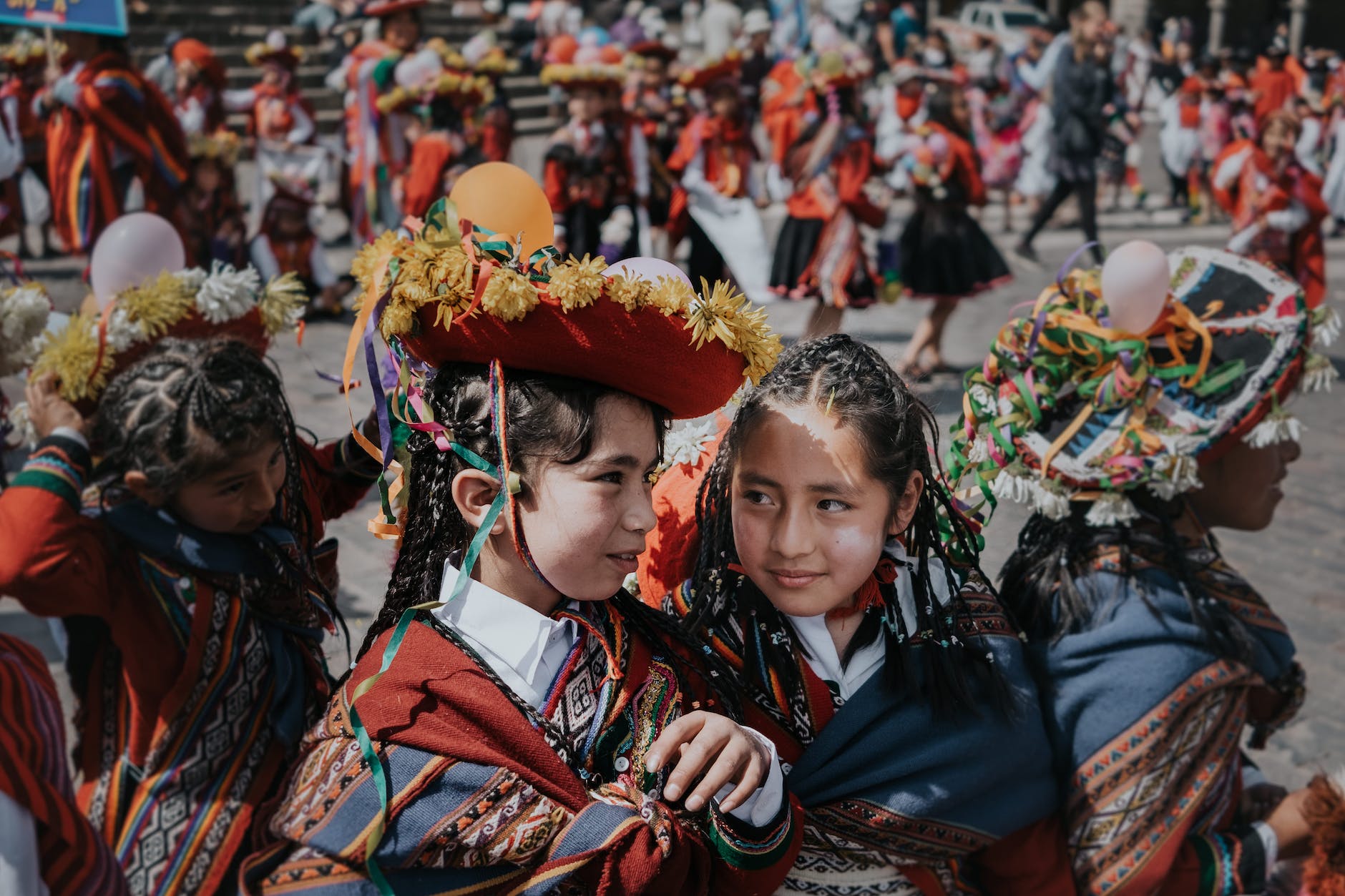
Photo by Junior Machado on Pexels.com

In Peru, there are 48 native languages and approximately 28,000 bilingual schools, within the modalities of regular basic school, alternative basic school and special basic school, serving more than 1,200,000 students nationwide, at the pre-school, primary and secondary levels.

In order to continue with the proposals for progress in rural bilingual education policies, within the Peruvian Ministry of Education there is the Directorate of Alternative Basic Education, Intercultural Bilingual Education and Educational Services in Rural Areas, which, through its professionals, is responsible for designing and proposing improvements in education in rural areas, through proposals for educational improvements and training for bilingual teachers, in order to ensure the education of thousands of students in an inclusive manner and to avoid school dropout.

However, despite continuous efforts, the lack of budget and bilingual teachers only widens the inequality gap. Furthermore, the ongoing political crisis in the country not only generates an atmosphere of uncertainty in general, but it also stops further proposals and investments in order to meet the main demands of students from indigenous peoples.

Rural bilingual schools are not only spaces for the dissemination of academic knowledge, but also of ancestral knowledge. Peruvian indigenous peoples are spaces in which there is a living culture of ancestral knowledge, which is passed down from generation to generation. Ensuring bilingual education through teacher training, funding, educational policies, but above all respect for ancestors who have resisted through the centuries, would contribute to reducing the inequality and indifference with which these peoples have been living. The current political situation, and the current violation of human rights in the country, especially in sectors where there is a high presence of indigenous people (the Department of Puno is the most affected, with citizens murdered during the demonstrations against the current president and is home to the Quechua and Aymara population), only affects a student community that is faced with indifference, lack of basic services to study and lack of quality education; However, it also empowers students who are aware that they are the voice of the future and seek to be heard in order to feel included in a country that is highly centralised in the capital Lima.

The challenges facing the Peruvian state in order to ensure the development of students from indigenous peoples is to continue to coordinate with various institutions such as the Ministry of Culture (which has a directorate that promotes policies for the protection of indigenous peoples), civil associations that have a professional staff to meet the main demand for social projects, curators who would help students to continue generating spaces for dialogue and ancestral knowledge, enhancing through education everything they have learned through their community sages; But above all, the Ministry of Education must ensure educational policies that ensure that students can receive the same quality education that students who have Spanish as their mother tongue receive.

The 48 native languages resist in a country that seems to be more and more indifferent every day and whose colonial construction still persists. However, what Peruvian society does not count on is a large native student community, who through meetings try to make their own demands visible, try to denounce open secrets that are like assassinations of community leaders defending their territories, as well as systematic violence that they constantly experience. Rural schools are therefore not only spaces of knowledge, but also of resistance, in the face of a country that looks at them with indifference.      

Ana Claudia Baltazar Diaz

POLITICAL CRISIS IN PERU: HUMAN RIGHTS IN DANGER

On 7 December, the former president of Peru, Pedro Castillo, was removed from office by the Peruvian Congress after a failed coup attempt. This event sparked a series of nationwide protests, which have so far left more than 25 people dead, including minors. But what are the Peruvian people demanding? 

The main demand is the resignation of the current president Dina Boluarte, who has so far repressed the protesters by giving freedom to the Peruvian army and the police to disperse any demonstration against the government using any measure of force, which is anti-democratic. It also calls for the elections to be brought forward to the current year (it has been approved to be brought forward to April 2024), the dissolution of the congress and the creation of a new constituent assembly.

Last weekend, during protests in the city of Juliaca, capital of the department of Puno, a series of police abuses were reported, including an injured reporter, who said the following: 

“At around 3 o’clock in the afternoon I was covering the protests, where I was recording (photographing) demonstrators and the police. I was on the wall of that bypass (level crossing), on the edge, to be able to see the confrontation between the police and the demonstrators. At that moment I was sending photos, I stopped to look at my mobile phone and I saw that I was hit by a blunt object. When it hit me, my leg went numb and then it started to bleed through my trousers. I pull up my trousers and I see a hole (at that moment), I was calm and also scared. When the demonstrators noticed it, some said it was buckshot, others said it was a bullet, but I didn’t really know what it was. They carried me to a little market ten steps away and there they began to treat me with bandages, clean the blood and put a tourniquet on my leg.”

The journalist received police threats, including death threats. This is a serious violation of human rights and an aggression towards the independent media, who in view of the lack of biased reporting by the mainstream media, report by getting involved in the protests and taking pictures of the various acts of violence that are taking place. However, this is only one of several events that have been recorded.

Demonstrations at the national level show human rights violations in the form of arbitrary arrests, use of tear gas, use of firearms by the police. Some of the deaths recorded during Dina Boluarte’s first month in office have been civilians who have been trying to help injured demonstrators. The constant repression has left children, adults and elderly people dead, without leaving dialogue open.

Protesting is a right. No human being should be violated for raising his or her voice against a regime. What is happening in Peru is a dictatorship: a president who uses force to silence the voice of the people, no space for dialogue to reach an agreement with the citizens, police who abuse their power, media that transmit messages of hatred towards the demonstrators.

Social inequality in Peru has always been latent. Today the forgotten voices are making themselves heard in the midst of a centralist, unequal and classist country. Infringing their rights through aggression and death only further widens the existing inequality gap. It is necessary to raise our voices to ensure that the right to protest is respected, however, through a dictatorship it is unfortunate to know that the only thing that is guaranteed is repression and death.

Photo Source

Ana Claudia Baltazar Diaz

An analysis of academic feminist criticisms of the provisions of international humanitarian law relating to women in armed conflict

Photo by Ahmed akacha on Pexels.com

International Humanitarian Law (IHL) founded on the concept of jus in bello, strives in regulating armed conflict and aims in protecting non-combatants against belligerents. In situations of armed conflict, there is a complete and ultimate breach of the rule of law whereby the impact on beings is so drastic that it promptly leads to a barbaric behavioural change. Consequently, women and girls are the main target of uncivilised norms in times of war which most commonly take the form of gender-based violence. They notably face manifest violations that are discriminatory and disproportional as to their rights because of their gender and sex.

In parallel, the advancement of IHL rules, has recognised that women are more prone to certain types of violence and as a result designed special laws (lex specialis) for these victims. The scope of prosecution has also, been widened for gender-based crimes. For instance, in Akayesu whereby the ICTR in 1998 set a milestone in adding Rape as an element of genocide and as a Crime Against Humanity. Nevertheless, these IHL Rules, have been subject to various criticisms by different schools of thoughts on whether these laws are adequate in protecting women and/or are properly enforced.

The basis of this analysis will thus evaluate dichotomous feminist critiques of IHL rules from the Revision and Enforcement School of thoughts, in relation to Rape and Sexual violence directed at women during international armed conflicts and evaluate whether they are outdated.

As such, the spearheading IHL rules and provisions surrounding the protection of women in relation to Rape and Sexual violence that shall form the basis of this analysis are firstly, Article 27, paragraph 2 of the Geneva Convention (GC) IV 1949, which states that: “Women must be especially protected against any attack on their honour, in particular against rape, enforced prostitution, or any other form of indecent assault.”. Secondly, Article 76(1) of the Additional Protocol (AP) I of the Geneva Conventions, complements this provision by stating that: “Women must be the object of special respect and must be protected in particular against rape, forced prostitution and any other form of indecent assault”.

The Revision School of thought

The first school of thought calls for a reform of the IHL rules and the criticisms made are derived from a mindset that women are dominated by a global patriarchal system since time immemorial. The rules are therefore, interpreted in such a way as to bring to surface the underlying flair of masculinity veiled in those provisions.

For instance, Gardam’s interpretation of the notion of a woman’s honour, in the wording and tenor of the Art.27, is that it is created by men for their own needs and overlooks the perception women have on sexual violence i.e., that Rape affects them both physically and psychologically. Bennoune and Crowe share similar thoughts, as they argue that instead of enunciating the protection of women as to their bodily integrity, it pejoratively connotes the respect owed to women in the conservation of their chastity and modesty. Since, in contrast, the reference to a man’s honour withholds positive attributes such as bravery, strength and independence.

The issue in practice, as to the undesirable prejudice women suffer, has serious implications as it would infer that a woman survivor of Rape in times of armed conflicts, bears the consequences of being dishonored and judge in society as being impure given that Art.27, inextricably draws a correlation between a woman’s honor and her sexuality.

However, Bennoune, distinguishes the drafting of Art.76 as it centers the attention towards human dignity rather than honor.

Although, a very simplistic interpretation of Art.27, could also be that ‘honor’ refers to preserving the value and dignity and women should remain untouched, which humbly draws in the physical aspect of the crime. After all, the fact that there is a lex specialis in the Geneva Convention, irrespective of the wording, demonstrates that there is a special attention given to the need in safeguarding those victims. The aim of Art.27 is strictly to protect women from an objective standpoint.

Thus, an over interpretation and biasness towards the rules not being derived from a gender equal standpoint is erroneous. Since, the level of subjectivity inculcated, not only creates an ambiguity but also has no bearing in the scope of protection accorded.

Additionally, feminists in critiquing the rules, bear in mind that, during armed conflicts, the anarchy that immerses, heightens the instigation of gender-based and sexual violence to the extent that perpetrators are not only the enemies but also the allies. It is a known fact that even UN Peacekeepers have been involved in sexual misconducts as part of their peacekeeping operations. As a matter of fact, Aoi, De Coning and Thakur are, of the view that armed conflicts change the sexual and psychosocial behaviour. As a total collapse in law and order, and the socio-economic factors creates a ‘permissive environment’ since the maintenance of norms disintegrate given the absence of the natural checks and balances system.

Therefore, in analysing the lack of prohibition, feminists are vehemently conscious that the Rape and Sexual violence during those times are significantly more drastic than in times of peace.

Additionally, one other main criticism of Art. 27 and Art. 76, is that they deal only with the protection of women and fail in prohibiting Rape and Sexual violence. Chinkin conveys that they do not “impose a blanket prohibition against sexual abuse but rather oblige States to offer women protection against attacks on their honor and to accord them special respect”. Furthermore, the reasoning follows that, even though both men and women can be raped, women are more vulnerable, and the aftermath is much greater to endure. For instance, as a consequent of being raped, a woman is disposed to unwanted pregnancies, shame and the fear of not being accepted in her community anymore.

Bennoune’s view however, is nuanced from Chinkin, as she believes that Art.27 and Art.76, are scarce in terms of mirroring the violent feature of the crime as it concentrates more on pregnancy and sexual violence instead of patronymically displaying the multi- dimensional impacts of the crime, as also conveyed by Gardam.

However, as the ICRC factually stated, women and men face different menaces during those situations. For instance, men are more likely to be killed on the field whereas women are more prone to sexual violence. Therefore, the reason as to why the rules emphasise the threat to the reproductive features.

Furthermore, Gardam’s view on the lack of prohibitive measures and sanctions of Rape under Art. 27 and Art. 76, is such that it weakens the applicability of the laws. In isolation, Rape and Sexual violence crimes are not serious enough to form part of the definition of “Grave Breaches” under Art.147 of the GC IV. Crowe suggests that this is due to the sentiment of a general indifference.

Nevertheless, Gardam, acknowledges that Rape can amount to the other elements of the definition of “Grave Breaches”. The criticism stems from the fact that Rape amounting to torture for instance, is a question of interpretation as has previously been done by the ICTY in Celebici and in Furundzija for example.

However, in the latter, the tribunal explicitly stated that Rape in time of war is prohibited under the Geneva Conventions and the Additional Protocols. Additionally, it is important to note the intertwining of IHL rules and despite Rape not forming part of the definition of Grave Breaches per se, the ICC Statute has codified Rape and Sexual violence under Art.8(2)(xxii) which out rightly states that “rape…or any form of sexual violence” amounts to a Grave Breach of the Geneva Conventions and under Art. 7(1)(g) as a Crime against Humanity.

The question of interpretation should further be considered, as complementary to the existing rules as they aid in further developing the definition of Rape and Sexual violence. For instance, the Musema case, referred to Furundzija in including “oral penetration” whilst also making use of the definition set forth in Akayesu and stated that rape unmistakably includes oral penetration since, “the essence of rape is not the particular details of the body parts and objects involved, but rather the aggression that is expressed in a sexual manner under conditions of coercion.”

Therefore, these arguments are redundant as they do not holistically take into consideration the other legal regimes, cases or provisions that should be read in conjunction to determine the protection accorded by IHL. Since it is evident, that IHL rules combined with the jurisprudence of the ICC and the Ad-Hoc Tribunals do provide extensive material concerning Rape and Sexual violence. As Copelon states, ““[p]prosecuting rape as a grave breach should effectively expand the meaning of the Conventions and Protocols and obviate the need for formal amendment””.

The Enforcement School of thought

Another school of thought on these IHL rules is that ““[i]f women have to bear so many of the tragic effects of armed conflict, it is not primarily because of any shortcomings in the rules protecting them, but because these rules are all too often not observed””. In essence, this school of thought conveys that the laws themselves are adequate but lack enforcement. As a matter of fact, it holds that men and women should be seen as equals. The ICRC argues that women should not be seen as vulnerable even in times of conflict. The interpretations that this school provides blatantly contrast with those previously mentioned.

In terms of the inherent discrimination criticism by the Revision school, Durham retaliates by stating that, those lex specialis are specifically designed to ensure the survival of women during the harshest times. Therefore, the whole scrutiny from a gender inequality standpoint counteracts the real objective of IHL. Since IHL is not construed to regulate social structure and as a result does not give way for a deeper social analysis. Furthermore, Liesbeth Lijnzaad contributes to this outlook as she is of the view that it is impractical to expect that IHL encompasses all types of gender issues during times of armed conflict when societies in times of peace fail to.

Moreover, as to the view that those IHL rules do not prohibit gender-based crimes, Quénivet counterargues that “protection” in IHL, should be interpreted as prohibition. Since the basis of the GC and the APs are to shield women unconditionally, thus it implies that the prohibition of those crimes forms parts of those rules.

Hence, it is manifestly absurd to consider that the rules disadvantage women, not to mention that none of them deal in as much detail for men. It is evident that, the sub- categorisation of the types of women victims under the GC is purposefully drafted to adequately provide for them in terms of both prohibition and protection as outlined by Quénivet.

An impartial gendered-equality scrutiny on those feminist critiques will indicate that none of them mention the fact that Rape and Sexual violence rules specific to men are virtually inexistent since they are always justified as being universal. Therefore, an overall gender- neutral approach would be to consider the lex specialis for women as a regime to counteract different permutations of issues that can arise rather than those drafted solely based on them being females.

Nevertheless, Durham and O’Byrne, in terms of protection argue that the pragmatic solution to resolve the lack of enforcement is through ‘soft laws’ instead of revising the existing IHL rules namely, the United Nations Security Council 1325 Resolution (Resolution) and the CEDAW.

The adoption of the CEDAW is particularly seen to mend the gaps of gender-based violence between the mainstream human rights treaties. As such, it regularly monitors implementation of the Resolution at State-level. Additionally, General Recommendation No.30, notably, serves as a guide for Member States to carry out their due diligence in relation to women’s rights in situations of armed conflicts.

Furthermore, the Resolution, prominently addresses “…the need to implement fully international humanitarian and human rights law that protects the rights of women and girls during and after conflicts”. Additionally, it emphasises the need to take special measures to protect women from gender-based violence. Therefore, as Cohn conveys, “…1325 puts women squarely in the center of efforts to end armed conflicts and creates sustainable peace.”

However, these supplementary protections even though, in theory strive in detail at practically helping women in those situations, they are also criticised for lacking enforcement. For instance, the Security Council is in fact not a monitoring body and as such, does not have a “mandate, function and means for holding all UN member states accountable to its thematic resolutions”as pointed out by Rourke and Swaine.

Furthermore, in responding to the disparagement on the lack of enforcement the Security Council tends to adopt subsequent resolutions instead of practically solving the issue at hand. As a result, it leads to a reiteration.

The issue with the CEDAW, on the other hand although being a monitoring body, can only be acceded via ratification. The Revision school, in particular, Charlesworth and Chinkin accurately convey that “some states have used the reservation mechanism effectively to hollow out the heart of their formal obligations”. Hence, those reservations are in reality a loophole for States to circumvent their responsibilities and to be held accountable. Therefore, by default the Convention is not only ineffective in terms of monitoring States but evidently unenforceable.

Thus, it is clear that these mechanisms are but illusionary, as even though they emphasise on the specific issues of gender-based violence in armed conflict and the need for States to observe their obligations of women’s rights, they are rhetoric.

Conclusion

Ultimately, both schools share the same values and intentions towards levelling up protection for women in armed conflict. To answer the question of whether these rules are fit for purpose in the 21st Century based on the above analysis, the straightforward answer is in the affirmative. The revision school of thought does demonstrate to some level that the language used is archaic and old-fashioned as it does not resonate with strong, independent women in modern times.

However, the school’s interpretation and implication of women requiring chivalric protection from men has no legal structure and is biased. As analysed, the language has no impact on the numerous scopes of their applications as perpetrators can be held criminally liable and prosecuted as seen via the Ad-Hoc tribunals and the ICC Statute.

In addition, the evolution in the jurisprudence of IHL rules have enabled Rape and Sexual violence, in different situations of armed conflict globally to be scrutinised in depth and have given women the justice deserved at the time needed and progress continues to be made.

The enforcement school of thought has notably, made it clear that the rules are suitable for women in this era. Evidently, in every legal regime the execution of laws is criticised as there is not one system that has ever reached a Utopian level, even less in times of armed conflict.

After all, the aim of IHL rules and the supplementary soft laws, focus on minimising the damage inflicted on women in armed conflicts and enable the issues to be examined through a multi-dimensional lens. Therefore, even though, they are criticized for a lack of enforcement, a flawless system during a time of magnified chaos is simply unrealistic. Thus, women are indeed accorded as much protection as can be provided for in this day and age.

Samia.F.Mallam-Hasham
Barrister-at-Law

Italian Youth Deviance Intervention

The Ministers of Internal Affairs and Justice, with Transcrime Research Center and Sacro Cuore University made a wonderful job in studying and reporting the presence and activity of baby gangs in Italy.

With the Scentific Committee of the Human Advisor Project we decide to activate a program of intervention about this phenomenon, working of what we elaborated could be the most important cause: Italian Young Generation is completely lost and not listened to, from years.

For that, our program aims to get in touch with young generations in difficult areas, mix with them, get to know them, listen to them (focusing on the North-East of Italy) and better understand the phenomenon and the possible intervention that need to be implemented, mostly about education but also about education to self-awareness, compassion, mindfulness and emotional intelligence, making them aware of the world they are creating for themselves and help them to face the uncertainty of this historic moment.

The program is not public because of safety reasons. Results will be published in the next two years.

China turning a blind eye to its International Obligations

AFP/Getty

China has seen an upsurge in religious persecutions against Uyghur Muslims, under the regime of Xi Jinping since he assumed the Presidency in 2013 as he aims in achieving the goal of creating a unified China. However, this goal entails eliminating the minorities. By default, the Uyghur Muslims are officially recognised as being one of the national minorities and are a target due to their practice of Islam which differs from the general population which is the Han Chinese making up 92%. The Uyghur Muslims are notably, from a specific region known as the Xinjiang Uygur Autonomous Region (XUAR) whereby they form half of that region’s population which amounts to around twelve million people.

The gravity of the situation lies in the fact that China is a permanent member of the United Nations Security Council and instead of standing as an exemplary Member State in terms of respecting its obligations towards its citizens and the international community as a whole, it has continuously denied the human rights violations and disregards its duty towards the fundamental rights of the Uyghur Muslims.

The rights of the Uyghur Muslims at a Universal Level

Under International Law, there are only a few instruments that afford protection to the Uyghur Muslims. The core UN Treaty concerned is the International Convention on the Elimination of All Forms of Racial Discrimination (ICERD) which China is legally bound by given the fact that the treaty has been ratified. In other words, any violation(s) of the ICERD would amount to a breach of the jus cogens i.e., the peremptory norms which are non-derogable under international law.

Furthermore, other legal instruments that protect those minorities are namely, the International Covenant on Civil and Political Rights (ICCPR)and the UN Declaration on the Rights of Persons Belonging to National or Ethnic, Religious and Linguistic Minorities (UN Declaration) which even though, are non-binding in nature, still have a high degree of relevance and importance as they form part of the International norms.

The International Treaties

The ICERD notably, legally binds States to comply with the Treaty in the observance of human rights and mentions that there should be no distinction as to religion.

Under Article 1 of the ICERD, the term “racial discrimination” encompasses “ethnic origin” and “descent”. Another mutual characteristic of the Uyghur Muslims, besides religion is that they are of Turkic descent. As such, the Uyghur Muslims, who are also officially recognized by China as an ethnic group, are protected from discrimination on those grounds.

Furthermore, Article 5 of the ICERD conveys a duty on China to not only prohibit racial discrimination but also to eliminate it. A further elaboration of this Article would entail that China should hold the rights of minorities to the same level as those of the Han Chinese i.e., they are viewed as equals. It specifically includes under civil rights, ‘the right to freedom of thought, conscience and religion’ under Article (5)(d)(vii). Therefore, allowing Uyghur Muslims the freedom to exercise Islam without facing any discrimination within the Chinese territory and jurisdiction.

The Norms

Furthermore, even though China has not ratified the ICCPR yet, that does not exempt it from not complying with this key human rights international treaty. By being a signatory, China has a duty to ensure it does not carry out any actions that defy the ICCPR. Therefore, it is responsible for guaranteeing the rights of the Uyghur Muslims under this treaty. As such, the main provision relating to the protection of Uyghur Muslims at a Universal level is found under Article 27 of the ICCPR which states that:

“In those States in which ethnic, religious or linguistic minorities exist, persons belonging to such minorities shall not be denied the right, in community with the other members of their group, to enjoy their own culture, to profess and practice their own religion, or to use their own language.”

Article 27 thus confers an obligation on China to allow Uyghur Muslims to practice Islam. This right is distinguished from the general rights of the Han Chinese population as it is specific to the minority group. Additionally, China’s duty in complying with this article encompasses the protection of the social identity of this religious minority i.e., as religion is often the core guide for the way people behave in a society for instance, their lifestyle and way of being.

 The UN Declaration as a matter of fact was inspired by Article 27 of the ICCPR and it further details out the rights of minorities including the need for States to protect their fundamental human rights (Article 4). Additionally, it creates a framework for Uyghur Muslims to practice Islam without facing discrimination as righteously stated under Article 2. Furthermore, Article 5, demands that National policies and programmes take into consideration the ‘legitimate interests’ of national minorities. Thus, China has a duty to ensure that there are no laws or norms that conflict with the legitimate interests of those minorities.

Hence the Uyghur Muslims have an international framework in terms of protection of their rights at a Universal level that China has a responsibility to the International Community to conform with.

Are the rights of Uyghur Muslims recognised and protected under the Chinese Constitution?

The main concern under the International instruments above in the protection of minorities are the State’s observance of the fundamental human rights. As such, Article 18 of the Universal Declaration of Human Rights (UDHR), is the main Article concerning the freedom to practice religion. It notably allows for religions or beliefs to be practiced without any conditions imposed on communities or individuals.

The Chinese Constitution carries a similar provision, under Article 36 whereby it conveys that religion should not be forced upon any individuals by any entities including the State and that none of its citizens shall be discriminated against. However, Article 36 makes mention of the State only protecting ‘Normal religious activities’ with no supplementary definition of what constitutes ‘normal’. Therefore, the protection of freedom of religion is limited in scope as it is subjective.

Furthermore, the UDHR sets some limitations on the practise of religion under Article 29(2) for the general welfare and so as not to disrupt the public order. Article 36 of the Chinese Constitution reflects this by also including ‘public order’ and other restrictions so as not to interfere with the health or education in China which is rather ambiguous but on the outset is still reflective of the UDHR.

As to the general rights of minorities, Article 4 of the Chinese Constitution states that:

All ethnic groups of the Peoples Republic of China are equal. The state shall protect the lawful rights and interests of all ethnic          minorities and uphold and promote relations of equality, unity, mutual assistance and harmony among all ethnic groups. Discrimination against and oppression of any ethnic group are prohibited; any act that undermines the unity of ethnic groups or creates divisions among them is prohibited.”

An interpretation of this article would therefore mean that, as they are a recognised ethnic group, the State bears the legal responsibility to protect their rights and offer them the same level of treatment as they would to any other minorities. As such, they are constitutionally a protected group. Additionally, the ‘unity’ of the Uyghur Muslims is notably, Islam. Therefore, Article 4 gives them the right to freely practise Islam without being discriminated and oppressed.

Furthermore, when Article 4 is read in conjunction with Article 36, it is clear that the Chinese Constitution allows religion to be practised by ethnic groups in the entire State, the Uyghur Muslims are not limited to practising Islam within the XUAR.

Rights in the XUAR

In essence, the XUAR, is constitutionally delegated powers under Section 6 of the Constitution: Autonomous Organs of Ethnic Autonomous Areas. In a nutshell, the Autonomous system, allows for a self-government whereby it is given the power to fine-tune central directives, State laws, regulations, and policies to fit its local conditions.

The 1984 Regional Ethnic Autonomy Law (REAL) as a matter of fact, is conferred these powers constitutionally and Article 11 sets out the following in accordance with religious beliefs:

          Autonomous agencies in ethnic autonomous areas guarantee the freedom of religious belief to citizens of the various nationalities. No state organ, public organization or individual may compel citizens to believe in, or not to believe in, any religion, nor may they discriminate against citizens who believe in, or do not believe in, any religion. The state protects normal religious activities. No one may make use of religion to engage in activities that disrupt public order, impair the health of citizens or interfere with the educational system of the state. Religious bodies and religious affairs shall not be subject to any foreign domination.”

Article 11’s wording mirrors that of Article 36 of the Chinese Constitution with the only difference being that it concentrates on the freedom of religious beliefs in the autonomous regions.

Therefore, by interpreting Article 11 of the REAL in combination with the self- governing feature of the autonomous region, Uyghur Muslims within the XUAR, are allowed to practice Islam in the realms of their culture, traditions, and Turkic descent without facing discrimination and interference by State or Non-State entities, subject to some reasonable restrictions of ensuring lordre public and the non-interference in China’s health and education.

Hence, the Chinese Constitution recognises and protects the rights of Uyghur Muslims in the practice of Islam and the Autonomous System, further enables not only for their rights to be tailored but also accord them the necessary protection with the incorporation of different nuances as to their ethnic background.

The National Laws that quash the protection of Uyghur Muslims

However, these rights are limited in scope to a theoretical framework and the Uyghur Muslims are faced with multiple local laws, policies and regulations purposefully enacted to deprive them of the freedom to practice Islam.

Sinicization

In 2017, the Regulations on Religious Affairs was enacted following the National Conference on religious work whereby Xi conveyed that the Regulation was created with the intent to ‘Sinicize’ religions. In essence, it is the process of unifying China by forcing minorities to conform with the Han Chinese culture fully, including their religion and customs. Furthermore, in reference to the policy of Sinicization he mentioned ‘providing active guidance to religions so that they can adapt themselves to socialist society’.

As such the existing domestic laws should be interpreted from this standpoint. For instance, Article 13 of the Criminal Code, defines a crime as ‘an act that endangers the sovereignty… of the State’, ‘… subverts the State power of the people’s democratic dictatorship’ and one which ‘… overthrows the socialist system’. Therefore, the underlying significance in regard to religion is that Islam is a threat to the National identity of the Atheist and Communist State. It challenges the Central government in maintaining State Sovereignty as Islam is more than just a religion, it is a mean to socially control individuals.

Xinjiang Uyghur Autonomous Region Regulation on De-extremification37 (De- extremification Laws)

Article 13’s interpretation is fully supported by the fact that it is applied in the context of de-extremification which is explicitly aimed at the Uyghur Muslims. Article 4 states that: ‘De-extremification shall persist in the basic directives of the party’s work on religion, persist in an orientation of making religion more Chinese and under law, and actively guide religions to become compatible with socialist society’.

Moreover, with the same intent, the Uyghur Muslims have also been introduced to new norms in the XUAR by the ‘Strike Hard Campaign Against Violent Terrorism’ which comprises of the Mass Surveillance system and the re-education camps.

In a nutshell, the Mass Surveillance involves a highly advanced technological system monitored by Han Chinese authorities whereby information is illegally gathered and is programmed in such a way that lawful practices are flagged as suspicious or threatening behaviors. The authorities, therefore, have full control over Uyghur Muslims.

Additionally, since 2017, over one million Uyghurs have been sent to the      re-education camps. The purpose behind those camps, is notably, to forcefully convert Uyghur Muslims into Han Chinese by any means necessary including a series of inhumane and torturous acts.

The Xinjiang Uyghur Autonomous Region Implementing Measures on the Counter-Terrorism Law (The Measures)

Furthermore, the Measures derive from China’s Counter-Terrorism Law 2015, which in its execution, is justified as a means to restore the public order by eliminating ‘terrorists’ in the XUAR.

Article 5 notably, states that: ‘Efforts to counter terrorism and extremism shall treat both the symptoms and causes and take comprehensive measures, combating in accordance with law and blending leniency and severity, respecting customs and protecting human rights’.

The ‘symptoms’ are detailed under Article 9 in the De-extremification Regulation as mentioned above, whereby Primary expressions of extremification include: covering the face, wearing gowns, and growing ‘irregular beards’. Additionally, generalizing the concept of Halal48 is banned under the same Article. Furthermore, Article 3, refers to ‘distorted religious teachings which is directed at Islamic teachings.

As such these norms are correspondingly, excessively disproportionate, The Regulation notably, draws no distinction between what constitutes terrorist activities and daily acceptable practices. Additionally, Article 5 of the Measures shows a complete disregard in the protection of human rights since the definition of a terrorist and a Muslim is one and the same. Religious persecution is thus justified as a measure taken in ‘anticipating the enemys moveas conveyed under Article 4 of the Measures51.

Therefore, those norms, are in clear violations of the ICERD since they discriminate Uyghur Muslims by stereotyping them as terrorists and criminalizing Islam to its very core whereby a Uyghur Muslim is strictly prohibited from conducting normal Islamic practices.

Furthermore, in conjunction with Article 5 of the UN Declaration mentioned above, these norms evidently overlook the ‘legitimate interests’ of the Uyghur Muslims. Lastly, the whole of Article 27 of the ICCPR in its application is extinguished, as there is a complete erasure of their social identity as practicing Muslims, Furthermore, their civil rights are violated as those civilians, by lawfully practicing their religion and abiding to all the norms of the XUAR are religiously persecuted.

Conclusion

Therefore, even though China’s constitution acknowledges the rights of the Uyghur Muslims and accords them protection both at a National level and in the XUAR, they are but fictitious and exist only in theory. The incessant aim of Xi’s regime in leading the Uyghur Muslims to extinction clearly demonstrates a breach in the rule of law. Since multiple National norms override their freedom to exercise Islam through immoral justifications of ensuring public order. It is thus evident that China shows an utter disregard to both the customary international norms and the ICERD. Thus, the delay in the ratification of the ICCPR is strategically based with the same intent of circumventing its international obligations and allowing Uyghur Muslims to be protected at a Universal level. Hence, the non-conformity, results in leaving Uyghur Muslims vulnerable and unable to practice religion without the fear of persecution.  

Samia Mallam-Hasham, Barrister-At-Law, Human Rights Advocate

LA EDUCACIÓN CON ENFOQUE DE GÉNERO SI ES PRIORIDAD

El pasado mayo, el Congreso de la República del Perú promulgó el Proyecto de Ley N° 094, el cual condiciona la publicación de materiales educativos al consentimiento de madres y padres de familia. Tal como dice la ley, los padres y madres pueden influir en la elaboración de los materiales que se usarían en las escuelas:

“Los representantes de las APAFA, comités, asociaciones civiles u otras instancias de representación inscritas (…) designarán a los representantes que participarán en el proceso de elaboración del contenido de materiales, textos y recursos educativos conforme al procedimiento que se establezca en el respectivo reglamento.”

Ante eso, la Defensoría del Pueblo manifestó que: “La promulgación de esta ley afectaría el derecho a la educación e implementación de la educación sexual integral (ESI), e impediría al Minedu garantizar su cumplimiento en un contexto recurrente de violencia y embarazos en niñas y adolescentes mujeres”

Asimismo, la entidad comunicó lo siguiente: “Nuestra institución considera que el condicionamiento de la publicación de materiales educativos al consentimiento previo de progenitores, constituiría un peligroso precedente para todas las políticas públicas, pues institucionalizaría -a través de una ley- un derecho a veto por parte de personas con creencias o prejuicios, generando inestabilidad y falta de seguridad jurídica para la protección de los derechos humanos de las personas, y particularmente, de las y los estudiantes”

En la actualidad, el Ministerio de Educación del Perú es la Entidad encargada de elaborar estos materiales educativos. En el año 2016, nació el Movimiento “Con Mis Hijos No te metas”, el cual se opone a la Educación con Enfoque de Género en las Escuelas. En el año 2017, este movimiento se opuso al Currículo Nacional, el cual incluía un temario con enfoque de género, con la finalidad que la educación sea inclusiva y que se pueda prevenir embarazos adolescentes.

Actualmente, este movimiento mantiene su discurso y al aprobar la ley 094 daría libre albedrío a que estos intereses particulares sean parte de la elaboración de materiales educativos. No se puede negar que peligra el derecho de niñas, niños y adolescentes al no recibir una educación sexual integral y libre de discriminación. Con esta norma en vigencia, grupos conservadores pueden aprobar o desaprobar materiales educativos bajo su propia perspectiva, limitando la educación con enfoque de género y retrasando los pocos avances que se han podido dar en el país.

En un país con una alta tasa de violencia hacia la mujer, embarazos adolescentes y prejuicios, sí es necesaria la Educación con Enfoque de Género. Necesitamos que nuestra infancia y nuestra adolescencia tenga una educación de calidad y crecer en un ambiente seguro donde los prejuicios cada día se derriban más. Asimismo, ya existen experiencias en las escuelas donde la Educación Sexual Integral ha logrado disminuir los casos de embarazo adolescente. Urge la intervención del Estado y que día a día los intereses de grupos conservadores tengan menor participación en leyes que afectan a toda una nación. Un país sin machismo ni discriminación, es un país sin violencia.

Ana Claudia Baltazar Diaz